

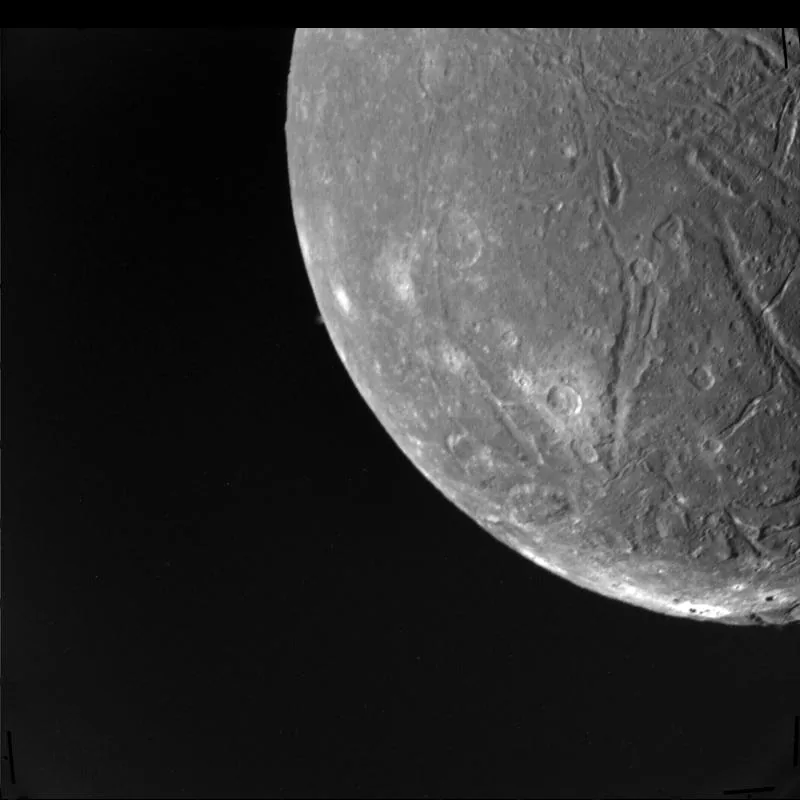
About Ariel
Ariel is the fourth-largest moon of Uranus and has the brightest surface of the Uranian moons, suggesting a relatively young crust. Voyager 2 imagery revealed an extensive network of deep rift valleys and smooth “graben floors” inside canyon systems — strong evidence of geologic activity, possibly cryovolcanic resurfacing, early in Ariel’s history.
Physical Properties
Orbit
Gallery
Hand-picked mission imagery of Ariel sourced from NASA and partner archives. Click any photo for full resolution and source attribution.
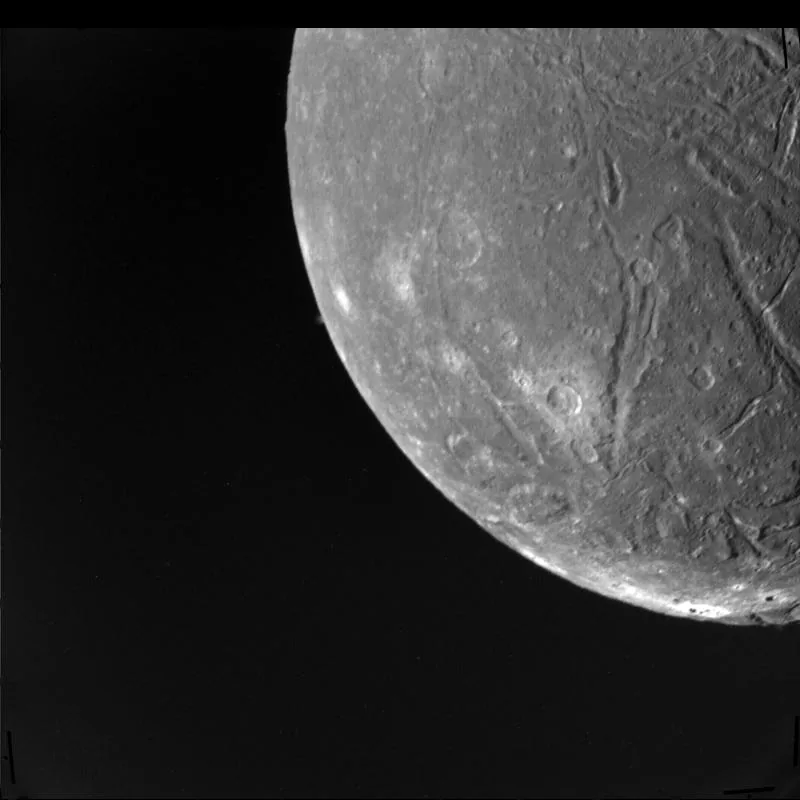
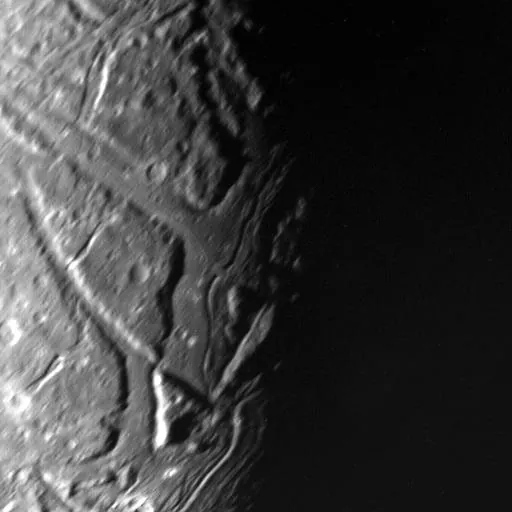
Imagery on this page is provided by the original mission teams. Full attribution terms: Image Rights & Credits.
Sources & Further Reading
- NASA — official mission / factsheet page
- Wikipedia — extensive cross-referenced article
- NASA u2014 Ariel
Numerical values (radius, mass, orbital elements, temperatures) are drawn from NASA NSSDC Planetary Fact Sheets, JPL Horizons, and the JPL Small-Body Database. Last refreshed: 2026-06-08 01:37:02.