

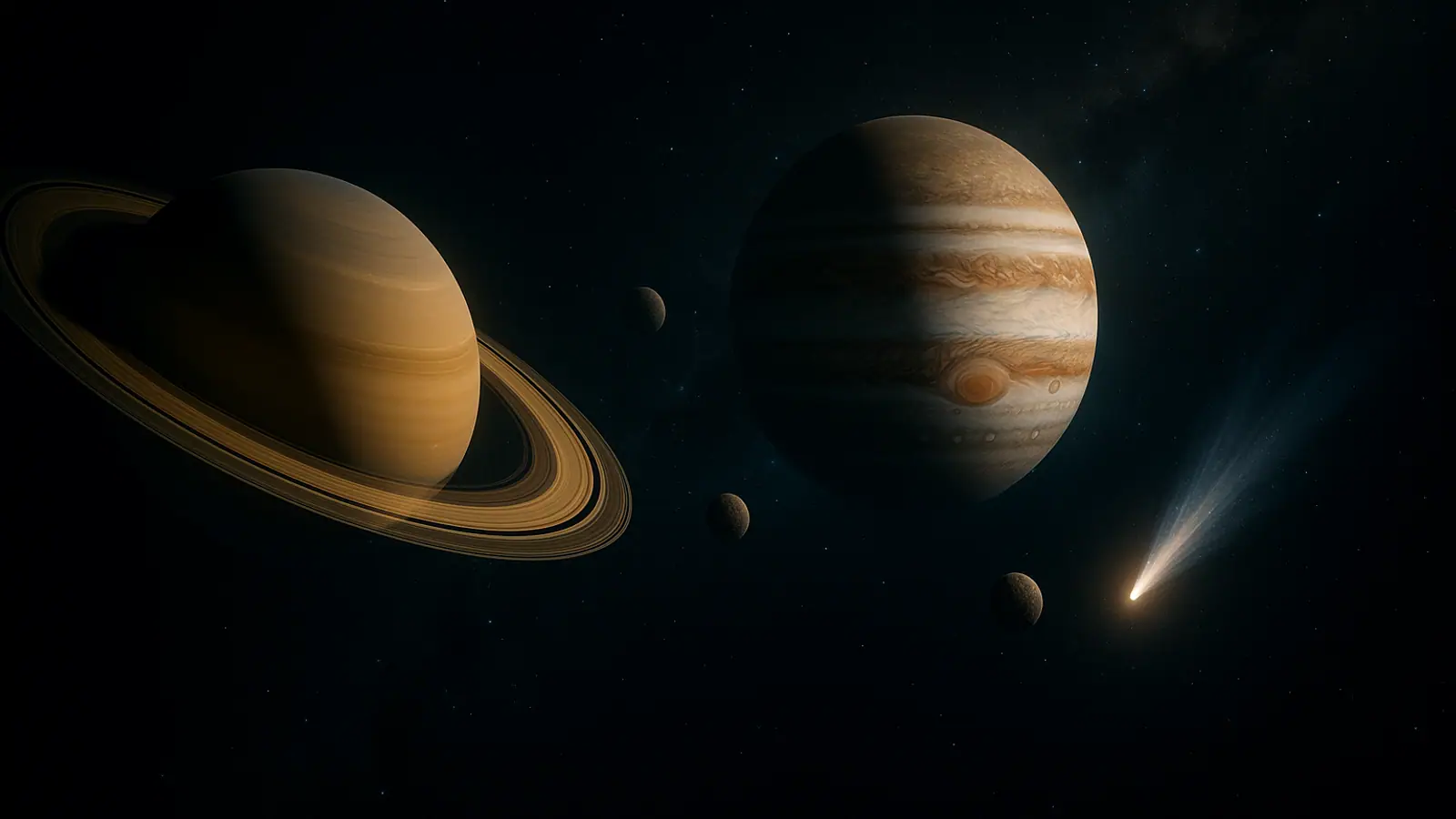
Worlds of the Solar System
Celestial Bodies
Planets, moons, dwarf planets, asteroids, and comets — the worlds our missions explore.
71 worlds17 types9 moons
71 bodies
Star
2 missions
Sun
The G-type main-sequence star at the gravitational center of the Solar System.
695,700 km
Planet
9 missions
ORBITS SUN
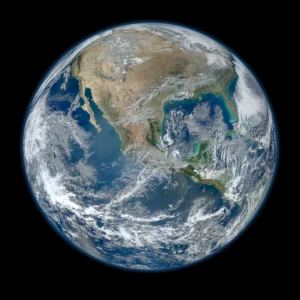
Earth
The only known world with liquid water oceans and life — the benchmark against which we measure every other planet.
1 AU6,371 km

Planet
10 missions
ORBITS SUN
Jupiter
The largest planet — a hydrogen-helium gas giant with 95 confirmed moons and the Great Red Spot.
5.2 AU69,911 km
Planet
24 missions
ORBITS SUN
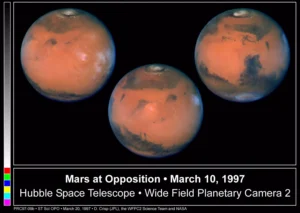
Mars
The cold, arid fourth planet — the most-visited world beyond Earth and a primary target for human spaceflight.
1.52 AU3,390 km
Planet
2 missions
ORBITS SUN
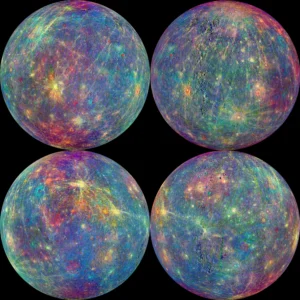
Mercury
The smallest planet and the closest to the Sun — a cratered, airless world of extremes.
0.39 AU2,440 km
Planet
1 mission
ORBITS SUN
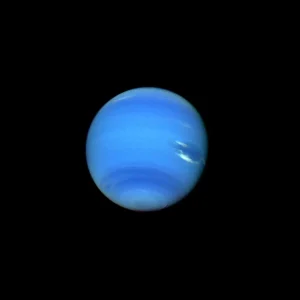
Neptune
The windy outer ice giant — the first planet found by mathematical prediction, host to the geyser-moon Triton.
30.07 AU24,622 km
Planet
4 missions
ORBITS SUN
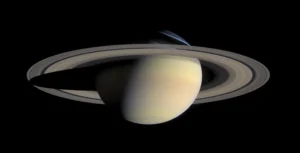
Saturn
The ringed jewel — a gas giant encircled by the most spectacular ring system in the Solar System and 146 moons.
9.54 AU58,232 km
Planet
1 mission
ORBITS SUN
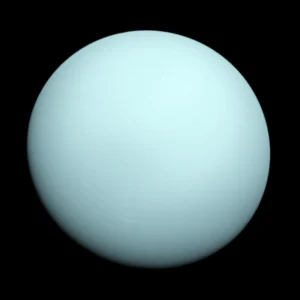
Uranus
The tilted ice giant — a cold world rolling on its side with faint rings and 28 moons.
19.19 AU25,362 km

Planet
12 missions
ORBITS SUN
Venus
Earth's scorched twin — cloaked in sulfuric acid clouds and a runaway greenhouse.
0.72 AU6,052 km
Dwarf Planet
1 mission
ORBITS SUN
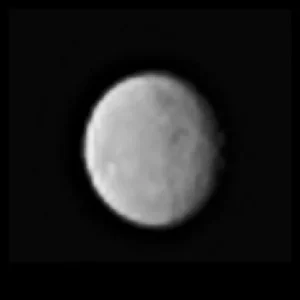
Ceres
The largest object in the asteroid belt — a dwarf planet with possible briny water beneath its surface.
2.77 AU470 km
Dwarf Planet
ORBITS SUN
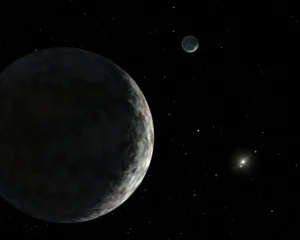
Eris
The most-massive known dwarf planet — discovery triggered Pluto's demotion.
67.86 AU1,163 km
Dwarf Planet
ORBITS SUN
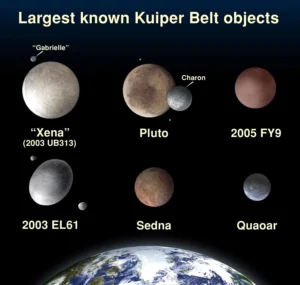
Haumea
A rugby-ball-shaped dwarf planet with two moons and a ring — one of the strangest bodies known.
43.13 AU816 km
Dwarf Planet
ORBITS SUN
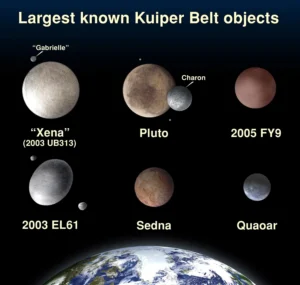
Makemake
A frozen methane world in the outer Kuiper Belt with a tiny dark moon.
45.6 AU715 km
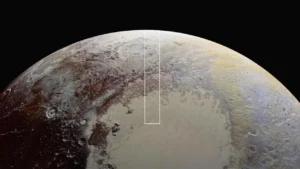
Dwarf Planet
1 mission
ORBITS SUN
Pluto
The first-discovered and most famous dwarf planet — a complex binary world of nitrogen glaciers and red organic haze.
39.48 AU1,188 km
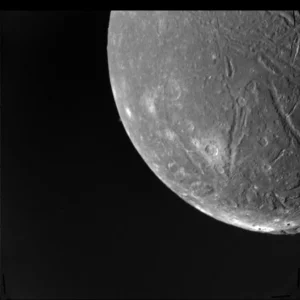
Moon
ORBITS URANUS
Ariel
The brightest and seemingly youngest of Uranus's major moons — crossed by a network of rift valleys.
579 km
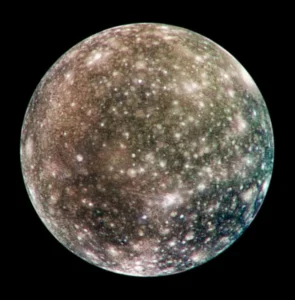
Moon
2 missions
ORBITS JUPITER
Callisto
The most heavily cratered object in the Solar System — an ancient, barely-differentiated ice-rock world.
2,410 km
Moon
ORBITS PLUTO
Charon
Pluto's giant companion — half Pluto's diameter, tidally locked into a true binary dwarf-planet system.
606 km
Moon
ORBITS MARS
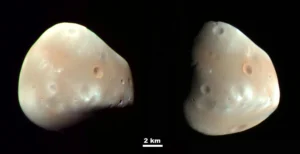
Deimos
The smaller, smoother moon of Mars — a likely captured asteroid drifting slowly outward.
6 km
Moon
ORBITS SATURN
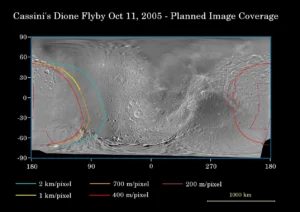
Dione
Icy moon with striking bright "wispy" ice cliffs and a possible subsurface ocean.
561 km
Moon
ORBITS ERIS
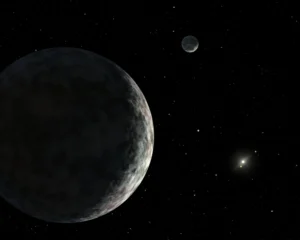
Dysnomia
350 km
Moon
1 mission
ORBITS SATURN
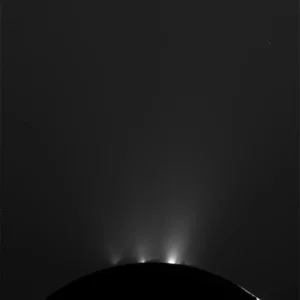
Enceladus
A tiny icy moon with geysers of salty water from a subsurface ocean — one of the best places in the Solar System to look for life.
252 km
Moon
4 missions
ORBITS JUPITER
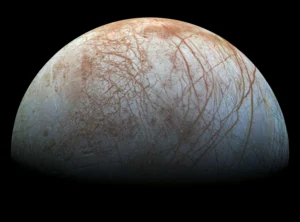
Europa
An ice-crusted ocean moon — one of the Solar System's prime candidates for extraterrestrial life.
1,561 km
Moon
3 missions
ORBITS JUPITER
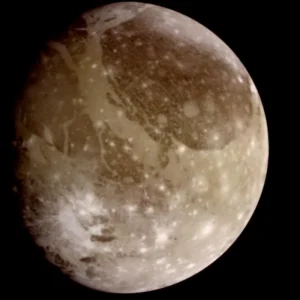
Ganymede
The largest moon in the Solar System — larger than Mercury, and the only moon with its own magnetic field.
2,634 km
Moon
ORBITS PLUTO
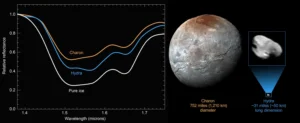
Hydra
21 km
Moon
1 mission
ORBITS SATURN
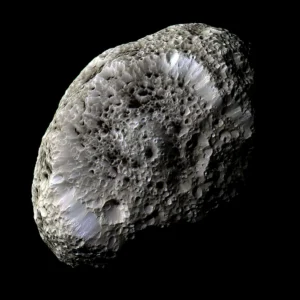
Hyperion
The chaotic sponge-moon — an irregular, porous body that tumbles unpredictably.
135 km
Moon
1 mission
ORBITS SATURN
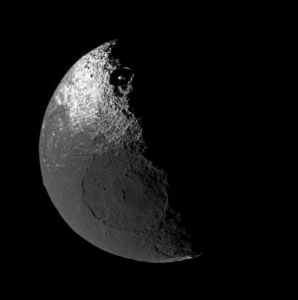
Iapetus
The two-toned "yin-yang" moon — one hemisphere as dark as asphalt, the other brilliant white.
735 km
Moon
2 missions
ORBITS JUPITER
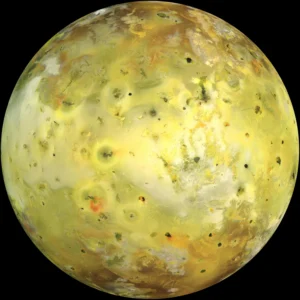
Io
The most volcanically active world in the Solar System — a sulfur-painted moon locked in tidal battle with Jupiter.
1,822 km
Moon
ORBITS PLUTO
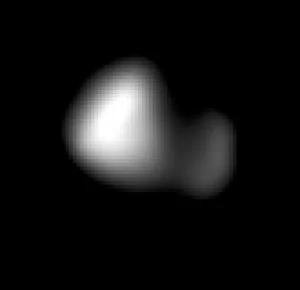
Kerberos
9 km
Moon
ORBITS SATURN
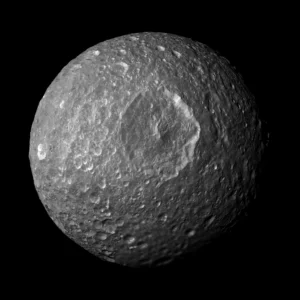
Mimas
The "Death Star moon" — a small icy world marked by the enormous crater Herschel.
198 km

Moon
ORBITS URANUS
Miranda
A patchwork moon of coronae and cliffs — the innermost and most dramatic of Uranus's five major satellites.
236 km
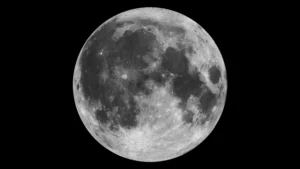
Moon
35 missions
ORBITS EARTH
Moon
Earth's only natural satellite — the only world beyond Earth where humans have walked.
0 AU1,737 km
Moon
ORBITS NEPTUNE
Nereid
A small outer moon of Neptune with one of the most eccentric orbits of any known moon.
170 km

Moon
ORBITS PLUTO
Nix
25 km
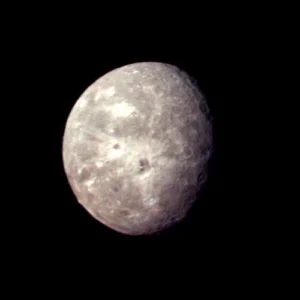
Moon
ORBITS URANUS
Oberon
The outermost major moon of Uranus — heavily cratered and likely harboring a thin deep ocean.
761 km
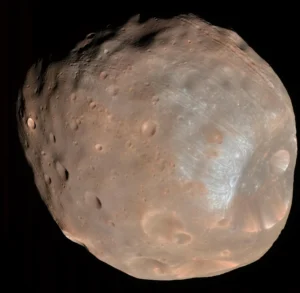
Moon
1 mission
ORBITS MARS
Phobos
The larger, doomed moon of Mars — spiraling inward and likely to be shredded into a ring within 100 million years.
11 km
Moon
1 mission
ORBITS SATURN
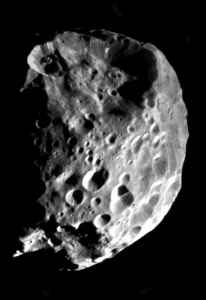
Phoebe
The captured Centaur — a retrograde, distant outer moon that supplies the dust painting Iapetus.
107 km

Moon
ORBITS NEPTUNE
Proteus
Neptune's second-largest moon — a dark, irregular body discovered by Voyager 2.
210 km
Moon
ORBITS SATURN
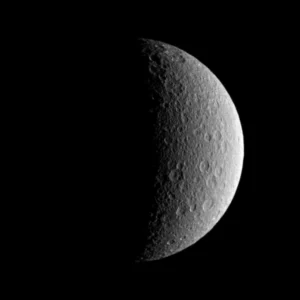
Rhea
Saturn's second-largest moon — a heavily cratered ice world with a tenuous oxygen exosphere.
764 km
Moon
ORBITS PLUTO
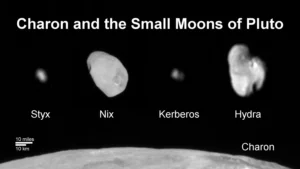
Styx
5 km
Moon
ORBITS SATURN
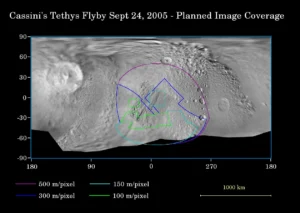
Tethys
Low-density icy moon with the giant crater Odysseus and the enormous rift Ithaca Chasma.
531 km
Moon
2 missions
ORBITS SATURN
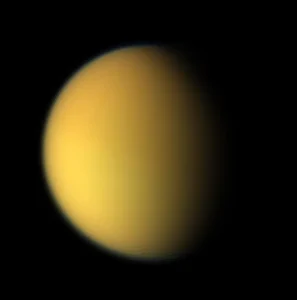
Titan
The only moon with a thick atmosphere and surface liquids — methane rivers and seas under an orange haze.
2,575 km
Moon
ORBITS URANUS
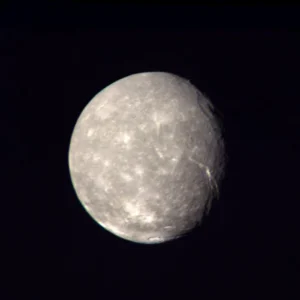
Titania
The largest moon of Uranus — crossed by enormous canyons and possibly hosting a subsurface ocean.
788 km
Moon
ORBITS NEPTUNE
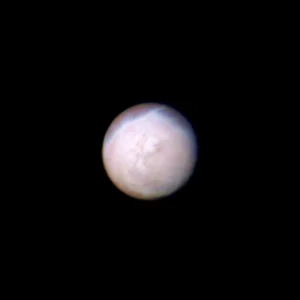
Triton
Neptune's captured Kuiper Belt giant — the only large moon in a retrograde orbit, with active nitrogen geysers.
1,353 km
Moon
ORBITS URANUS
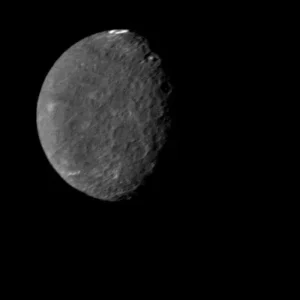
Umbriel
The dark, ancient, heavily cratered Uranian moon with the enigmatic Wunda crater.
585 km
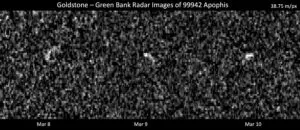
Asteroid
ORBITS SUN
Apophis
A Near-Earth asteroid that will pass closer than geostationary satellites on 13 April 2029.
0.92 AU0 km
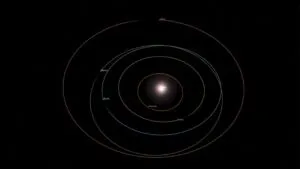
Asteroid
ORBITS SUN
Bennu
A carbon-rich Near-Earth asteroid — OSIRIS-REx returned 121.6 g of samples to Earth in 2023.
1.13 AU0 km
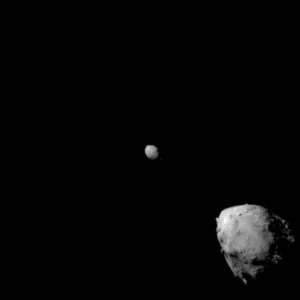
Asteroid
ORBITS SUN
Didymos
The primary of a binary asteroid system — target of NASA's DART planetary-defense test.
1.64 AU0 km

Asteroid
ORBITS DIDYMOS
Dimorphos
The asteroid moonlet struck by NASA DART — the first object whose orbit has been changed by humans.
0 km
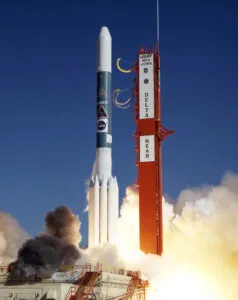
Asteroid
ORBITS SUN
Eros
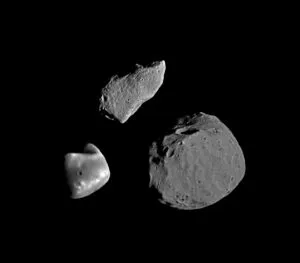
The first asteroid orbited and landed on by a spacecraft.
1.46 AU8 km
Asteroid
ORBITS SUN
Gaspra
The first asteroid ever visited by a spacecraft — Galileo flyby, October 1991.
2.21 AU6 km
Asteroid
ORBITS SUN
Ida
The first asteroid discovered to have a moon — Dactyl — photographed by Galileo in 1993.
2.86 AU16 km
Asteroid
ORBITS SUN
Itokawa
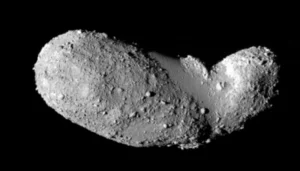
A rubble-pile NEO — the first asteroid from which samples were returned to Earth.
1.32 AU0 km
Asteroid
ORBITS SUN
Lutetia
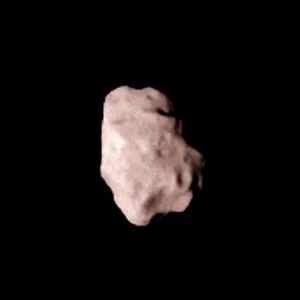
A large main-belt asteroid flown past by Rosetta in 2010 — possibly a primitive protoplanet survivor.
2.44 AU49 km

Asteroid
ORBITS SUN
Pallas
The third-largest main-belt asteroid — highly inclined, rich in water.
2.77 AU256 km

Asteroid
ORBITS SUN
Psyche
A metal-rich asteroid that may be the exposed iron core of an ancient protoplanet — target of NASA's Psyche mission.
2.92 AU113 km
Asteroid
ORBITS SUN
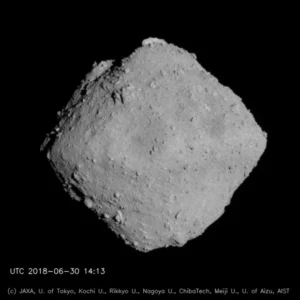
Ryugu
A C-type near-Earth asteroid — Hayabusa2 returned 5.4 g of pristine samples in 2020.
1.19 AU0 km
Asteroid
ORBITS SUN
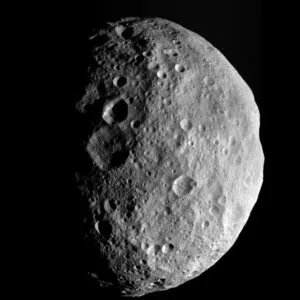
Vesta
The second-largest main-belt asteroid — a differentiated protoplanet with a giant south-polar scar.
2.36 AU263 km
Comet
ORBITS SUN
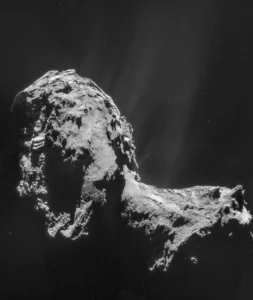
67P/Churyumov-Gerasimenko
The first comet to be orbited and landed on by a spacecraft — ESA Rosetta + Philae.
3.46 AU2 km
Comet
ORBITS SUN
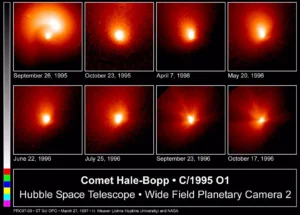
Hale-Bopp
The "Great Comet of 1997" — one of the brightest, longest-visible comets of modern times.
186 AU30 km
Comet
ORBITS SUN
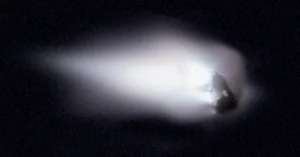
Halley’s Comet
The most famous comet — the first periodic comet recognized; next perihelion 2061.
17.83 AU6 km
Comet
ORBITS SUN
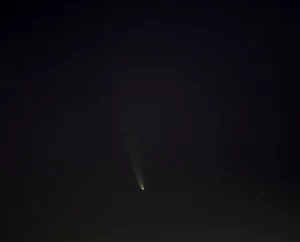
NEOWISE
The brightest comet to grace northern-hemisphere skies since Hale-Bopp.
358 AU3 km
Comet
ORBITS SUN
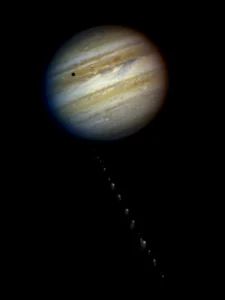
Shoemaker-Levy 9
The comet that collided with Jupiter in 1994 — the first Solar System collision directly observed.
Comet
ORBITS SUN
Tempel 1
The comet struck by NASA's Deep Impact spacecraft in 2005 — then revisited by Stardust-NExT.
3.14 AU3 km

Comet
ORBITS SUN
Wild 2
The first comet from which samples were returned to Earth — NASA's Stardust, 2006.
3.45 AU2 km
Kuiper Belt Object
1 mission
ORBITS SUN
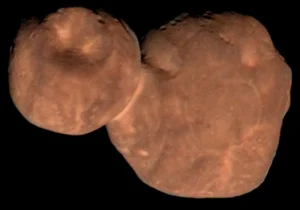
Arrokoth
The most distant object ever visited by spacecraft — a contact-binary cold classical KBO.
44.58 AU18 km
Go
Kuiper Belt Object
ORBITS SUN
Gonggong
A distant red dwarf-planet candidate with a single moon — Xiangliu.
67.21 AU615 km
Or
Kuiper Belt Object
ORBITS SUN
Orcus
The "anti-Pluto" — a plutino in the same 2:3 resonance but 180° out of phase.
39.17 AU455 km
Kuiper Belt Object
ORBITS SUN
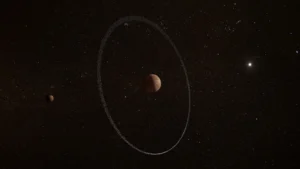
Quaoar
A cubewano with two rings — the first ring system found around a body outside the giant-planet region.
43.69 AU555 km

Trans-Neptunian Object
ORBITS SUN
Sedna
An extreme trans-Neptunian object with a 10,000-year orbit — possibly a first member of the inner Oort Cloud.
506 AU498 km
Interstellar Object
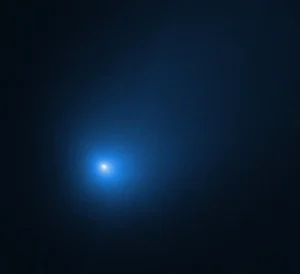
2I/Borisov
The first confirmed interstellar comet — a normal-looking visitor from another star system.
-0.85 AU1 km
Interstellar Object
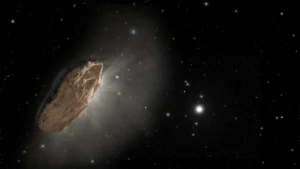
Oumuamua
The first confirmed interstellar object to pass through the Solar System — detected October 2017.
-1.28 AU0 km
Space Launch Live maintains a complete, accurate catalog of every major object in our solar system — the Sun, all eight planets, every major moon, all five IAU-recognized dwarf planets, notable asteroids, comets, Kuiper Belt Objects, and the two confirmed interstellar visitors. Each body includes verified physical and orbital data from the NASA NSSDC Planetary Fact Sheets, JPL Horizons, and the IAU Minor Planet Center, plus cross-links to every probe, rover, lander, and satellite tracked on the site.
LIVE · UPDATING
Right now, humanity’s probes are here
Every second, these spacecraft move farther from Earth. Distances extrapolated from JPL Horizons data.