

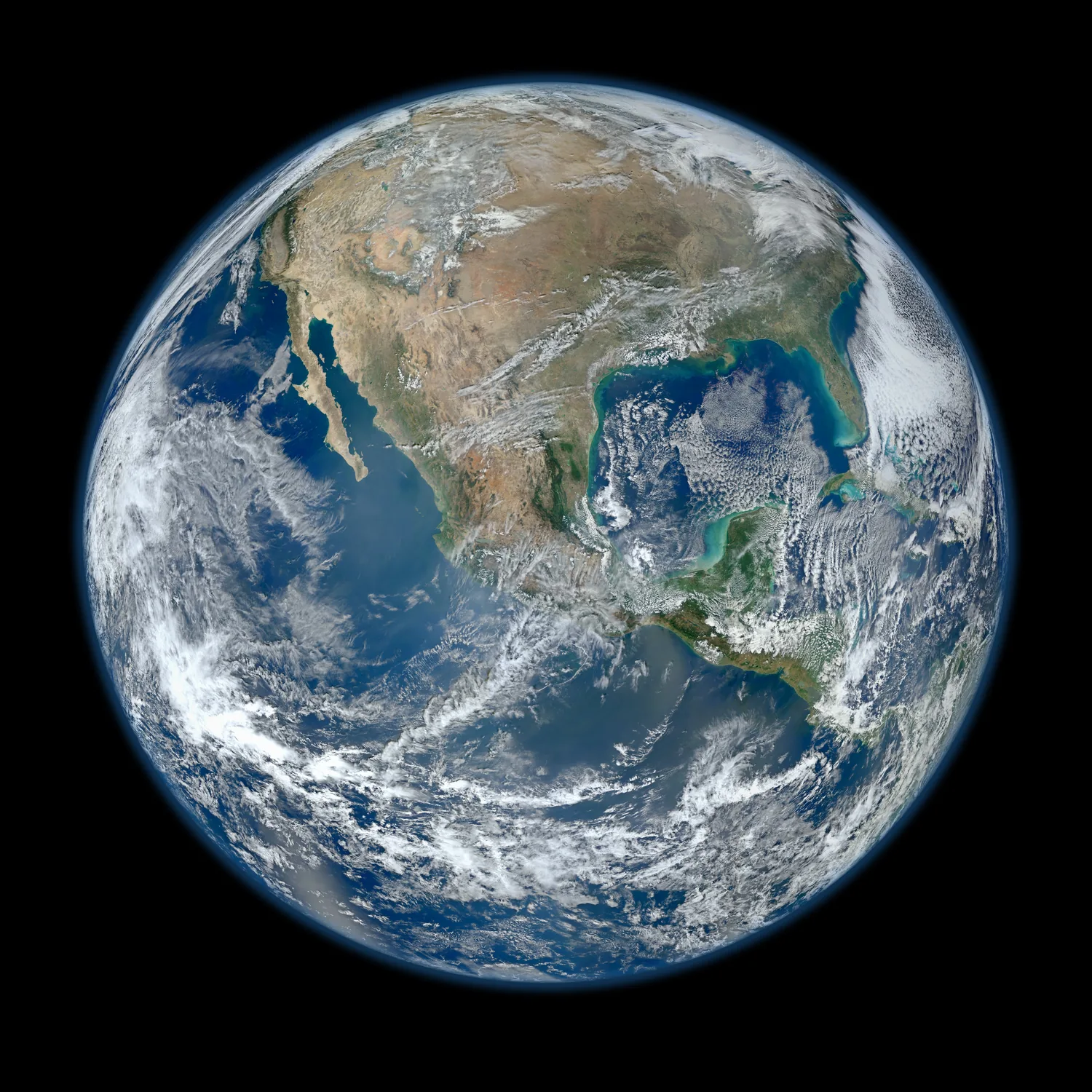
About Earth
Earth is the third planet from the Sun, the densest planet in the Solar System, and the largest of the four terrestrials. It is — as far as we yet know — the only world with a biosphere, surface liquid water, and tectonic recycling of its crust.
Earth is 71% covered by salt-water oceans, with a total water inventory of roughly 1.386 × 10⁹ km³. Its atmosphere is dominated by nitrogen and molecular oxygen — the latter produced almost entirely by photosynthetic life over the past ~2.4 billion years. The planet’s magnetic dipole, generated by convection in its molten iron-nickel outer core, and the stratospheric ozone layer together block the bulk of the solar wind and ultraviolet radiation that would otherwise sterilize the surface.
Earth formed around 4.54 billion years ago. Its single large natural satellite, the Moon, formed about 4.5 billion years ago from debris ejected by a Mars-sized impactor (Theia). More than 13,000 operational satellites, 8 billion humans, and every known form of life share this single world as of 2026.
Physical Properties
Atmosphere Composition
- Nitrogen (Nu2082) 78.08%
- Oxygen (Ou2082) 20.95%
- Argon 0.93%
- Carbon Dioxide 0.042% (and rising)
- Water vapor variable, 0-4%
Orbit
Notable Moons
Missions to Earth
9 spacecraft tracked on Space Launch Live.
Gallery
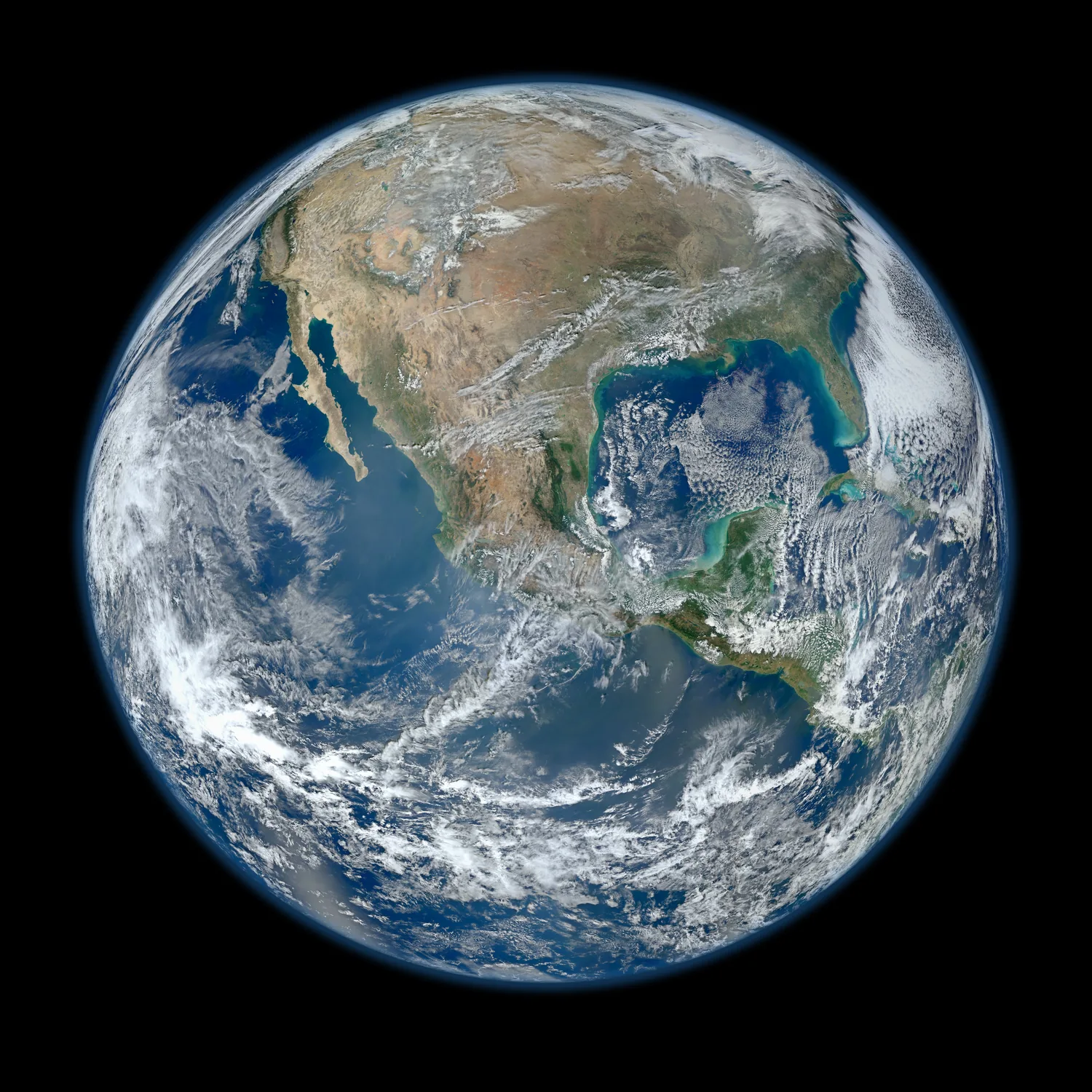
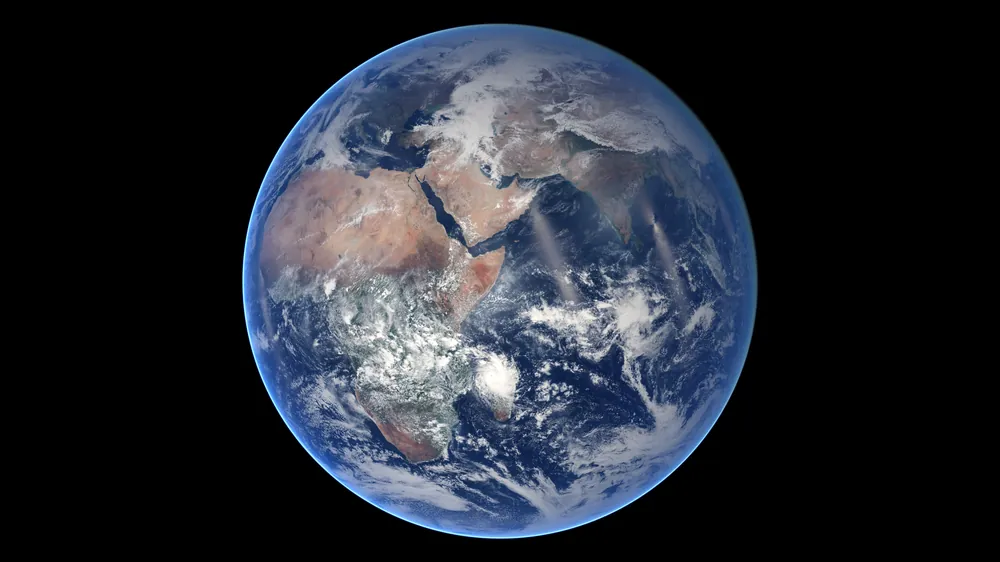
Hand-picked mission imagery of Earth sourced from NASA and partner archives. Click any photo for full resolution and source attribution.
Imagery on this page is provided by the original mission teams. Full attribution terms: Image Rights & Credits.
Sources & Further Reading
- NASA — official mission / factsheet page
- NASA JPL — orbital data and imaging
- Wikipedia — extensive cross-referenced article
- NASA Earth Fact Sheet (NSSDC)
- NASA u2014 Earth
- NOAA Earth System Research
Numerical values (radius, mass, orbital elements, temperatures) are drawn from NASA NSSDC Planetary Fact Sheets, JPL Horizons, and the JPL Small-Body Database. Last refreshed: 2026-06-08 01:37:01.