

About Moon
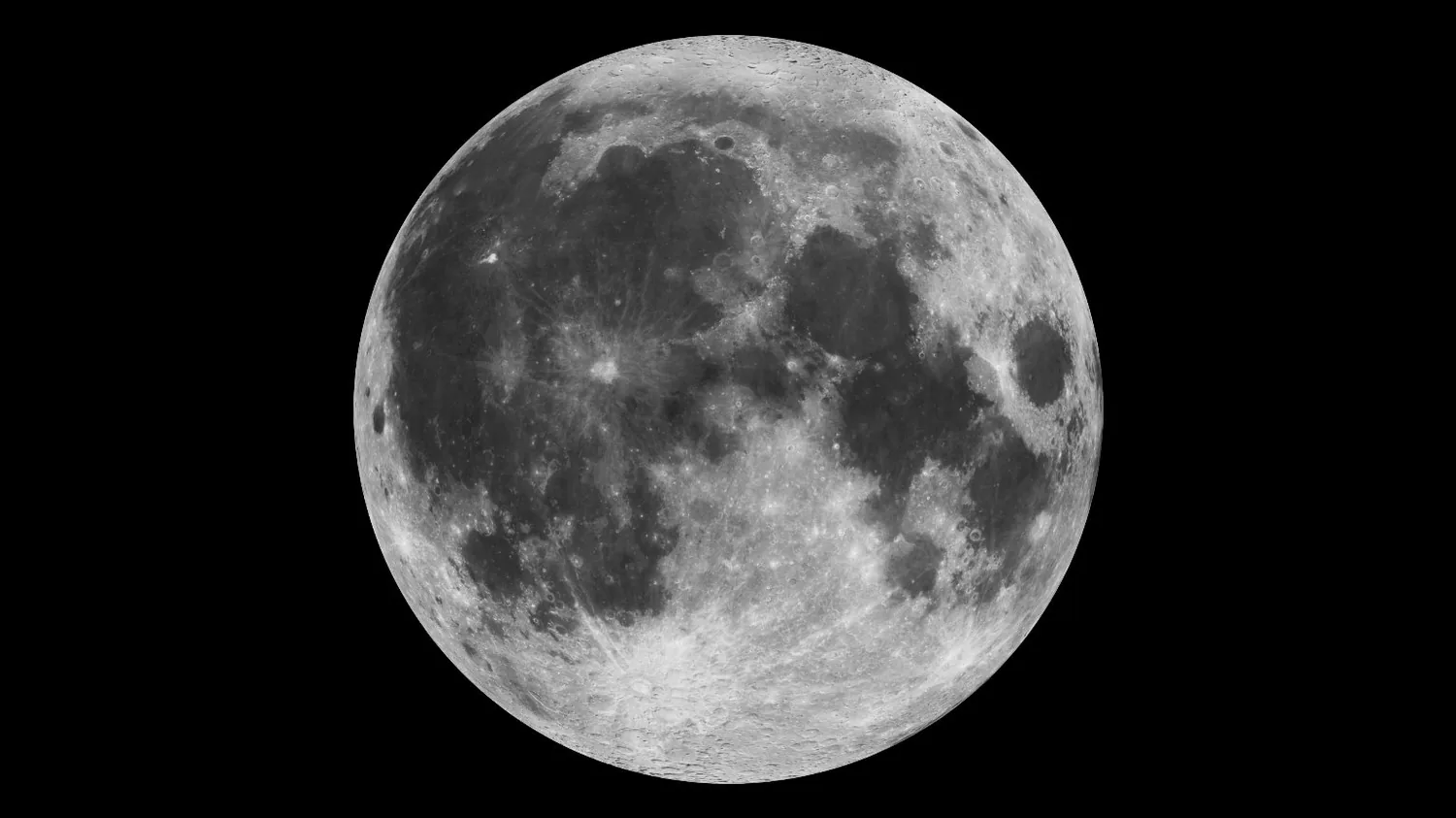
The Moon is Earth’s only natural satellite and the fifth-largest moon in the Solar System. At roughly 1/4 Earth’s diameter and 1/81 Earth’s mass, it is unusually large relative to its planet — a ratio unmatched among the eight primary planets.
The Moon almost certainly formed about 4.51 billion years ago from debris ejected when a Mars-sized body (“Theia”) collided with the young Earth. This “giant impact” hypothesis is supported by the Moon’s bulk composition, its iron-poor interior, and the nearly identical oxygen isotope ratios of lunar and terrestrial rocks.
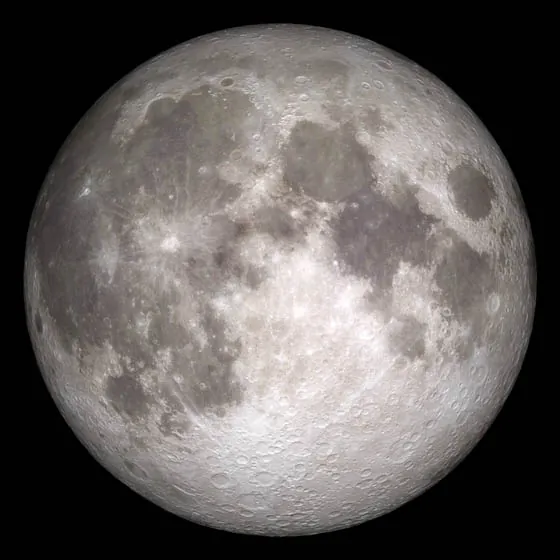
The Moon is tidally locked — it rotates on its axis in exactly the time it takes to orbit Earth, so the same “near side” always faces us. Its surface is divided between the dark, lava-filled lowland “maria” (Latin for seas) and the bright, heavily cratered “highlands.” Water ice has been confirmed in permanently shadowed craters at both poles by missions including LCROSS, Chandrayaan-1, and LRO.
The Moon is the only world beyond Earth upon which humans have walked. Six Apollo missions landed astronauts there between July 1969 (Apollo 11) and December 1972 (Apollo 17), returning 382 kg of samples. NASA’s Artemis program aims to return humans to the Moon in the mid-2020s, while China’s CNSA, India’s ISRO, Japan’s JAXA, Russia’s Roscosmos and multiple commercial operators are running robotic missions and planning future bases.
Physical Properties
Atmosphere Composition
- Effectively none Surface-boundary exosphere of helium, neon, hydrogen, argon at ~10u207bu00b9u2075 bar
Orbit
Missions to Moon
35 spacecraft tracked on Space Launch Live.
Gallery
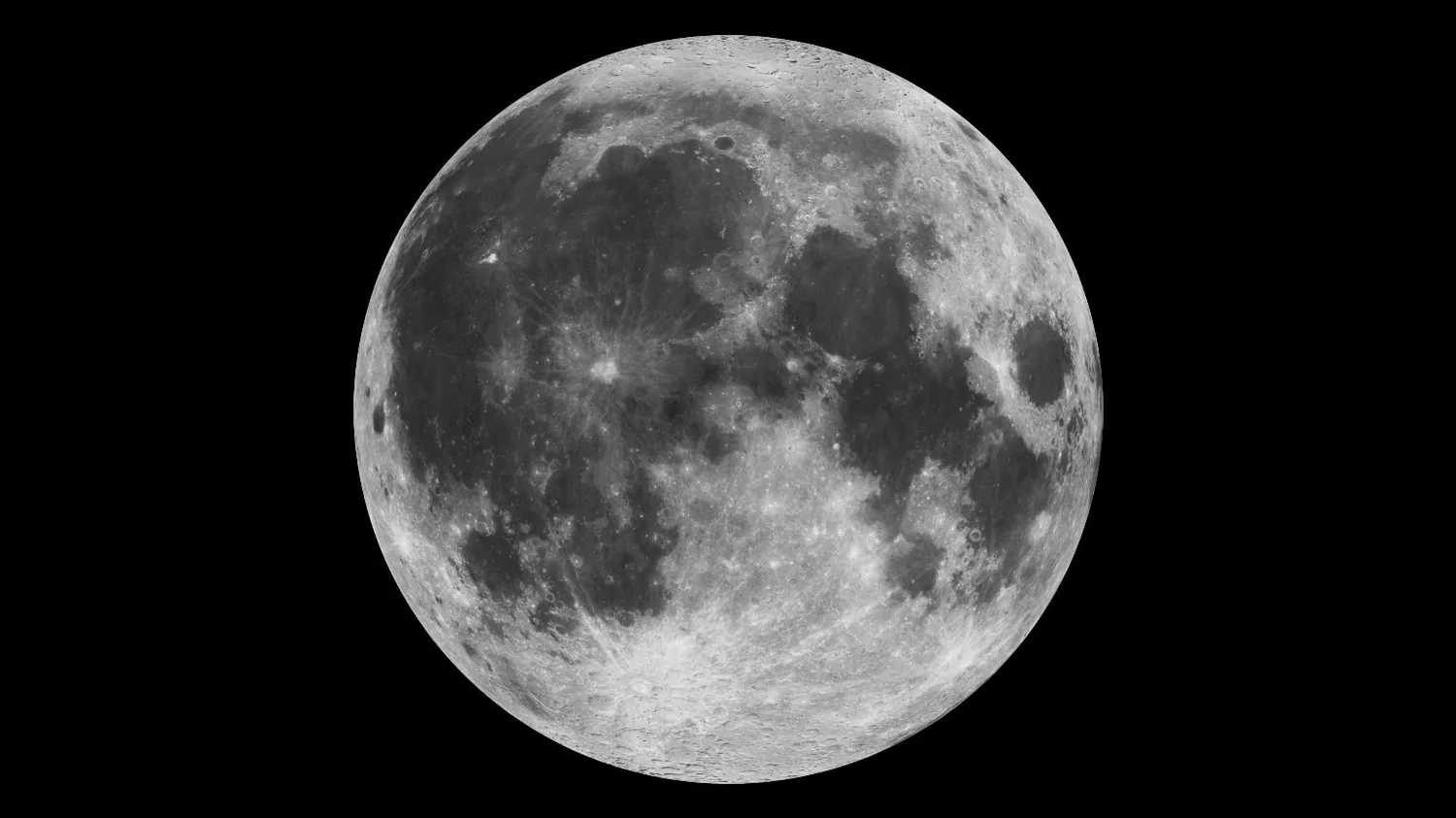
Hand-picked mission imagery of Moon sourced from NASA and partner archives. Click any photo for full resolution and source attribution.
Imagery on this page is provided by the original mission teams. Full attribution terms: Image Rights & Credits.
Sources & Further Reading
- NASA — official mission / factsheet page
- NASA JPL — orbital data and imaging
- Wikipedia — extensive cross-referenced article
- NASA Moon Fact Sheet (NSSDC)
- Lunar Reconnaissance Orbiter (LRO)
- NASA Artemis
- Apollo Program
Numerical values (radius, mass, orbital elements, temperatures) are drawn from NASA NSSDC Planetary Fact Sheets, JPL Horizons, and the JPL Small-Body Database. Last refreshed: 2026-06-08 01:37:01.