

About Hale-Bopp
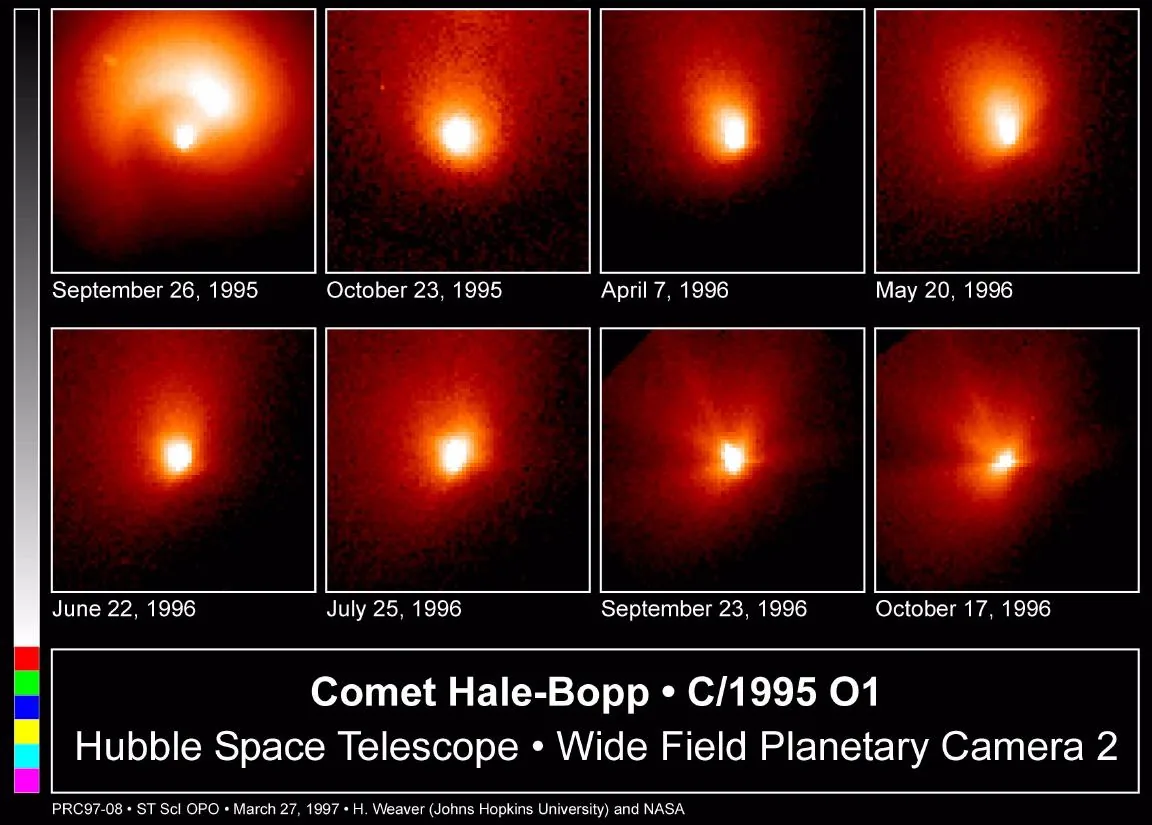
C/1995 O1 (Hale-Bopp), discovered independently by Alan Hale and Thomas Bopp on 23 July 1995, became one of the most spectacular comets of the 20th century. It was visible to the naked eye for a record 18 months — from May 1996 to December 1997 — and outshone every star except Sirius in the spring of 1997. Its nucleus, estimated at 60 km across, is among the largest known.
Physical Properties
Orbit
Gallery
Hand-picked mission imagery of Hale-Bopp sourced from NASA and partner archives. Click any photo for full resolution and source attribution.
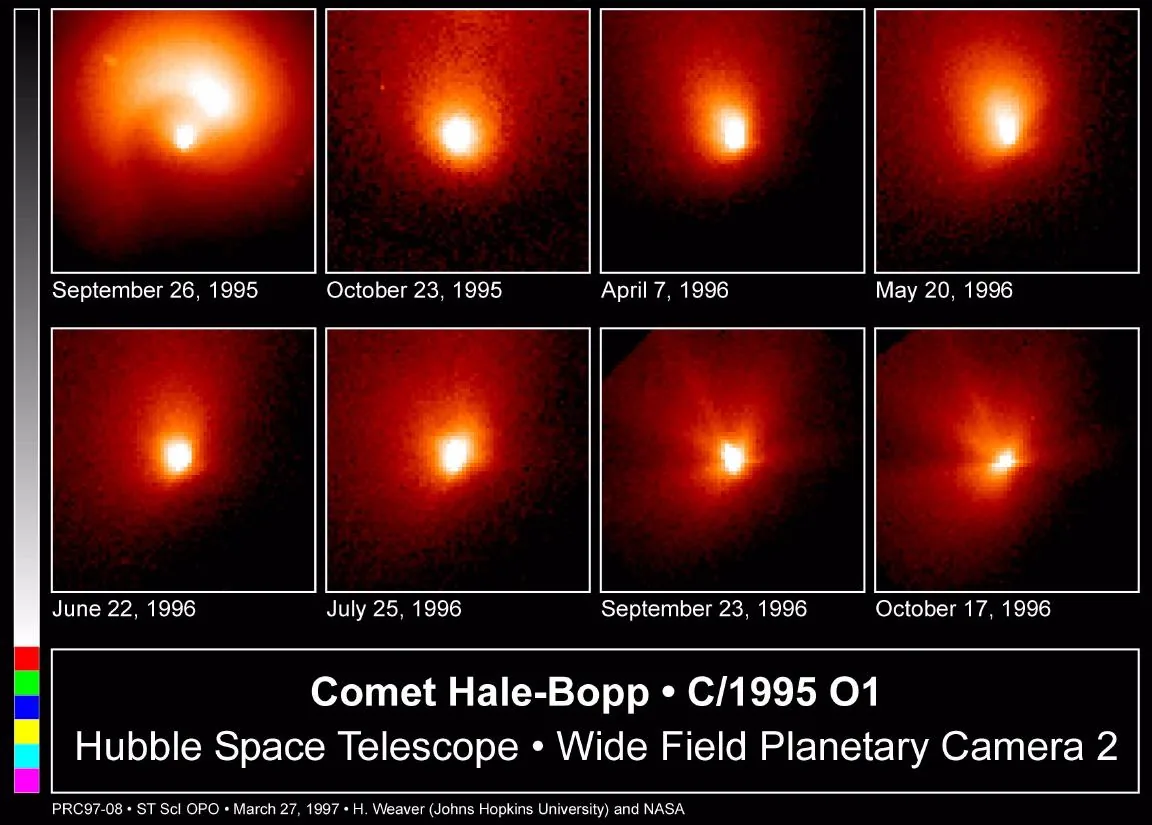
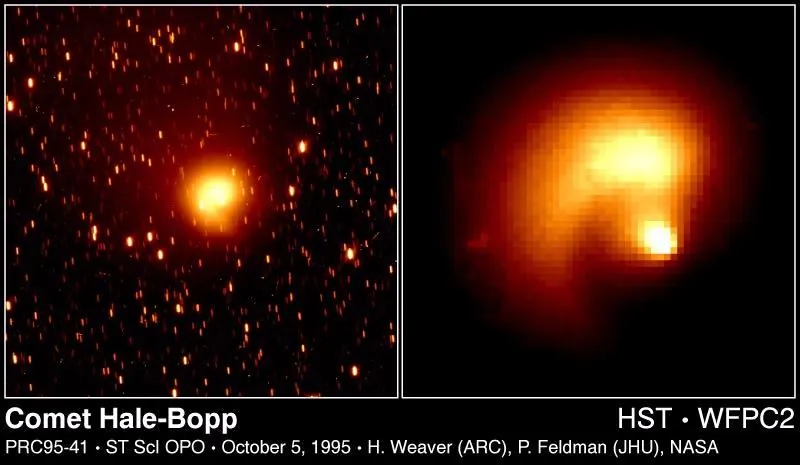
Imagery on this page is provided by the original mission teams. Full attribution terms: Image Rights & Credits.
Sources & Further Reading
Numerical values (radius, mass, orbital elements, temperatures) are drawn from NASA NSSDC Planetary Fact Sheets, JPL Horizons, and the JPL Small-Body Database. Last refreshed: 2026-06-08 01:37:02.