

About Halley’s Comet
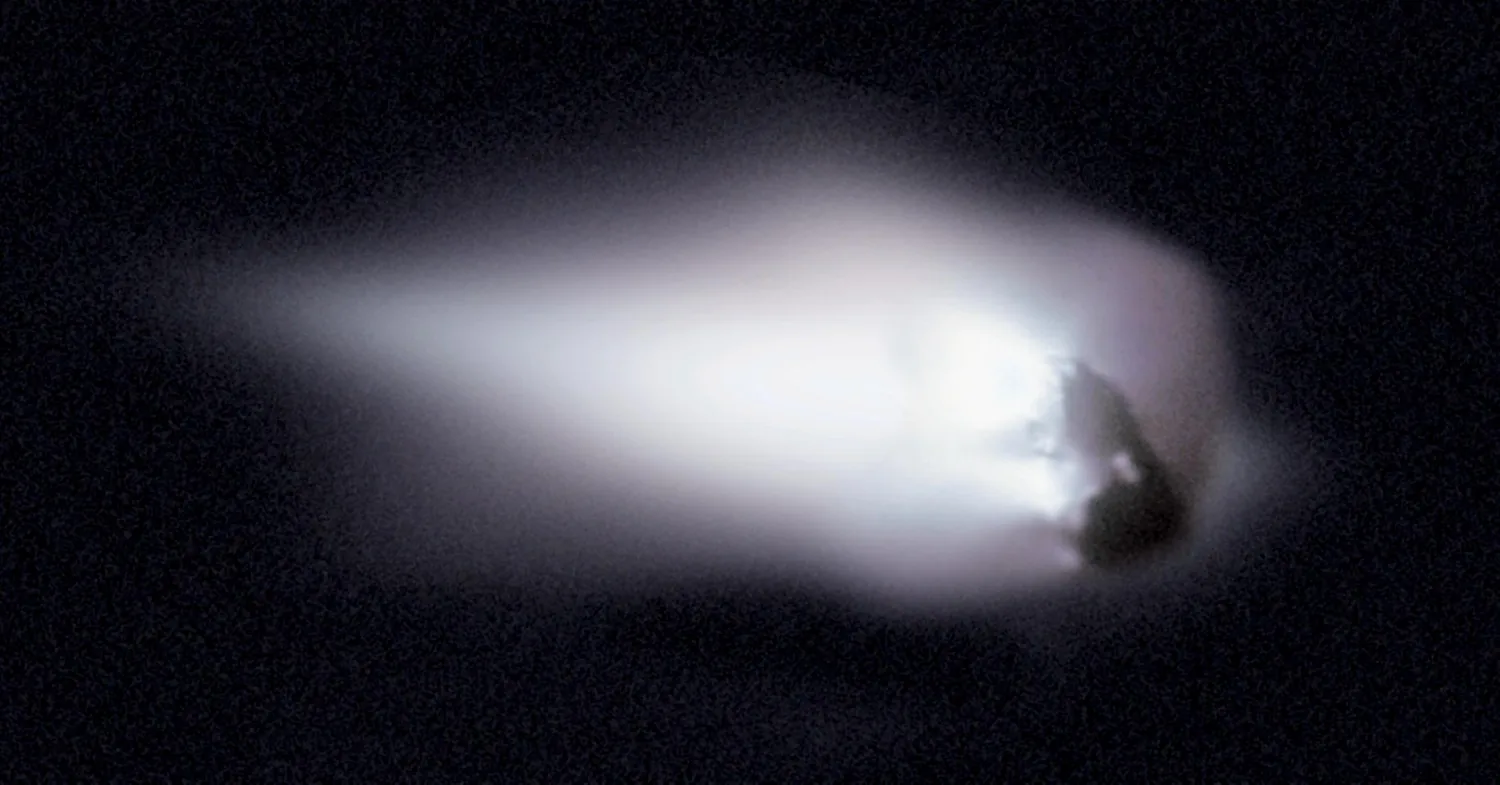
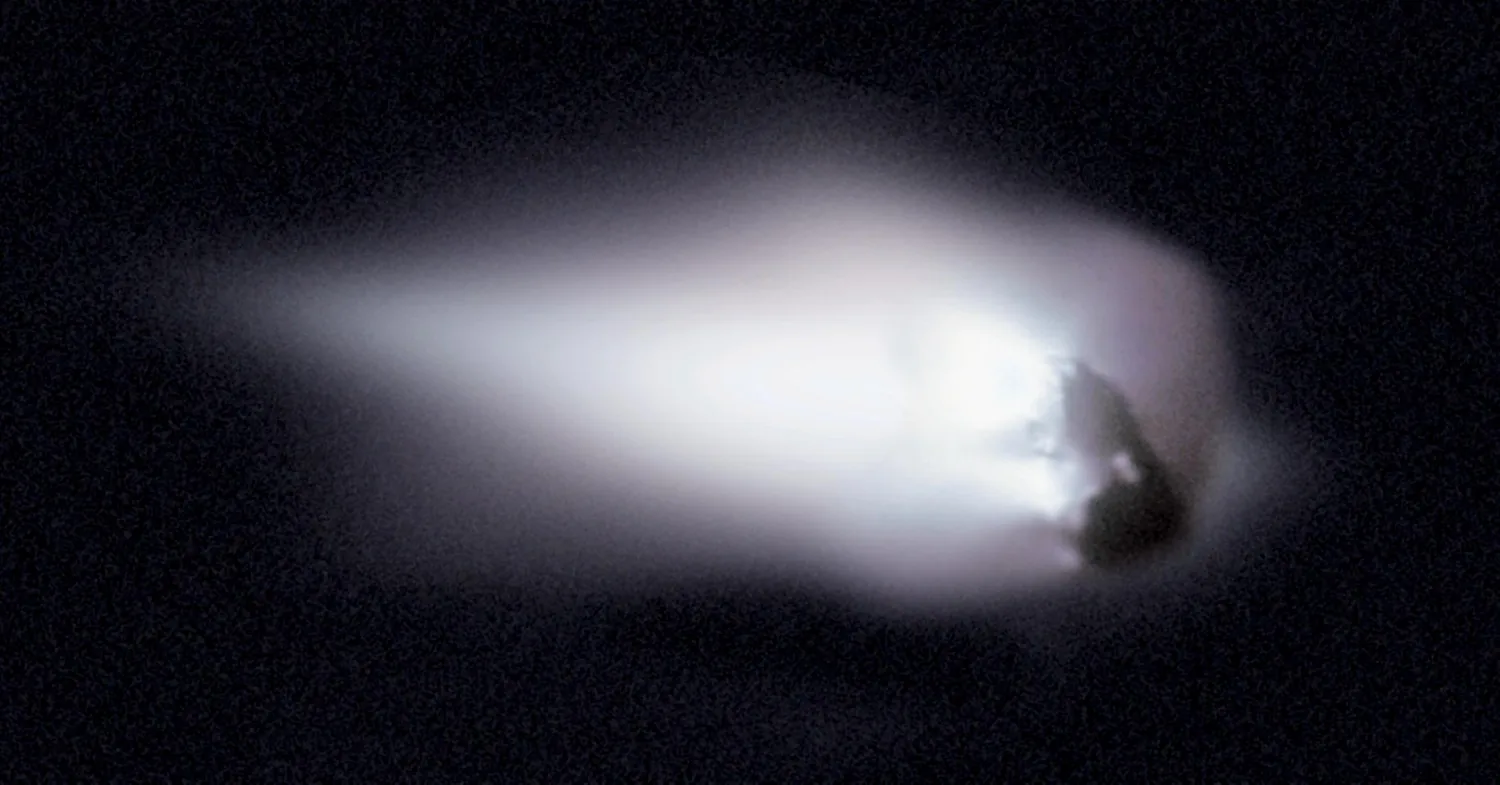
1P/Halley is the most famous comet, observed by civilizations since at least 240 BCE and the first object ever recognized as a periodic comet. English astronomer Edmond Halley predicted in 1705 that the comets seen in 1531, 1607 and 1682 were the same object returning every ~76 years, and its recovery in 1758 (16 years after his death) confirmed the prediction. Halley was the first comet to be imaged up close: during its 1986 apparition, the Soviet Vega 1 & 2, Japanese Sakigake & Suisei, and ESA’s Giotto all flew past the nucleus. Giotto passed within 596 km and revealed a dark, 15 × 8 × 8 km potato-shaped nucleus emitting jets of gas and dust on the sunward side.
Physical Properties
Orbit
Gallery
Hand-picked mission imagery of Halley’s Comet sourced from NASA and partner archives. Click any photo for full resolution and source attribution.
Imagery on this page is provided by the original mission teams. Full attribution terms: Image Rights & Credits.
Sources & Further Reading
- NASA — official mission / factsheet page
- Wikipedia — extensive cross-referenced article
- NASA u2014 1P/Halley
- ESA Giotto Mission
Numerical values (radius, mass, orbital elements, temperatures) are drawn from NASA NSSDC Planetary Fact Sheets, JPL Horizons, and the JPL Small-Body Database. Last refreshed: 2026-06-08 01:37:02.