

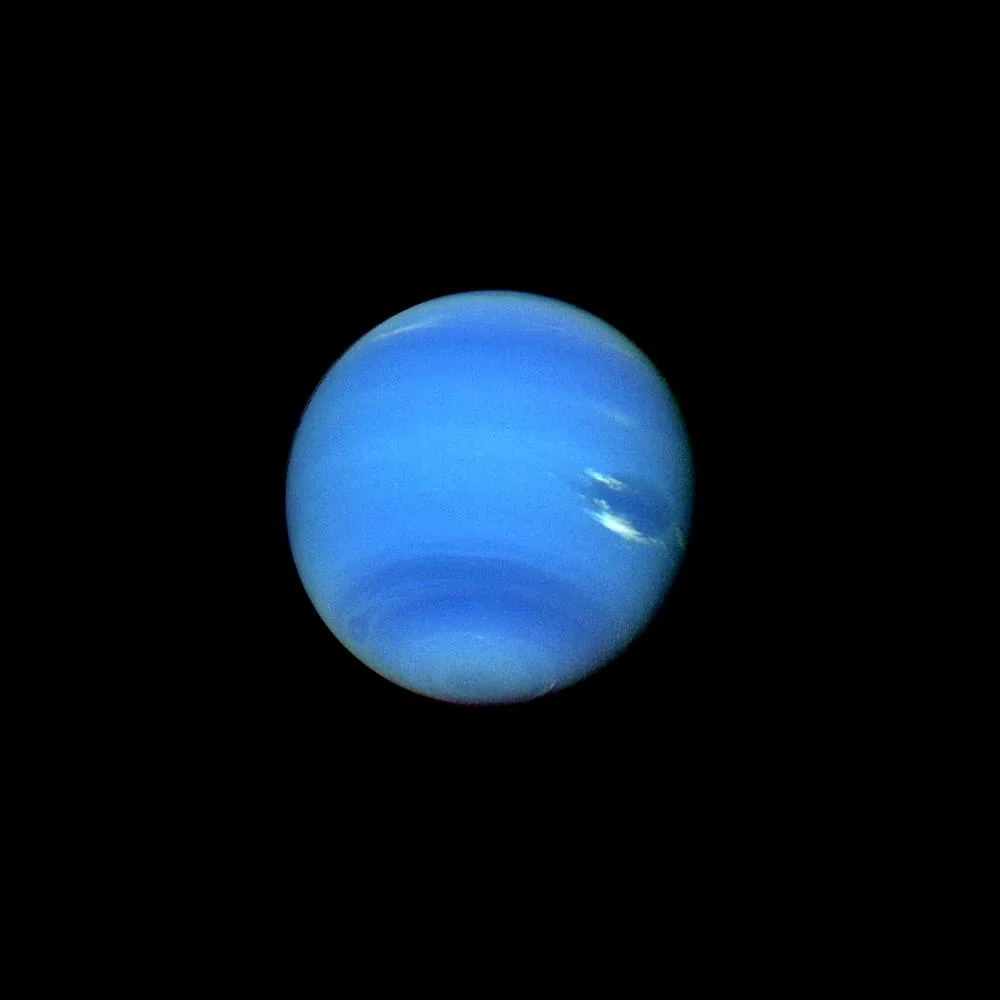
About Neptune
Neptune is the eighth and farthest planet from the Sun in our Solar System. It was the first planet to be located by mathematical prediction: discrepancies in the observed motion of Uranus led Urbain Le Verrier to predict its existence and position; Johann Galle and Heinrich d’Arrest confirmed it within 1° of the predicted location on the night of 23 September 1846.
Like Uranus, Neptune is an ice giant — a dense hot fluid of water, methane, and ammonia surrounds a small rocky core, with a hydrogen-helium atmosphere above. Neptune’s atmosphere, however, is notably more dynamic than Uranus’s: supersonic jets and dark, persistent storms like the “Great Dark Spot” observed by Voyager 2 in 1989 (and later, smaller versions observed by Hubble) mark its visible cloud deck.
Neptune has 16 known moons and 5 rings. Its largest moon, Triton (2,710 km diameter), is unique among large moons in orbiting retrograde — strong evidence that Triton is a captured Kuiper Belt object. Voyager 2 observed nitrogen geysers actively erupting on Triton’s surface in 1989. NASA’s 2023 Planetary Science Decadal Survey identified Neptune/Triton exploration as a high-priority mission concept.
Physical Properties
Atmosphere Composition
- Hydrogen (Hu2082) 80%
- Helium 19%
- Methane (CHu2084) 1.5%
- HD, Ethane trace
Orbit
Ring System
Five known rings (Galle, Le Verrier, Lassell, Arago, Adams) — the outermost hosting three prominent arcs of clumped material called Liberté, Égalité, and Fraternité.
Notable Moons
Missions to Neptune
1 spacecraft tracked on Space Launch Live.
Gallery
Hand-picked mission imagery of Neptune sourced from NASA and partner archives. Click any photo for full resolution and source attribution.
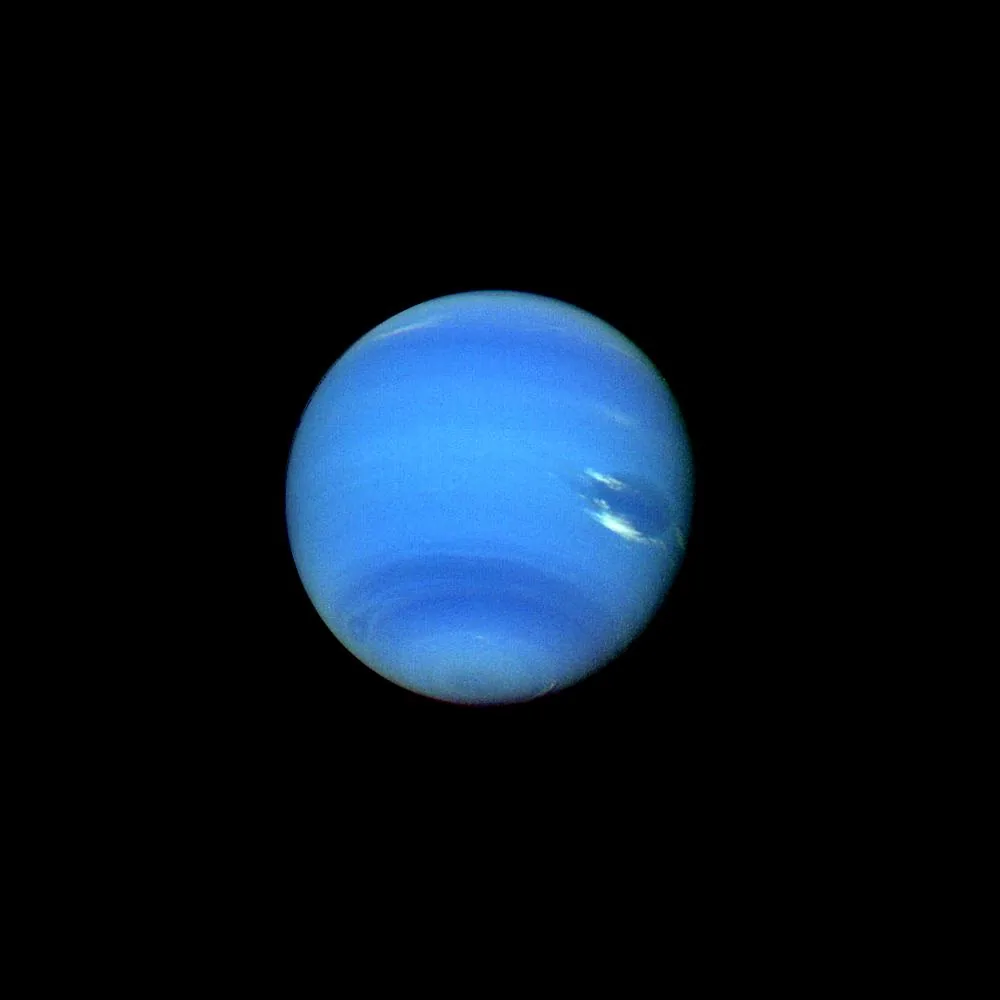
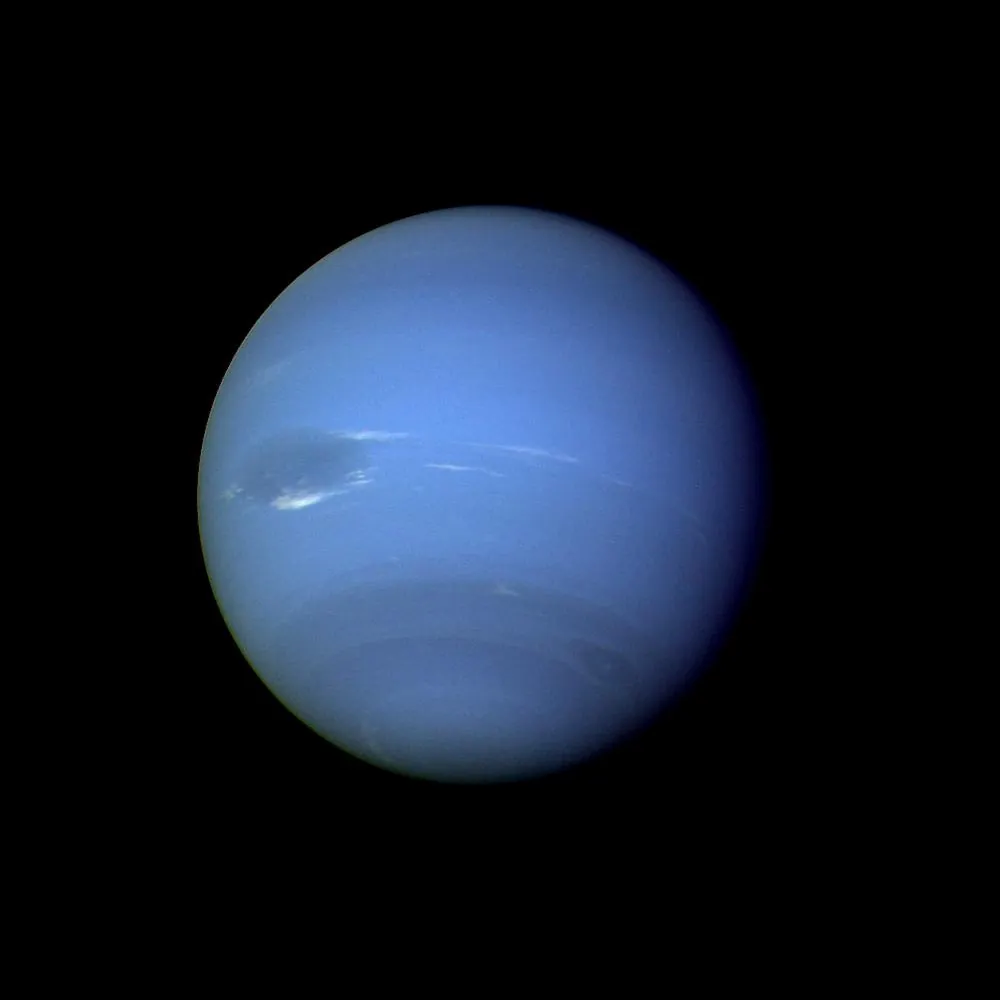
Imagery on this page is provided by the original mission teams. Full attribution terms: Image Rights & Credits.
Sources & Further Reading
- NASA — official mission / factsheet page
- NASA JPL — orbital data and imaging
- Wikipedia — extensive cross-referenced article
- NASA Neptune Fact Sheet (NSSDC)
- NASA u2014 Neptune
- Voyager 2 at Neptune
Numerical values (radius, mass, orbital elements, temperatures) are drawn from NASA NSSDC Planetary Fact Sheets, JPL Horizons, and the JPL Small-Body Database. Last refreshed: 2026-06-08 01:37:01.