

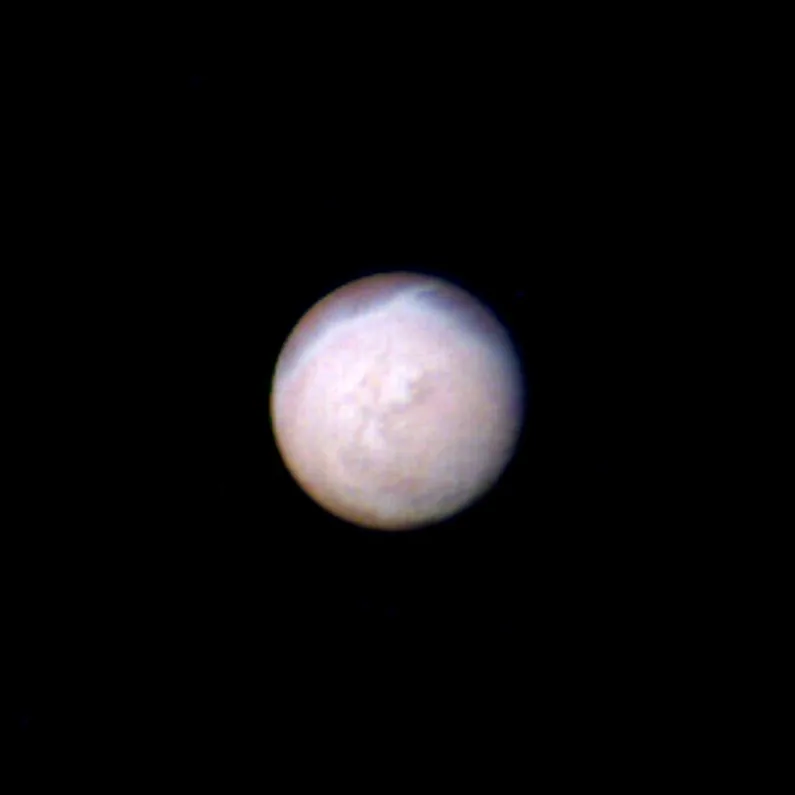
About Triton
Triton is the largest moon of Neptune and a body unlike any other large moon in the Solar System. It orbits Neptune in a retrograde direction on a highly inclined orbit — the only large moon to do so — and it has a surface and composition almost indistinguishable from the dwarf planet Pluto. Together these facts strongly imply that Triton formed in the Kuiper Belt and was captured by Neptune early in the Solar System’s history, almost certainly disrupting Neptune’s original moon system in the process.
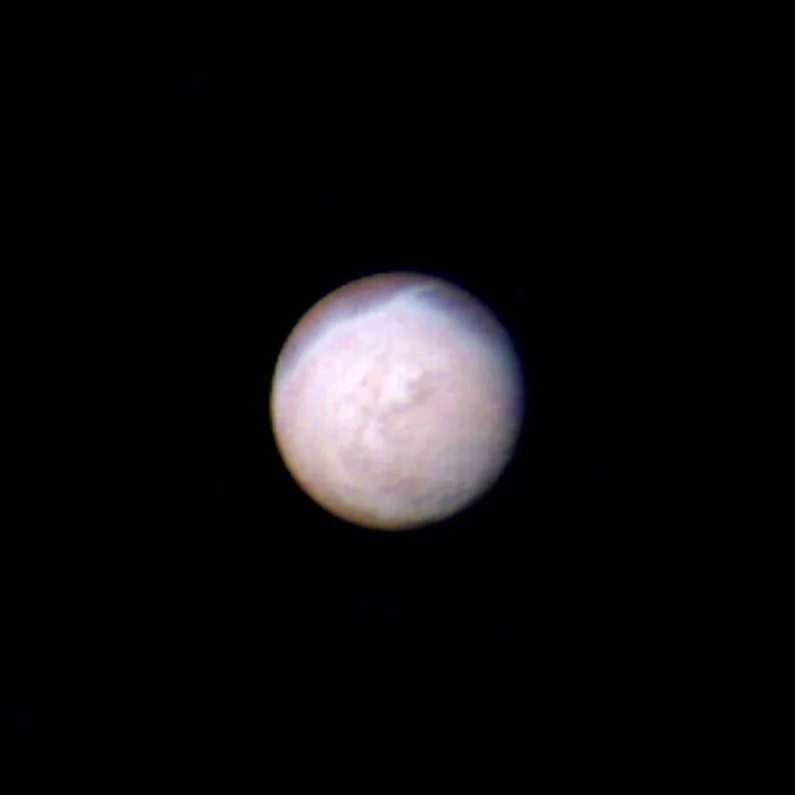
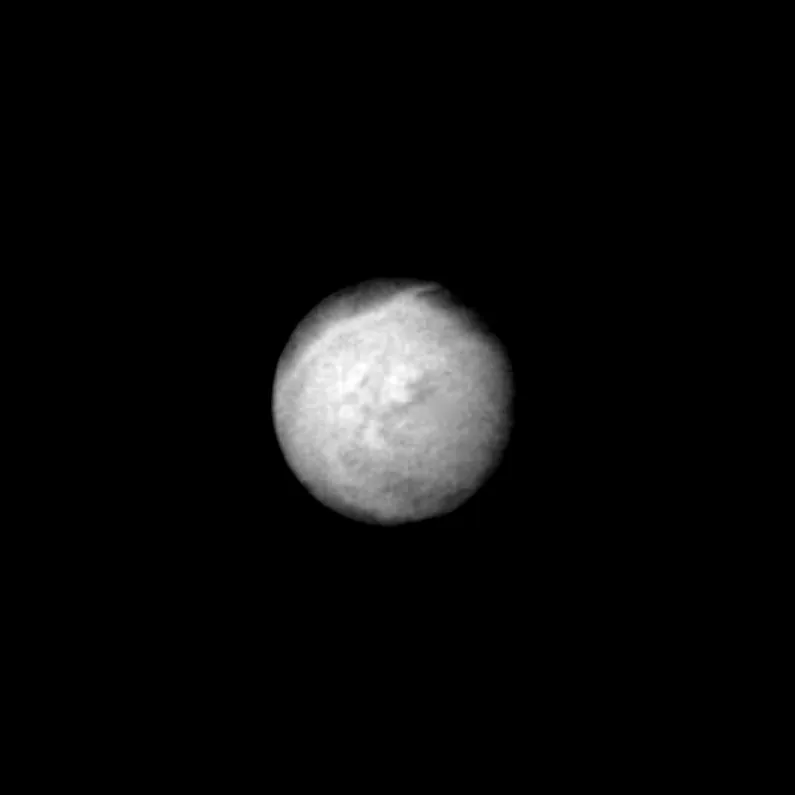
Triton’s surface, imaged up-close only by Voyager 2 in August 1989, shows nitrogen-ice plains, “cantaloupe terrain” of hummocky pits, and — spectacularly — active nitrogen geysers erupting 8 km into a tenuous atmosphere. The geysers are driven by seasonal subsurface warming and are one of only four places in the Solar System where active volcanism has been seen in progress (the others being Earth, Io, and Enceladus).
Physical Properties
Atmosphere Composition
- Nitrogen (Nu2082) 99.9%
- Methane trace
Orbit
Gallery
Hand-picked mission imagery of Triton sourced from NASA and partner archives. Click any photo for full resolution and source attribution.
Imagery on this page is provided by the original mission teams. Full attribution terms: Image Rights & Credits.
Sources & Further Reading
- NASA — official mission / factsheet page
- Wikipedia — extensive cross-referenced article
- NASA u2014 Triton
- Voyager 2 at Neptune
Numerical values (radius, mass, orbital elements, temperatures) are drawn from NASA NSSDC Planetary Fact Sheets, JPL Horizons, and the JPL Small-Body Database. Last refreshed: 2026-06-08 01:37:02.