

About Jupiter
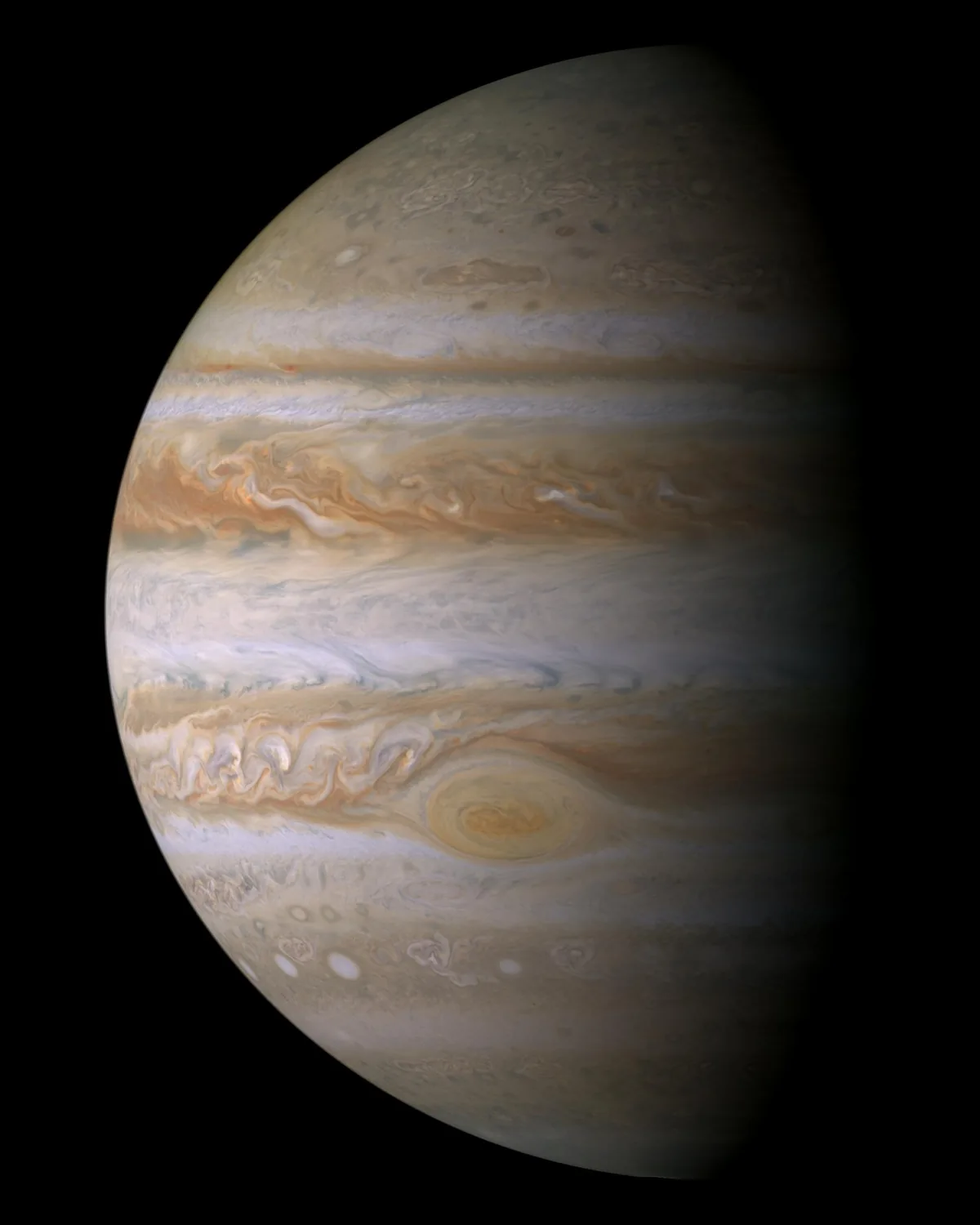
Jupiter is the fifth planet from the Sun and by far the largest — a gas giant with more than twice the combined mass of every other planet in the Solar System. Its composition of roughly 90% hydrogen and 10% helium (by number) mirrors the Sun itself, earning it the informal nickname of a “failed star.”
Jupiter’s atmosphere is organized into dark belts and light zones of east-west jet streams, with embedded vortices — most famously the Great Red Spot, an anticyclonic storm wider than Earth that has persisted for at least 190 years. Beneath the clouds, pressure and temperature rise until hydrogen transitions into a metallic, liquid state; this vast electrically conductive layer drives Jupiter’s enormous magnetic field — 20,000× stronger than Earth’s at the poles.
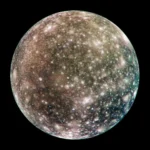
Jupiter’s 95 confirmed moons include the four Galilean satellites — Io, Europa, Ganymede and Callisto — each a world in its own right. Io is the most volcanically active body in the Solar System; Europa hides a global liquid-water ocean beneath its ice crust; Ganymede is larger than Mercury; Callisto is the most heavily cratered body known. The Juno spacecraft (2016-present) continues to map Jupiter’s gravity, magnetic field, and deep atmosphere; ESA’s JUICE (arriving 2031) and NASA’s Europa Clipper (arriving 2030) will follow up on its icy moons.
Physical Properties
Atmosphere Composition
- Hydrogen (Hu2082) 89.8%
- Helium 10.2%
- Methane, Ammonia, Hydrogen Deuteride, Ethane, Water trace
Orbit
Ring System
Faint dust ring system — halo ring, main ring, Amalthea gossamer ring, Thebe gossamer ring — composed of dust ejected by small inner moons.
Notable Moons
Missions to Jupiter
10 spacecraft tracked on Space Launch Live.
Gallery
Hand-picked mission imagery of Jupiter sourced from NASA and partner archives. Click any photo for full resolution and source attribution.
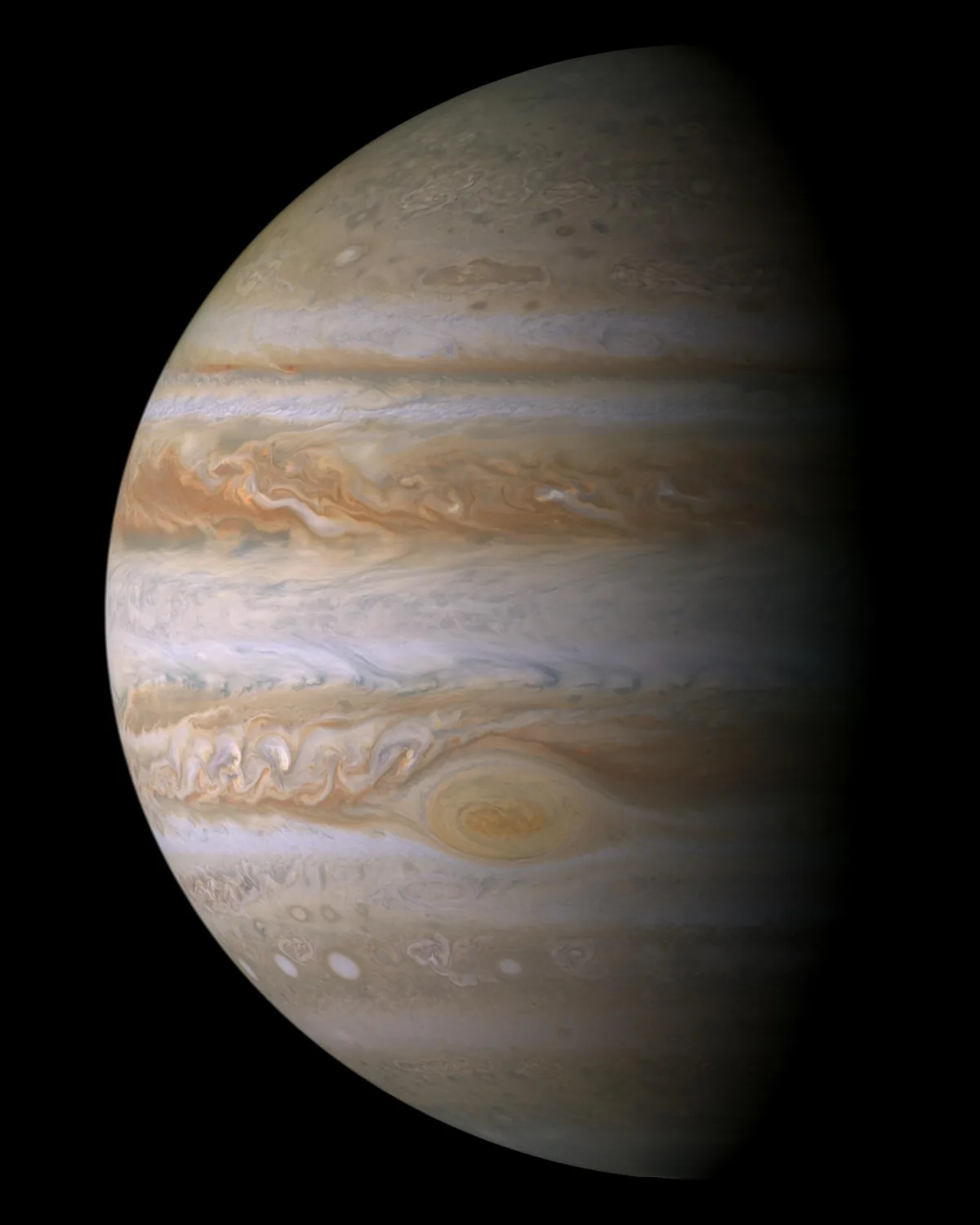
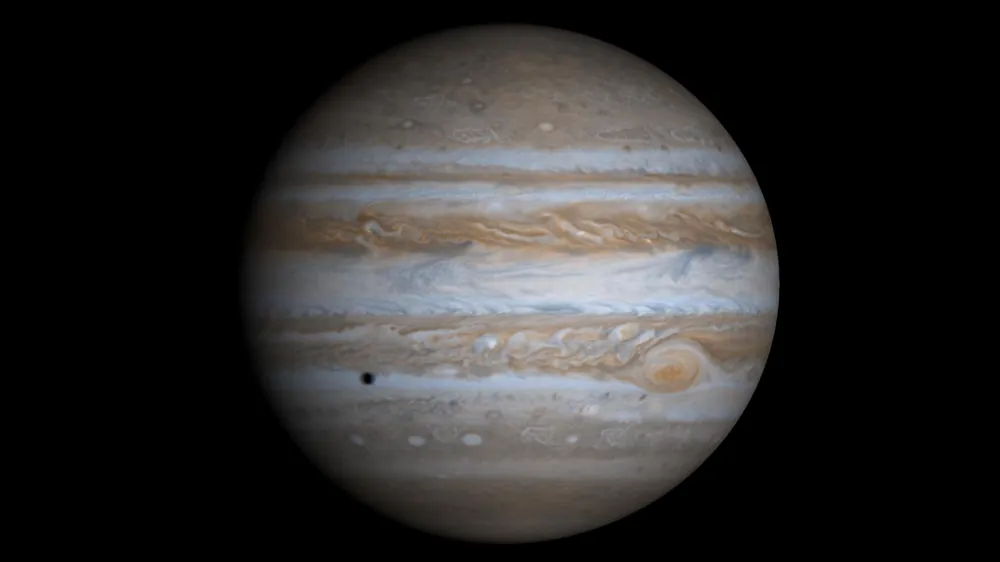
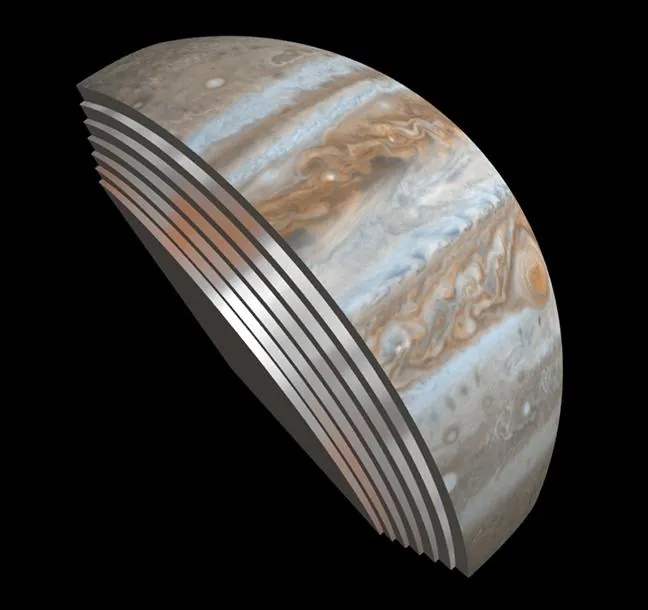
Imagery on this page is provided by the original mission teams. Full attribution terms: Image Rights & Credits.
Sources & Further Reading
- NASA — official mission / factsheet page
- NASA JPL — orbital data and imaging
- Wikipedia — extensive cross-referenced article
- NASA Jupiter Fact Sheet (NSSDC)
- NASA Juno Mission
- ESA JUICE Mission
- NASA Europa Clipper
Numerical values (radius, mass, orbital elements, temperatures) are drawn from NASA NSSDC Planetary Fact Sheets, JPL Horizons, and the JPL Small-Body Database. Last refreshed: 2026-06-08 01:37:01.