

About Io
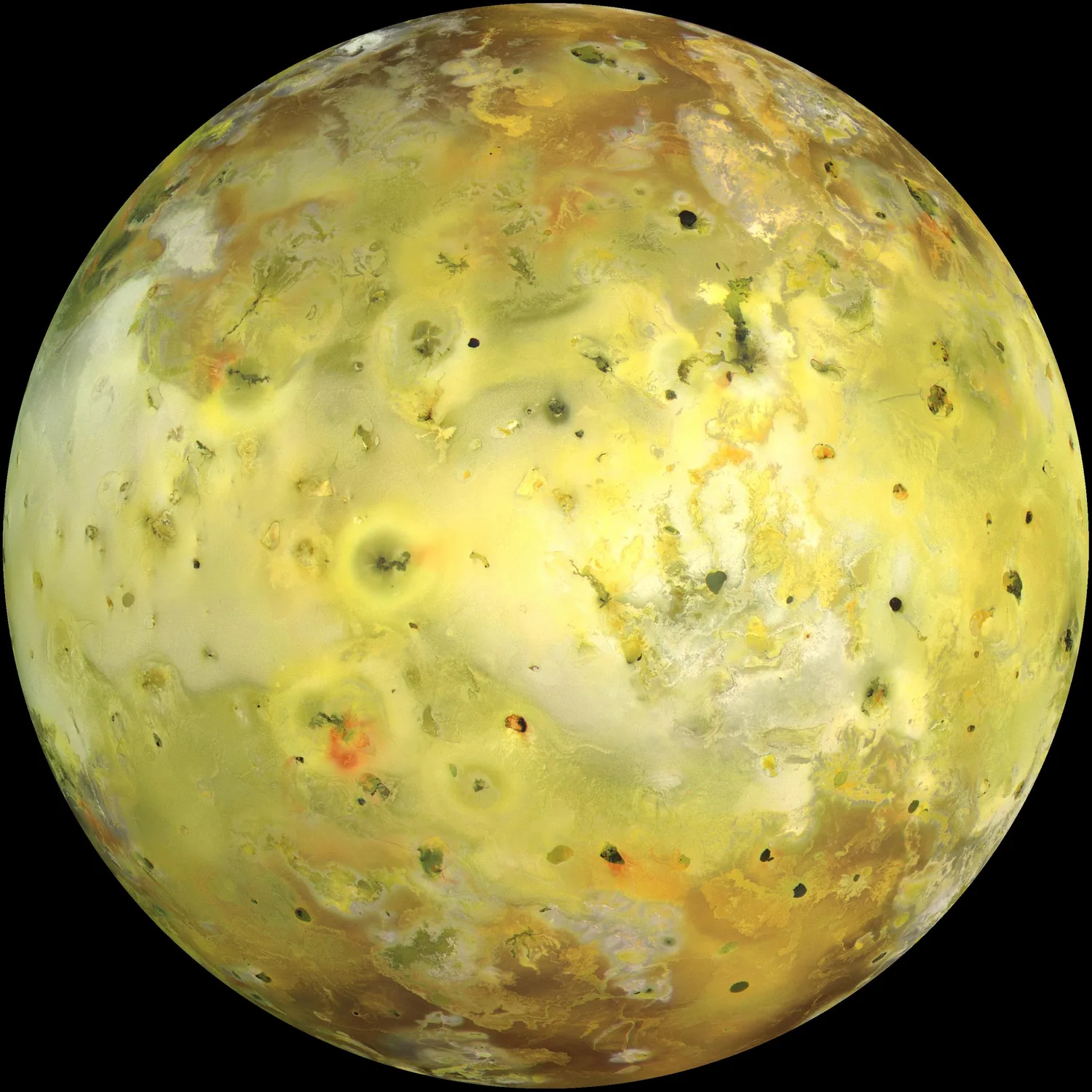
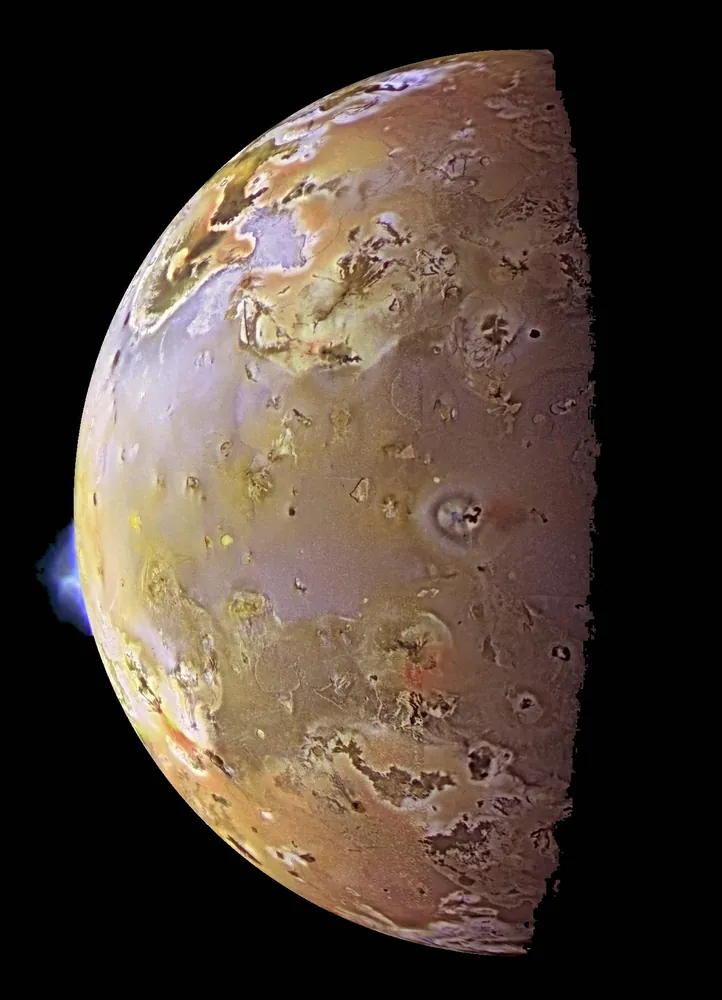
Io is the innermost of Jupiter’s four Galilean moons and the most volcanically active body in the Solar System. More than 400 active volcanoes erupt lava and sulfur-compound plumes up to 500 km above Io’s surface — so prolifically that Io’s entire surface is resurfaced every ~1 million years, erasing impact craters.
This incredible volcanism is powered by tidal heating. Io is locked in a 4:2:1 Laplace orbital resonance with Europa and Ganymede; its slightly eccentric orbit means Jupiter’s immense gravity flexes Io by up to 100 m in each orbit, dissipating enough heat to keep the interior molten.
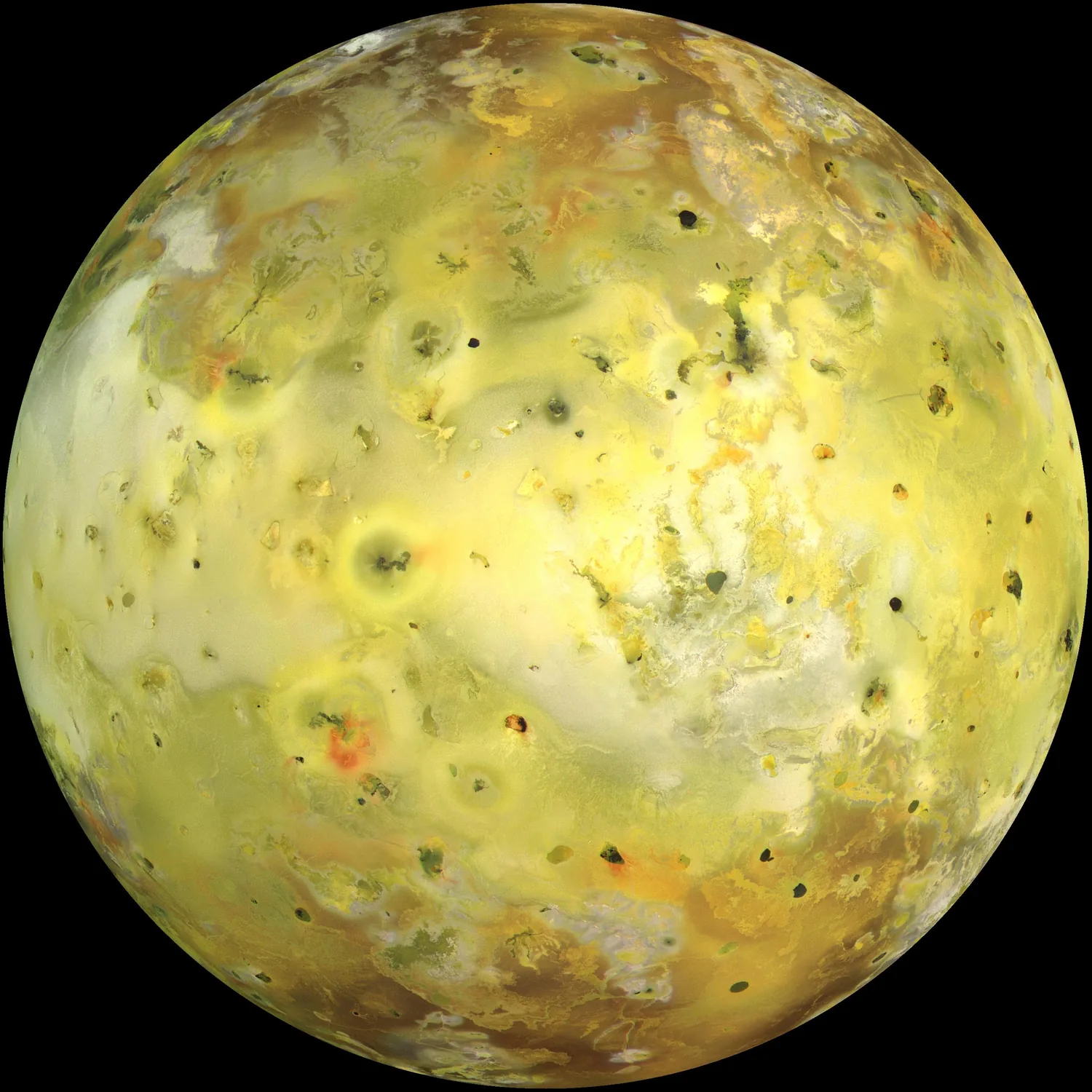
Io’s surface is painted in striking yellows, oranges, reds, whites and blacks from sulfur and sulfur-dioxide frosts deposited by volcanic plumes. A thin, patchy SO₂ atmosphere collapses onto the surface as frost on Io’s night side. Io was first imaged up close by Voyager 1 in March 1979 (which discovered its active volcanism), and has since been studied by Galileo, Cassini, New Horizons, and Juno — Juno continues to make close flybys through the mid-2020s.
Physical Properties
Atmosphere Composition
- Sulfur Dioxide (SOu2082) 90%
- Sulfur monoxide, Sodium chloride, Atomic sulfur/oxygen minor
Orbit
Missions to Io
2 spacecraft tracked on Space Launch Live.
Gallery
Hand-picked mission imagery of Io sourced from NASA and partner archives. Click any photo for full resolution and source attribution.
Imagery on this page is provided by the original mission teams. Full attribution terms: Image Rights & Credits.
Sources & Further Reading
- NASA — official mission / factsheet page
- Wikipedia — extensive cross-referenced article
- NASA u2014 Io
- Juno Mission u2014 Io Observations
Numerical values (radius, mass, orbital elements, temperatures) are drawn from NASA NSSDC Planetary Fact Sheets, JPL Horizons, and the JPL Small-Body Database. Last refreshed: 2026-06-08 01:37:01.