

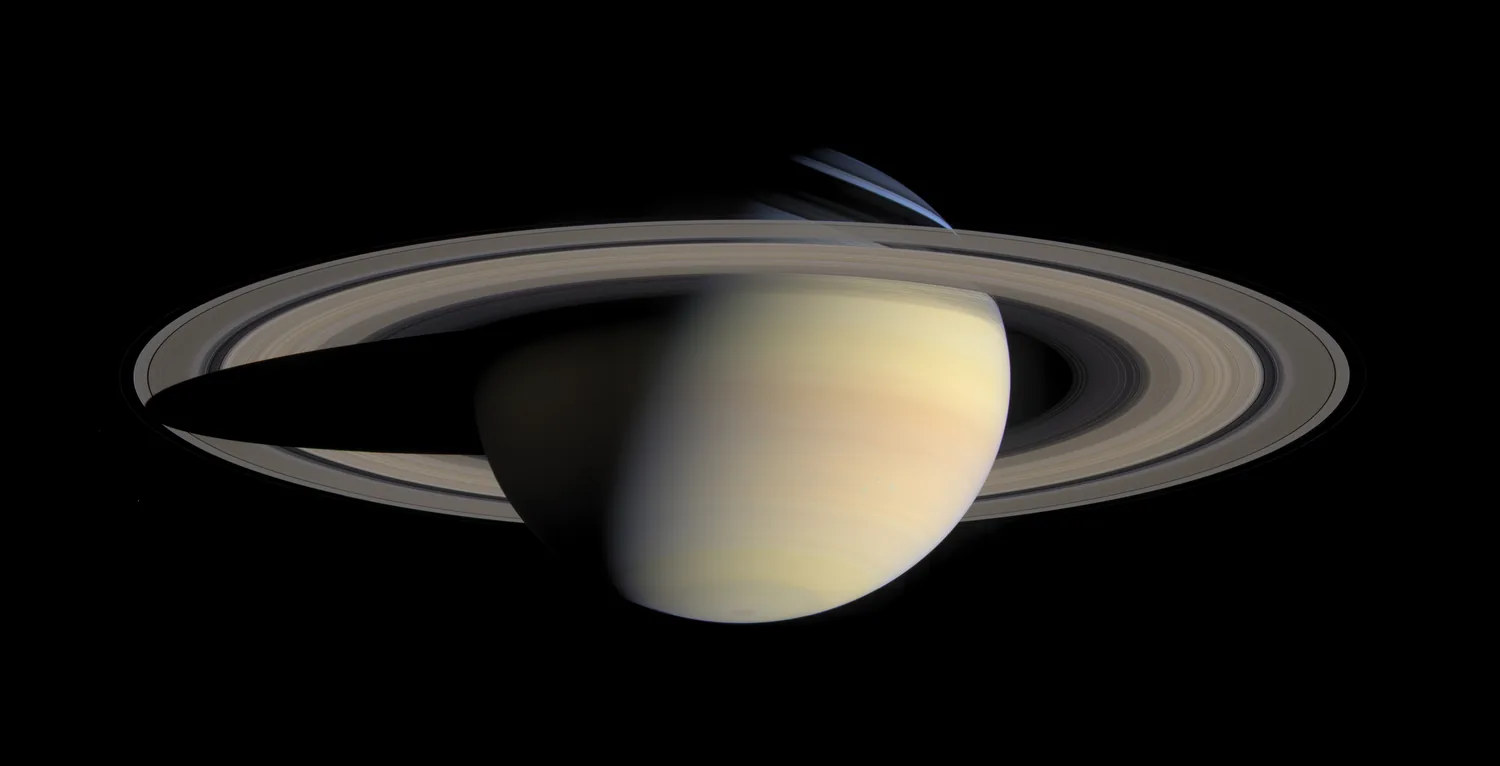
About Saturn
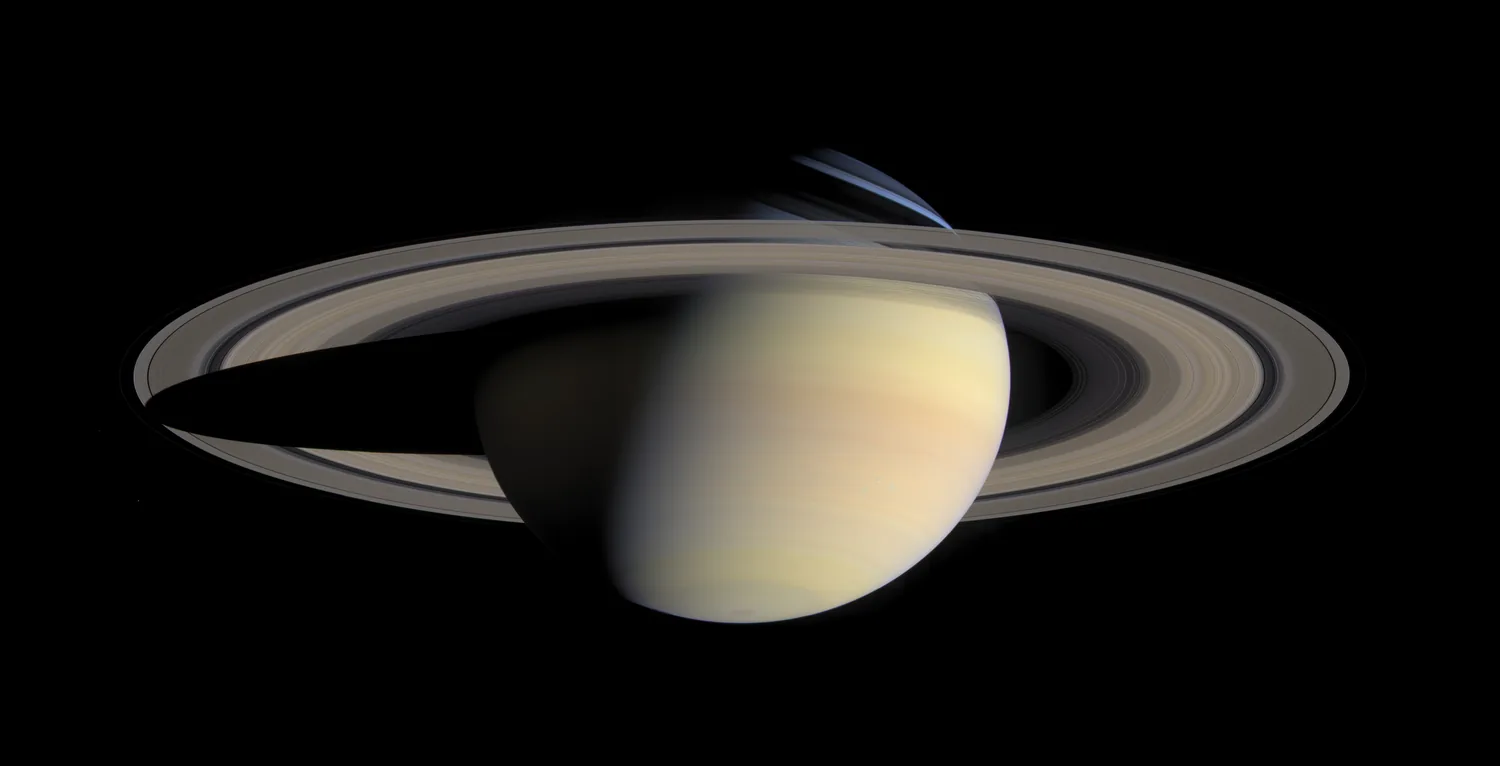
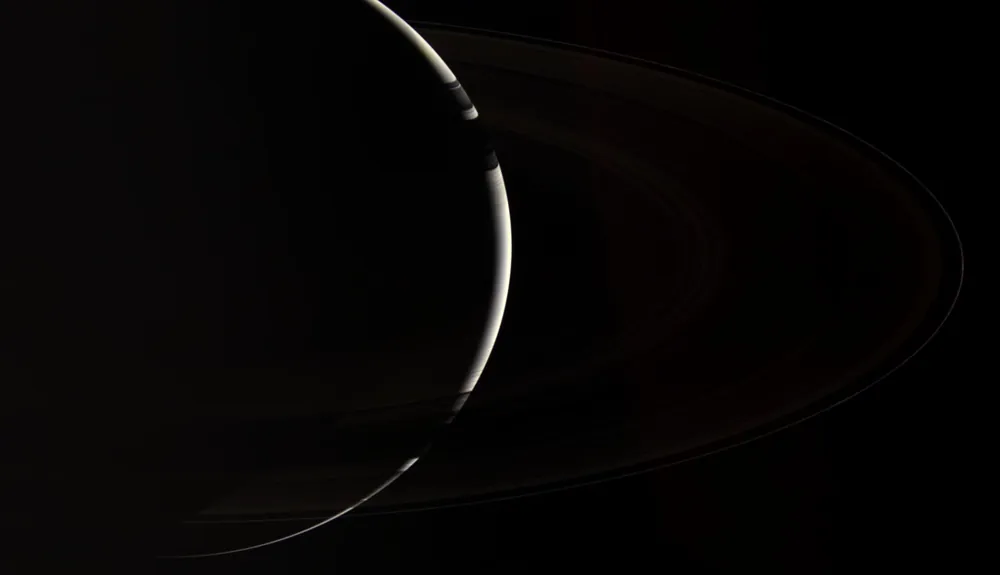
Saturn is the sixth planet from the Sun and the second-largest in the Solar System, another hydrogen-helium gas giant. Its defining feature is its vast ring system — by far the most extensive in the Solar System — composed of trillions of chunks of almost-pure water ice ranging from micrometer-sized dust to house-sized boulders, organized into distinct named rings separated by narrow gaps shaped by small shepherd moons.
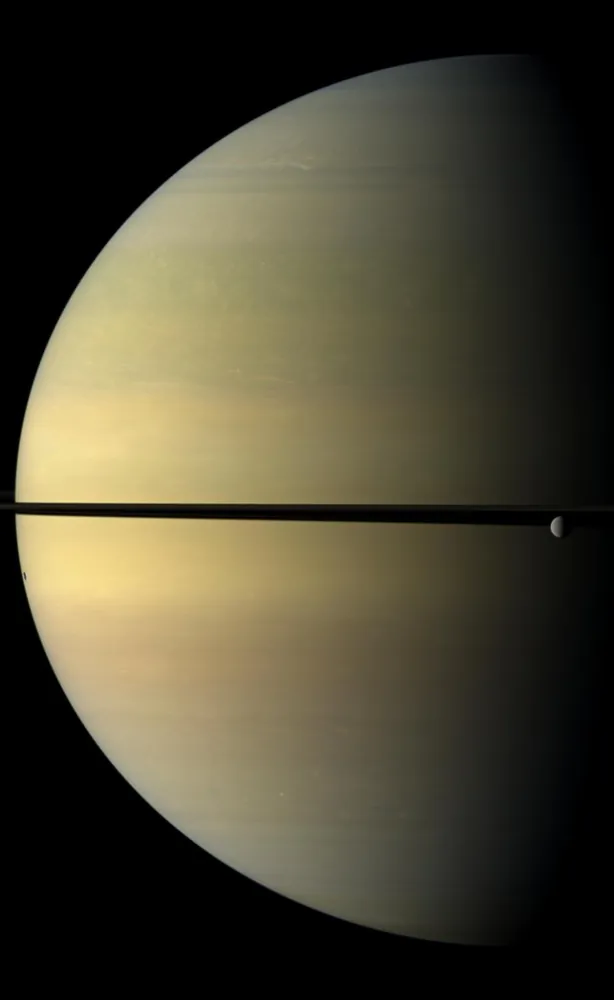
Saturn has the lowest density of any planet in the Solar System (0.687 g/cm³), less than water. Its atmosphere shows subtler banding than Jupiter’s but hosts exotic features such as the hexagonal north-polar vortex — a stable, six-sided jet-stream pattern ~14,500 km across.
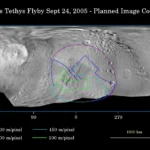
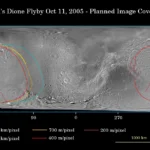
Saturn’s 146 known moons include Titan — the only moon with a substantial atmosphere and the only world other than Earth where liquid rivers, lakes and seas have been observed on the surface (methane and ethane, not water). Enceladus, a small icy moon, erupts plumes of water vapor and ice grains from a subsurface ocean in contact with rocky seafloor — making it a prime target in the search for life. The Cassini-Huygens mission (2004-2017) transformed our understanding of the entire Saturnian system before Cassini’s planned atmospheric entry in September 2017.
Physical Properties
Atmosphere Composition
- Hydrogen (Hu2082) 96.3%
- Helium 3.25%
- Methane, Ammonia, HD, Ethane trace
Orbit
Ring System
Seven main rings (D, C, B, Cassini Division, A, F, G, E) composed of water ice chunks from micrometer to 10 m across, spanning 7,000-280,000 km from the planet's center but averaging only ~10 m thick.
Notable Moons
Missions to Saturn
4 spacecraft tracked on Space Launch Live.
Gallery
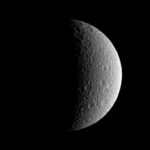
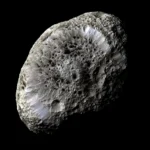
Hand-picked mission imagery of Saturn sourced from NASA and partner archives. Click any photo for full resolution and source attribution.
Imagery on this page is provided by the original mission teams. Full attribution terms: Image Rights & Credits.
Sources & Further Reading
- NASA — official mission / factsheet page
- NASA JPL — orbital data and imaging
- Wikipedia — extensive cross-referenced article
- NASA Saturn Fact Sheet (NSSDC)
- NASA Cassini Mission
- NASA Dragonfly (Titan)
Numerical values (radius, mass, orbital elements, temperatures) are drawn from NASA NSSDC Planetary Fact Sheets, JPL Horizons, and the JPL Small-Body Database. Last refreshed: 2026-06-08 01:37:01.