

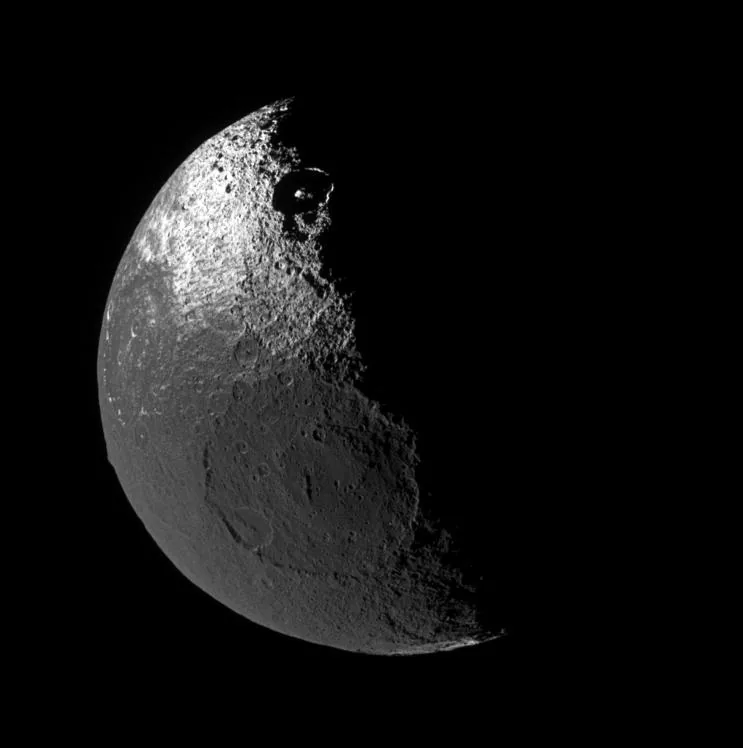
About Iapetus
Iapetus is Saturn’s third-largest moon and perhaps its strangest. Its two hemispheres differ so dramatically in brightness that Giovanni Cassini, who discovered it in 1671, could only see the moon when it was on one side of Saturn. The leading hemisphere (Cassini Regio) is painted a dark reddish-brown by dust blown off the distant retrograde moon Phoebe; the trailing hemisphere is bright water ice. Iapetus also features a mysterious 20-km-tall equatorial ridge that wraps two-thirds of the way around the moon — the tallest relief in the Solar System.
Physical Properties
Orbit
Missions to Iapetus
1 spacecraft tracked on Space Launch Live.
Gallery
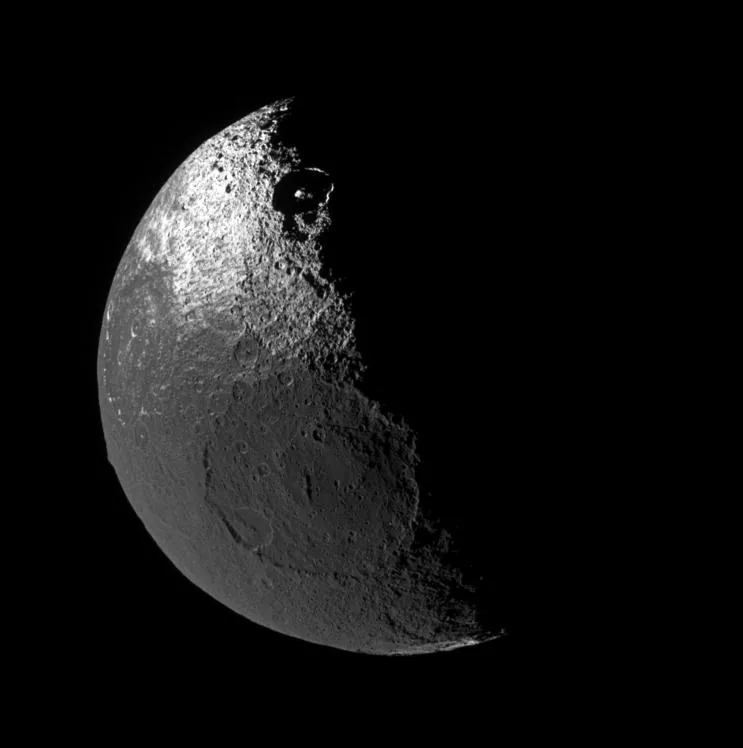
Hand-picked mission imagery of Iapetus sourced from NASA and partner archives. Click any photo for full resolution and source attribution.
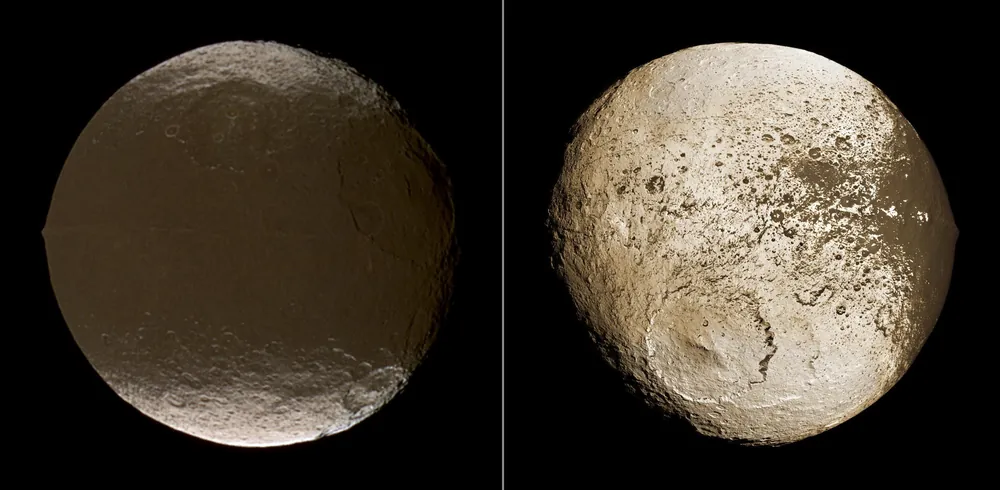
Imagery on this page is provided by the original mission teams. Full attribution terms: Image Rights & Credits.
Sources & Further Reading
- NASA — official mission / factsheet page
- Wikipedia — extensive cross-referenced article
- NASA u2014 Iapetus
Numerical values (radius, mass, orbital elements, temperatures) are drawn from NASA NSSDC Planetary Fact Sheets, JPL Horizons, and the JPL Small-Body Database. Last refreshed: 2026-06-08 01:37:02.