

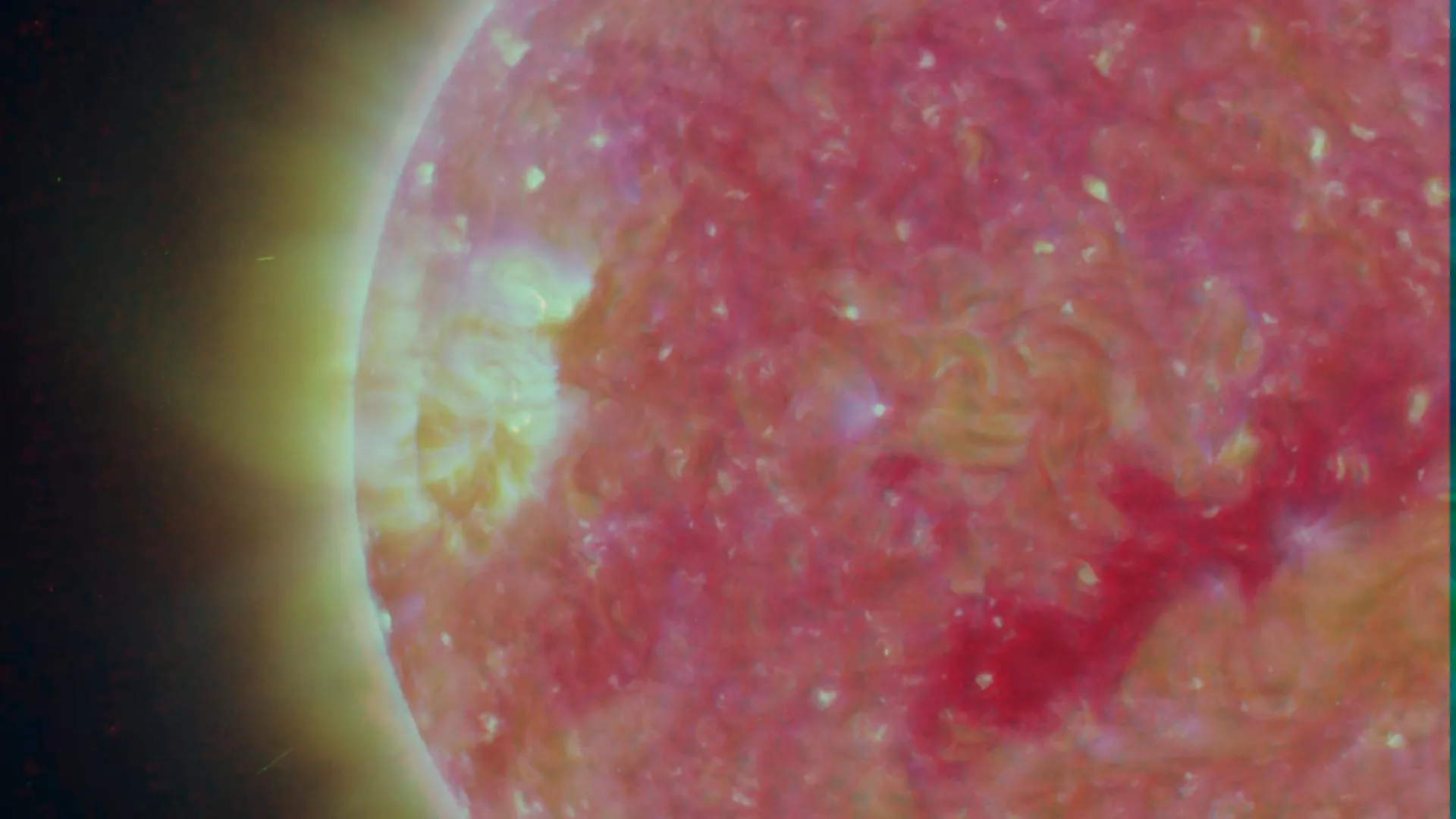
About Sun
The Sun is a G-type main-sequence star (spectral type G2V) that accounts for approximately 99.86% of the total mass of the Solar System. Its gravitational pull holds every planet, moon, asteroid, and comet in orbit. Nuclear fusion of hydrogen into helium in its core produces the energy that warms and lights every world we can observe.
The Sun’s visible surface, the photosphere, has an effective temperature of 5,772 K. Beneath lies the radiative zone and a turbulent convective zone; above are the chromosphere and the multimillion-degree corona — visible during total solar eclipses and mapped in extreme ultraviolet by missions such as SOHO and the Parker Solar Probe.
At an age of approximately 4.603 billion years the Sun is roughly halfway through its main-sequence life. In about 5 billion years its core hydrogen will be exhausted and it will expand into a red giant, eventually shedding its outer layers and leaving behind a white dwarf.
Physical Properties
Atmosphere Composition
- Hydrogen ~73% (mass) / ~91% (number)
- Helium ~25% (mass) / ~8.9% (number)
- Oxygen 0.77%
- Carbon 0.29%
- Iron, Neon, Nitrogen, Silicon, Magnesium, Sulfur trace
Orbit
Missions to Sun
2 spacecraft tracked on Space Launch Live.
Gallery
Hand-picked mission imagery of Sun sourced from NASA and partner archives. Click any photo for full resolution and source attribution.
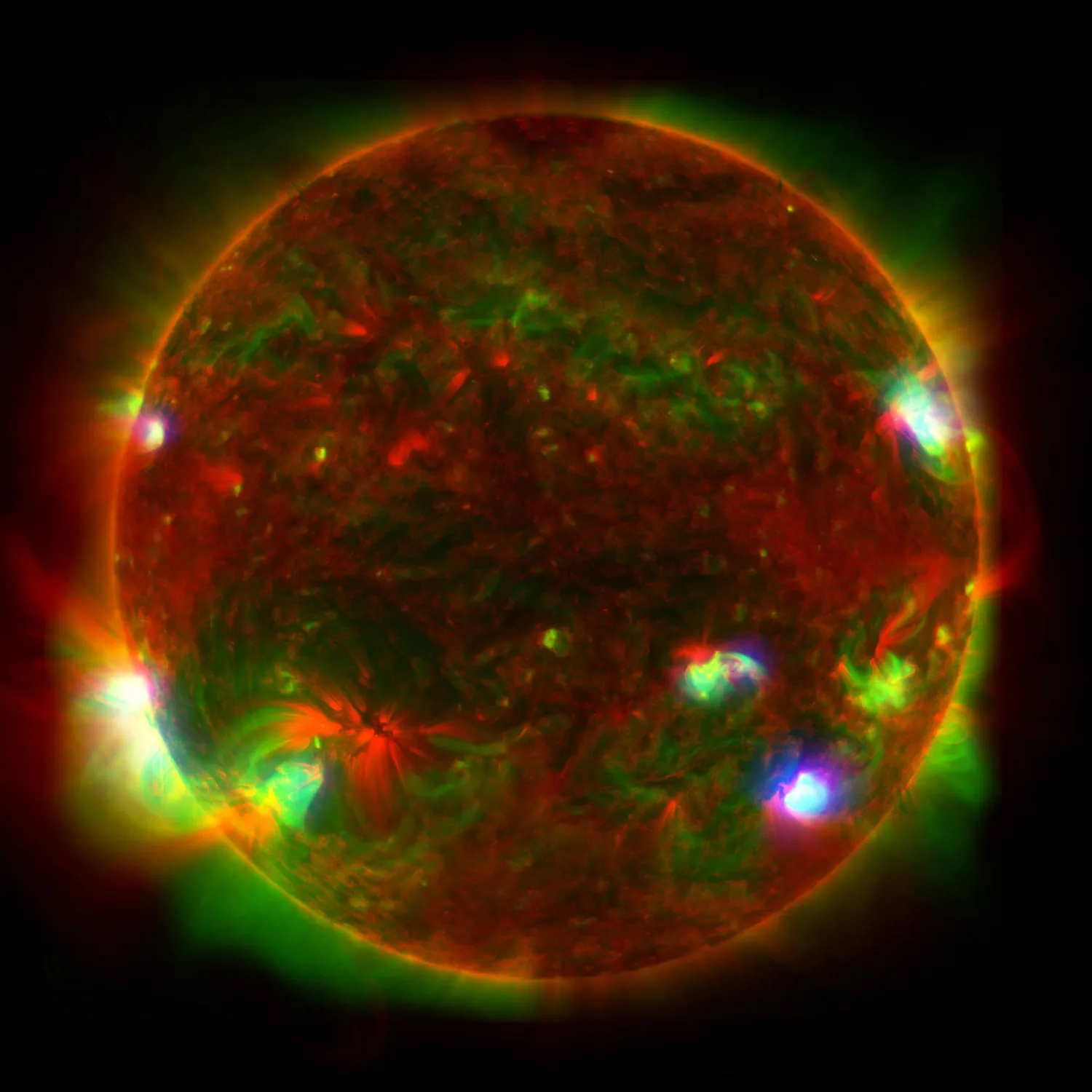
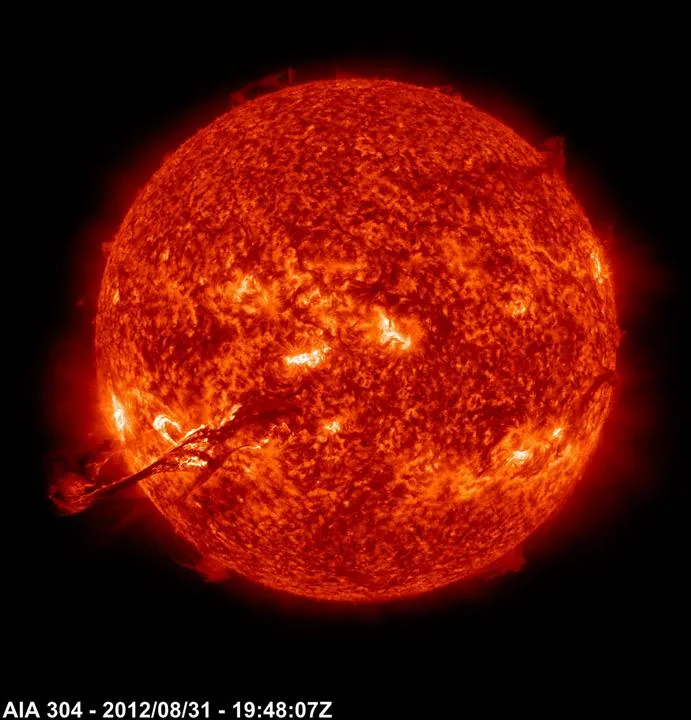
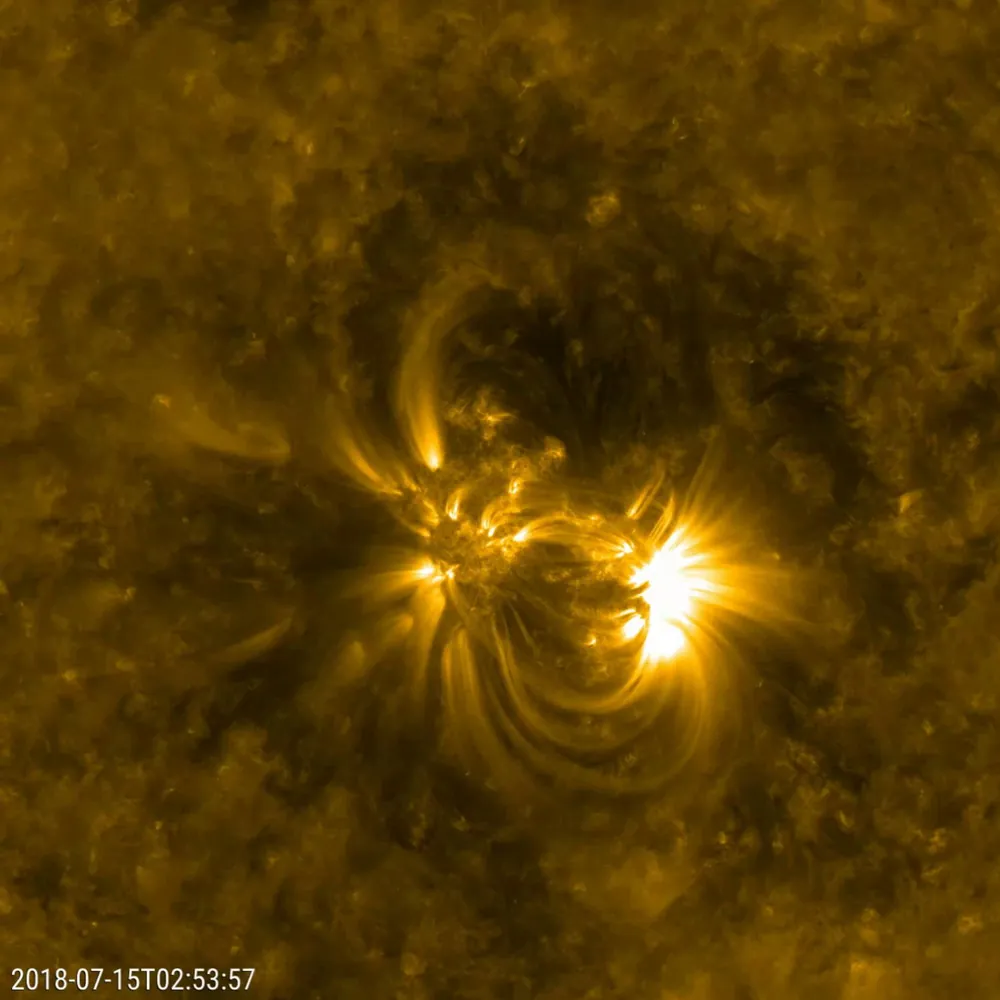
Imagery on this page is provided by the original mission teams. Full attribution terms: Image Rights & Credits.
Sources & Further Reading
- NASA — official mission / factsheet page
- NASA JPL — orbital data and imaging
- Wikipedia — extensive cross-referenced article
- NASA u2014 Our Sun (2025)
- NASA NSSDC u2014 Sun Fact Sheet
- NASA SDO Mission
- Williams, D. R. u2014 Sun Fact Sheet — NASA GSFC (2024)
Numerical values (radius, mass, orbital elements, temperatures) are drawn from NASA NSSDC Planetary Fact Sheets, JPL Horizons, and the JPL Small-Body Database. Last refreshed: 2026-06-08 01:37:01.