

About Pluto
Pluto is the most famous dwarf planet and for 76 years the ninth planet in our Solar System. Its 2006 reclassification as a dwarf planet triggered worldwide controversy that continues to the present. Scientifically, Pluto is the largest known Kuiper Belt Object by volume and the prototype of the “plutinos” — KBOs locked in 2:3 mean-motion resonance with Neptune.
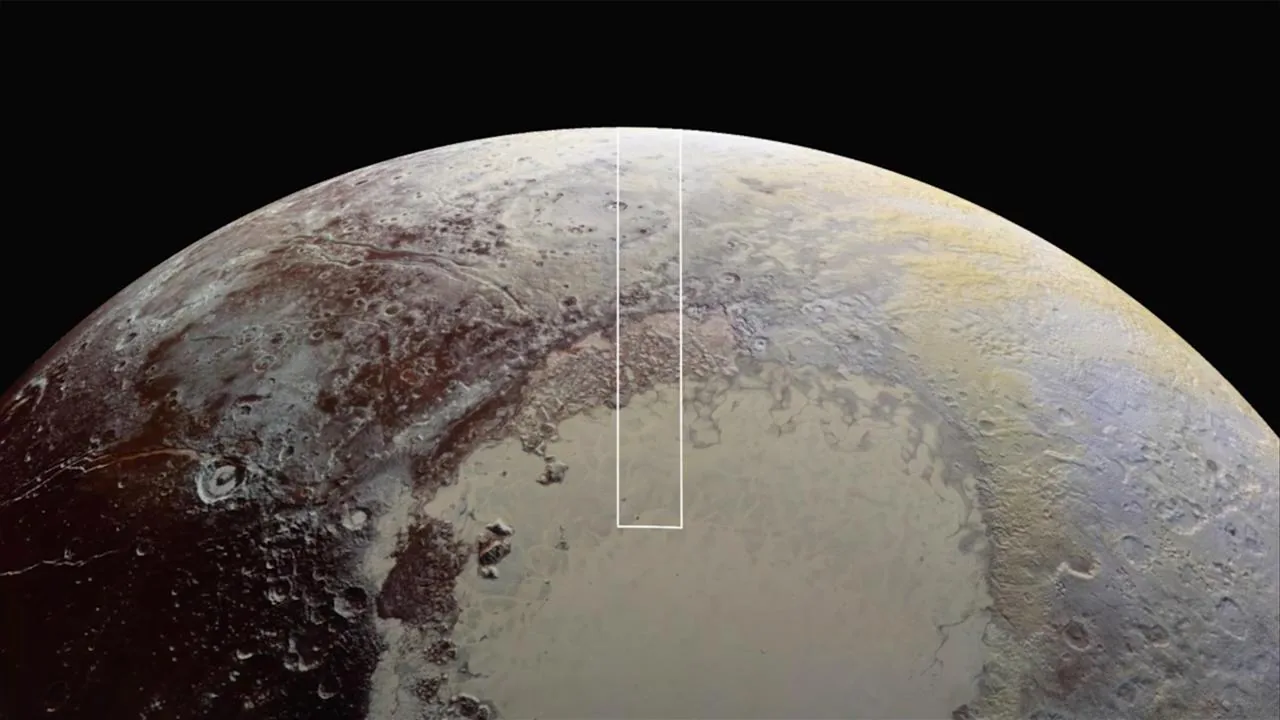
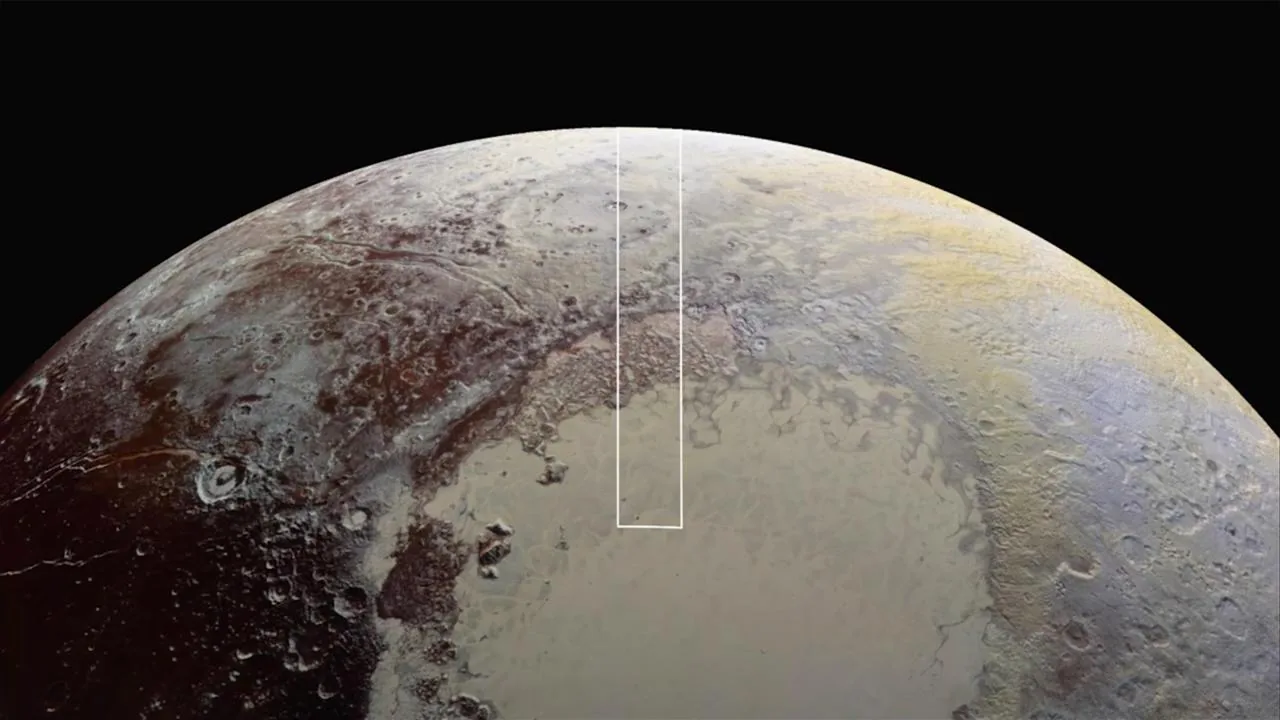
NASA’s New Horizons mission flew past Pluto on 14 July 2015, transforming it from a dim telescopic dot into a stunningly varied world. Sputnik Planitia — the western “heart” of Pluto’s famous heart-shaped region Tombaugh Regio — is a 1,050 km wide basin filled with slowly convecting nitrogen ice. Towering water-ice mountains rise around the basin; Pluto’s thin nitrogen atmosphere produces blue-hued photochemical haze; and complex tholins stain the equatorial Cthulhu Macula red-brown.
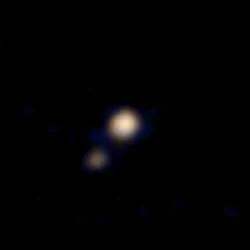
Pluto and its largest moon Charon are mutually tidally locked, forming a true binary system with a barycenter outside Pluto’s surface. Five known moons — Charon, Styx, Nix, Kerberos and Hydra — make the Pluto system a miniature planetary system of its own.
Physical Properties
Atmosphere Composition
- Nitrogen (Nu2082) ~99%
- Methane, Carbon Monoxide trace
Orbit
Notable Moons



Missions to Pluto
1 spacecraft tracked on Space Launch Live.
Gallery
Hand-picked mission imagery of Pluto sourced from NASA and partner archives. Click any photo for full resolution and source attribution.
Imagery on this page is provided by the original mission teams. Full attribution terms: Image Rights & Credits.
Sources & Further Reading
- NASA — official mission / factsheet page
- Wikipedia — extensive cross-referenced article
- NASA New Horizons
- NASA u2014 Pluto
- Stern et al., Science 2015 u2014 The Pluto system: initial results from its exploration by New Horizons
Numerical values (radius, mass, orbital elements, temperatures) are drawn from NASA NSSDC Planetary Fact Sheets, JPL Horizons, and the JPL Small-Body Database. Last refreshed: 2026-06-08 01:37:02.