

About Phobos
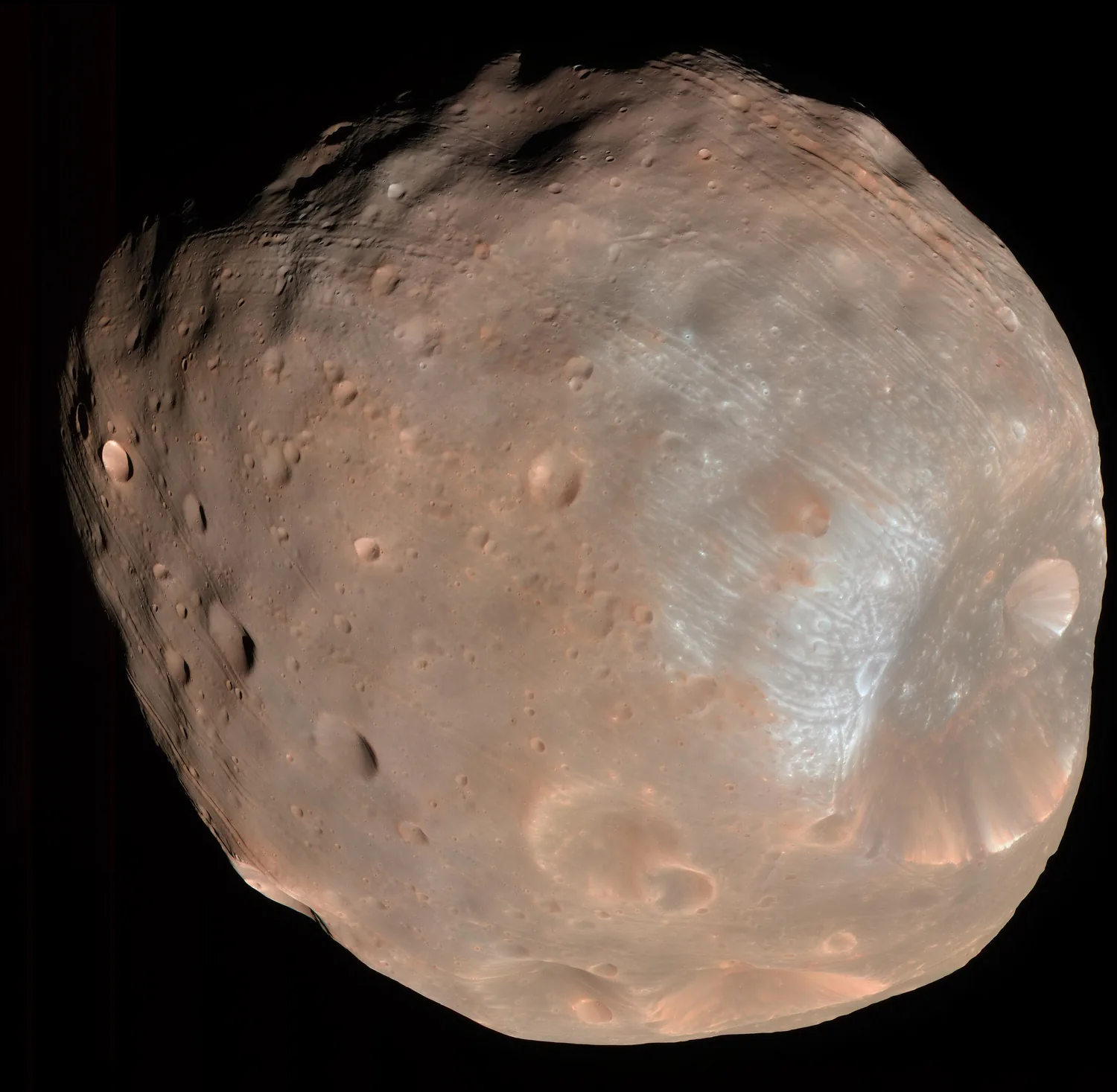
Phobos is the larger and closer of the two moons of Mars, discovered along with Deimos in August 1877 by American astronomer Asaph Hall. It is a small, irregular, heavily cratered body — triaxial dimensions 26 × 23 × 18 km — orbiting Mars just 5,989 km above the Martian surface (closer than any other moon to its primary). Its density and low albedo resemble carbonaceous chondrite asteroids, suggesting either capture or a large-impact formation from Martian material.
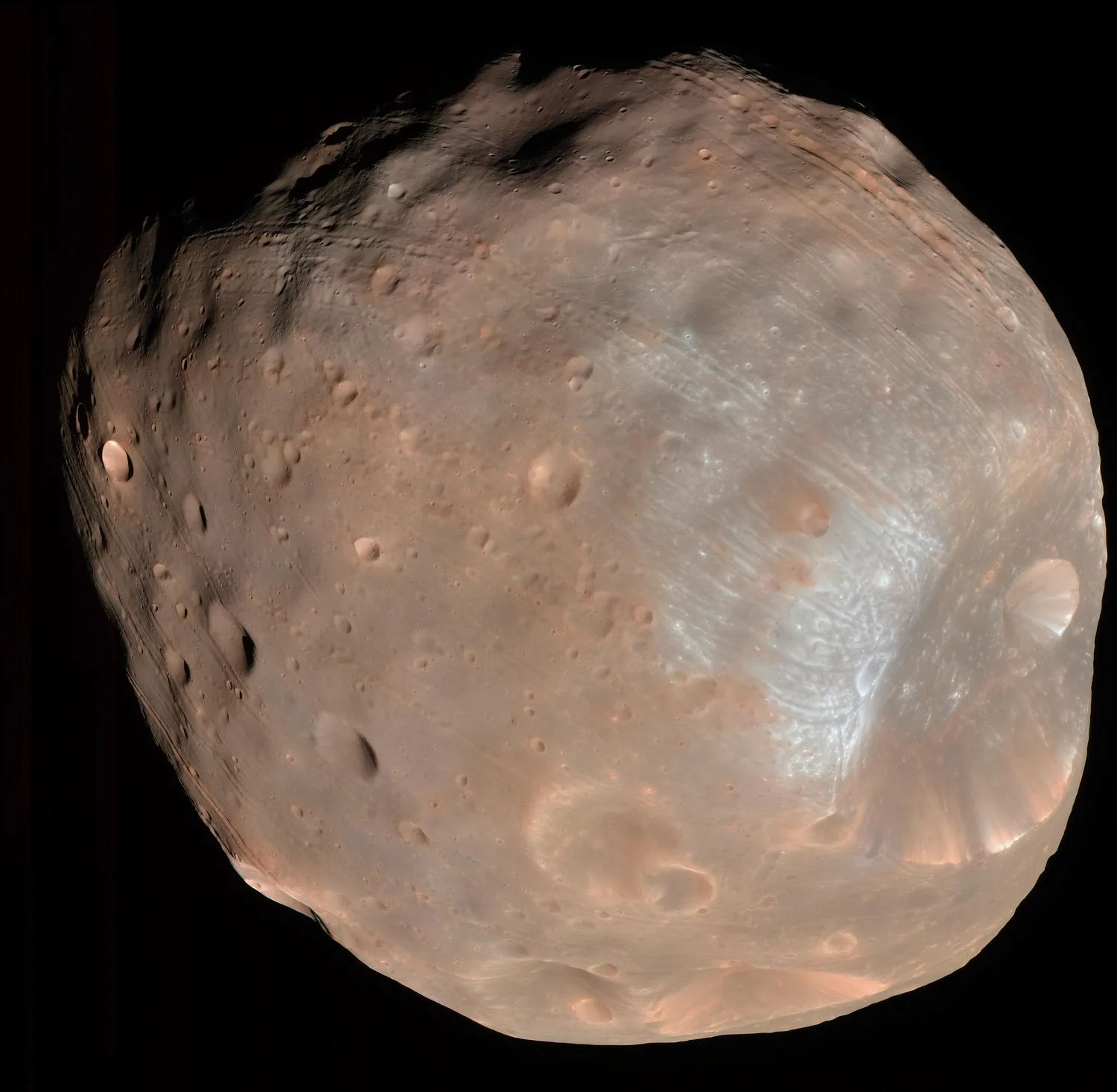
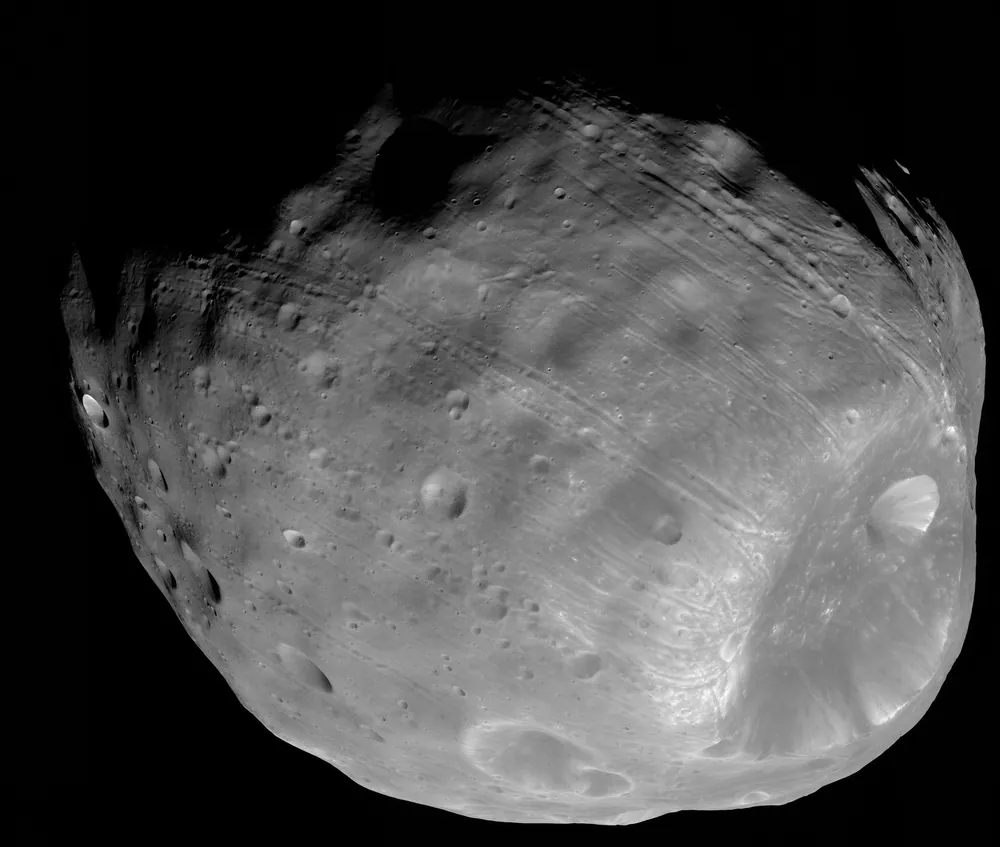
Phobos’s orbit is decaying. Tidal interaction with Mars is drawing it inward at roughly 1.8 cm per year; within 30-50 million years it will either be shredded by Mars’s tidal forces into a ring, or impact the Martian surface. Its largest feature, the crater Stickney, is 9 km across — fully half the moon’s width — and the impact that formed it very nearly destroyed the moon.
JAXA’s Martian Moons eXploration (MMX) mission, scheduled to launch in late 2026, will orbit Mars, land briefly on Phobos, collect surface samples, and return them to Earth in 2031 — our first samples from a moon of Mars.
Physical Properties
Orbit
Missions to Phobos
1 spacecraft tracked on Space Launch Live.
Gallery
Hand-picked mission imagery of Phobos sourced from NASA and partner archives. Click any photo for full resolution and source attribution.
Imagery on this page is provided by the original mission teams. Full attribution terms: Image Rights & Credits.
Sources & Further Reading
- NASA — official mission / factsheet page
- Wikipedia — extensive cross-referenced article
- NASA u2014 Phobos
- JAXA MMX Mission
- Mars Reconnaissance Orbiter HiRISE imagery
Numerical values (radius, mass, orbital elements, temperatures) are drawn from NASA NSSDC Planetary Fact Sheets, JPL Horizons, and the JPL Small-Body Database. Last refreshed: 2026-06-08 01:37:01.