

HEAT SHIELDS & TPS
Thermal protection systems that survive the inferno of atmospheric re-entry.
Explore ablative shields like PICA-X and AVCOAT, ceramic tiles from the Space Shuttle, and Starship’s next-generation hex tiles. Understand the physics of re-entry heating and how each material protects spacecraft.
HEAT SHIELDS
Every thermal protection system used in spaceflight — ablatives, ceramic tiles, carbon-carbon composites, and next-generation materials that protect spacecraft during reentry.
19 heat shields
2,200°C
ACTIVE
Ablative
SAFRAN / AIRBUS DEFENCE
3D Quartz Phenolic
2,200°CAblativeActive
Huygens probe, European reentry vehicles, Ballistic reentry vehicles
816°C
Flexible Blanket
LOCKHEED MARTIN
AFRSI (Advanced Flexible Reusable Surface Insulation)
816°CReusableRetired (Shuttle)
Space Shuttle (upper surfaces, payload bay doors)
2,800°C
ACTIVE
Ablative
TEXTRON SYSTEMS
AVCOAT
2,800°CAblativeActive
Apollo Command Module, Orion MPCV
1,100°C
ACTIVE
Ablative (Spray-On)
SPACEX
Dragon 2 SPAM-T
1,100°CAblativeReusableActive
Dragon 2 (Crew Dragon), Dragon 2 (Cargo Dragon)
1,260°C
Ceramic Tile
LOCKHEED MARTIN
FRCI (Fibrous Refractory Composite Insulation)
1,260°CReusableRetired (Shuttle)
Space Shuttle (high-stress areas, forward fuselage)
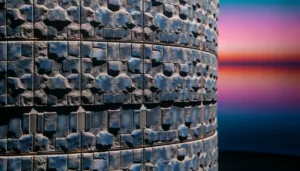
ACTIVE
Concept
How Does Atmospheric Re-entry Work? Heat, Plasma, and Physics
15,000°CActive
1,260°C
Ceramic Tile
LOCKHEED MARTIN
HRSI (High-Temperature Reusable Surface Insulation)
1,260°CReusableRetired (Shuttle)
Space Shuttle (lower fuselage, wing undersides)
1,260°C
Ceramic Tile
LOCKHEED MISSILES & SPACE COMPANY
LI-2200
1,260°CReusableRetired (Shuttle)
Space Shuttle (high-load areas)
1,260°C
Ceramic Tile
LOCKHEED MISSILES & SPACE COMPANY
LI-900 Silica Tiles
1,260°CReusableRetired (Shuttle)
Space Shuttle (lower surface)
649°C
Ceramic Tile
LOCKHEED MARTIN
LRSI (Low-Temperature Reusable Surface Insulation)
649°CReusableRetired (Shuttle)
Space Shuttle (upper fuselage, orbital maneuvering pods)
1,200°C
Multi-Layer Shield
3M / NASA JPL
Nextel/SiC (Stardust WSIM)
1,200°CReusableHeritage
Stardust, ISS (Whipple shield concept adaptation)
2,900°C
ACTIVE
Ablative
FIBER MATERIALS INC. / NASA AMES
PICA (Phenolic Impregnated Carbon Ablator)
2,900°CAblativeActive
Stardust, Mars Science Laboratory, OSIRIS-REx
1,850°C
ACTIVE
Ablative
SPACEX
PICA-X
1,850°CAblativeReusableActive
Dragon 1, Dragon 2 (Crew Dragon), Dragon XL
1,650°C
Refractory Composite
LTV AEROSPACE / LOCKHEED MARTIN
Reinforced Carbon-Carbon (RCC)
1,650°CReusableRetired (Shuttle)
Space Shuttle (nose cap, wing leading edges), X-37B
1,750°C
ACTIVE
Ablative
NASA AMES RESEARCH CENTER
SIRCA
1,750°CAblativeActive
Mars Pathfinder, Stardust, Various probe backshells
1,900°C
ACTIVE
Ablative
LOCKHEED MARTIN
SLA-561V
1,900°CAblativeActive
Viking 1/2, Mars Pathfinder, MER Spirit/Opportunity
1,400°C
ACTIVE
Ablative (Spray-On)
LOCKHEED MARTIN
SPAM (SLA Spray-On)
1,400°CAblativeActive
Mars Pathfinder (backshell), MER Spirit/Opportunity (backshell), Mars Phoenix (backshell)
1,760°C
ACTIVE
Refractory Composite
NASA AMES RESEARCH CENTER
TUFROC
1,760°CReusableActive
X-37B, Next-gen reusable vehicles (development)
2,200°C
Refractory Ceramic
VARIOUS (NASA, DARPA RESEARCH PROGRAMS)
UHTC Composites
2,200°CReusableDevelopment
SHARP-B2 test vehicle, Hypersonic glide vehicles (development), Next-gen reentry vehicles
Explore every thermal protection system used in spaceflight — from the ablative PICA-X on Dragon to the ceramic tiles of the Space Shuttle. Space Launch Live catalogs material types, temperature limits, composition data, and the vehicles protected by each heat shield technology.