UNITED LAUNCH ALLIANCE

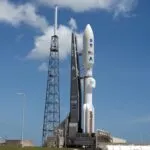
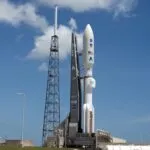
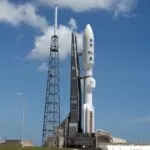
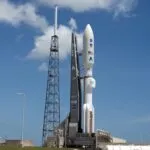
Atlas V 551 | Juno

SUCCESS Atlas V 551 →
—
—
Aug 5, 2011 at 16:25 UTC
Jupiter Orbit Planetary Science Cape Canaveral SFS, FL, USA 100% success
Initializing Launch Globe…
Live Orbit
⏺Fullscreen
▶ REPLAY
Source
Mission Control3D trajectory · Live telemetry · AI narrator · Booster tracking
PADSpace Launch Complex 41
SITECape Canaveral SFS, FL, USA →
ORBITJupiter Orbit
TYPEPlanetary Science

Juno is a NASA space probe orbiting the planet Jupiter. It was built by Lockheed Martin and is operated by NASA’s Jet Propulsion Laboratory. The spacecraft was launched from Cape Canaveral Air Force Station as part of the New Frontiers program.

Juno’s mission is to measure Jupiter’s composition, gravitational field, magnetic field, and polar magnetosphere.

MISSION
Juno
MISSION TYPE
Planetary Science
TARGET ORBIT
Jupiter Orbit
COUNTRY
USA
CONFIRMEDPrecision: Minute
LAUNCH LIBRARY 2 PRIMARY
API ID: 60ea06b7-2470-41a8-b9f0-65c95c0d807b
Reported date: Aug 5, 2011 at 16:25 UTC
Last synced: 6 minutes ago
This launch date and time are confirmed by the launch provider. Countdown is active.
Loading weather…
Select a location to check if this launch is visible from where you are
MANUFACTURER
United Launch Alliance
VARIANT
551
FLIGHTS
19
SUCCESSES
19
SUCCESS RATE
100%

Atlas V is an expendable launch system in the Atlas rocket family. It was formerly operated by Lockheed Martin and is now operated by United Launch Alliance (ULA), a joint venture with Boeing. Each Atlas V rocket uses a Russian-built RD-180 engine burning kerosene and liquid oxygen to power its first stage and an American-built RL10 engine burning liquid hydrogen and liquid oxygen to power its Centaur upper stage. The RD-180 engines are provided by RD Amross, while Aerojet Rocketdyne provides both the RL10 engines and the strap-on boosters used in some configurations. The standard payload fairing sizes are 4 or 5 meters in diameter and of various lengths. Fairings sizes as large as 7.2 m in diameter and up to 32.3 m in length have been considered. The rocket is assembled in Decatur, Alabama and Harlingen, Texas.

When is the Atlas V 551 | Juno launch?
The Atlas V 551 | Juno is scheduled for Friday, August 5, 2011 at 4:25 PM UTC. This is the NET (No Earlier Than) time and may be subject to change. Current status: SUCCESS.
What rocket is being used for Juno?
The Atlas V 551 | Juno mission uses the Atlas V 551 rocket, manufactured by United Launch Alliance. The Atlas V 551 has flown 19 times with a 100% success rate.
Where is the Atlas V 551 | Juno launching from?
The launch takes place from Space Launch Complex 41 at Cape Canaveral SFS, FL, USA.
What orbit is Juno going to?
The Juno mission is targeting Jupiter Orbit.
Who is launching Juno?
The Atlas V 551 | Juno is operated by United Launch Alliance.
Can I watch the Atlas V 551 | Juno launch live?

Yes. Visit the launch detail page on Space Launch Live for embedded YouTube webcasts, replay videos, and links to live coverage from SpaceX, NASA, NASASpaceflight, and other channels.
Mar 29, 2026 00:02 UTC
Launch added to tracker
Imported from Launch Library 2 API
Mar 29, 2026 00:02 UTC
Launch date set: Aug 5, 2011 at 16:25 UTC
NET (No Earlier Than) confirmed by United Launch Alliance
Mar 29, 2026 00:02 UTC
Launch completed successfully
Updated via Launch Library 2
Feb 23, 2026 00:50 UTC
Juno data provides insight into thickness of Europau2019s surface ice sheet
Using recent data from NASAu2019s Juno orbiter, scientists have uncovered new details on the thicknessu2026 The post Juno data provides insight into thickness of Europau2019s…
NASASpaceflight
Feb 13, 2026 05:20 UTC
JUNO VR system brings detector events into immersive 3D space
Tokyo, Japan (SPX) Feb 13, 2026 Researchers working on the Jiangmen Underground Neutrino Observatory (JUNO) experiment have developed a Unity-based virtual reality system that immersively…
SpaceDaily
Jan 27, 2026 19:21 UTC
NASAu2019s Juno Measures Thickness of Europau2019s Ice Shell
Results from the solar-powered spacecraft provide a new measurement of the thickness of the ice shell encasing theu00a0Jovian moonu2019su00a0ocean.u00a0 Data from NASAu2019s Juno mission hasu00a0providedu00a0new…
NASA
Sep 3, 2025 00:56 UTC
Juno Detected the Final Missing Auroral Signature from Jupiteru2019s Four Largest Moons
Jupiter hosts the brightest and most spectacular auroras in the Solar System. Near its poles, these shimmering lights offer a glimpse into how the planet…
NASA
Apr 30, 2025 22:18 UTC
Juno reveals Iou2019s inner structure and volcanic activity; investigates north pole cyclones
New data from NASAu2019s Juno mission, which has been orbiting Jupiter since 2016, has providedu2026 The post Juno reveals Iou2019s inner structure and volcanic activity;…
NASASpaceflight
Apr 29, 2025 16:01 UTC
NASAu2019s Juno Mission Gets Under Jupiteru2019s and Iou2019s Surface
New data from the agencyu2019s Jovian orbiter sheds light on the fierce winds and cyclones of the gas giantu2019s northern reaches and volcanic action on…
NASA
Apr 9, 2025 21:38 UTC
NASAu2019s Juno Back to Normal Operations After Entering Safe Mode
The spacecraft was making its 71st close approach to Jupiter when it unexpectedly entered into a precautionary status. Data received from NASAu2019s Juno mission indicates…
NASA
Jan 28, 2025 16:22 UTC
NASA Juno Mission Spots Most Powerful Volcanic Activity on Io to Date
Even by the standards of Io, the most volcanic celestial body in the solar system, recent events observed on the Jovian moon are extreme. Scientists…
NASA
Dec 12, 2024 15:47 UTC
NASAu2019s Juno Mission Uncovers Heart of Jovian Moonu2019s Volcanic Rage
A new study points to why, and how, Io became the most volcanic body in the solar system. Scientists with NASAu2019s Juno mission to Jupiter…
NASA
Aug 20, 2024 17:07 UTC
Danish Instrument Helps NASAu2019s Juno Spacecraft See Radiation
Using cameras designed for navigation, scientists count u2018firefliesu2019 to determine the amount of radiation the spacecraft receives during each orbit of Jupiter. Scientists with NASAu2019s…
NASA
Aug 20, 2024 17:00 UTC
Danish Instrument Helps NASAu2019s Juno Spacecraft See Radiation
Using cameras designed for navigation, scientists count u2018firefliesu2019 to determine the amount of radiation the spacecraft receives during each orbit of Jupiter.
Jet Propulsion Laboratory
Jul 19, 2024 19:19 UTC
NASAu2019s Juno Mission Captures the Colorful and Chaotic Clouds of Jupiter
During its 61st close flyby of Jupiter on May 12, 2024, NASA’s Juno spacecraft captured this color-enhanced view of the giant planet’s northern hemisphere. It…
NASA
Jun 26, 2024 18:00 UTC
NASAu2019s Juno Gets a Close-Up Look at Lava Lakes on Jupiteru2019s Moon Io
Infrared imagery from the solar-powered spacecraft heats up the discussion on the inner workings of Jupiteru2019s hottest moon.
Jet Propulsion Laboratory
Jun 26, 2024 17:30 UTC
NASAu2019s Juno Gets a Close-Up Look at Lava Lakes on Jupiteru2019s Moon Io
Infrared imagery from the solar-powered spacecraft heats up the discussion on the inner workings of Jupiteru2019s hottest moon. New findings from NASAu2019s Juno probe provide…
NASA
May 15, 2024 07:00 UTC
NASAu2019s Juno Provides High-Definition Views of Europau2019s Icy Shell
Imagery from the solar-powered spacecraft shows some intriguing features on the ice-encased Jovian moon.
Jet Propulsion Laboratory
Last data sync: 6 minutes ago
●Launch Library 26 minutes ago
Launch ID: 60ea06b7-2470-41a8-b9f0-65c95c0d807b
●Spaceflight News API23 minutes ago
15 articles matched
●Open-Meteo Weather1 month ago
Pad weather at 28.58, -80.58

Mission Profile

Juno was a Atlas V 551 mission operated by United Launch Alliance that lifted off from Space Launch Complex 41, Cape Canaveral SFS, FL, USA on August 5, 2011. The flight carried its payload on a planetary science mission to Jupiter Orbit. The launch was a success.