


Falcon 9 Block 5 | Nova-C IM-2 & Others
This is the second mission of Nova-C lunar lander developed and built by Intuitive Machines. This time it carries a NASA payload called PRIME-1 (Polar Resources Ice Mining Experiment-1), which is to be the first demonstration of in-situ resource utilization on the Moon. PRIME-1 consists of two instruments: TRIDENT drill and Msolo mass spectrometer.
Also on board are:
* Lunar Trailblazer, a small (class D) lunar orbiter, part of NASA’s SIMPLEx program, that will detect and map water on the lunar surface to determine how its form, abundance, and location relate to geology. Its mission is to aid in the understanding of lunar water and the Moon’s water cycle.
* Odin, a spacecraft for AstroForge, a company that plans to mine asteroid resources. Odin intends to head into deep space to observe near-Earth asteroid 2022 OB5 in preparation for their first retrieval mission. Odin will fly by the asteroid at a distance of about 1 kilometer, arriving 11 months after launch.
* CHIMERA GEO 1, a transfer spacecraft by Epic Aerospace to a geostationary orbit, with the aim of covering an orbital position. For this launch, CHIMERA-GEO is carrying an unidentified 16U cubesat manifested by Exolaunch.
Falcon 9 is a two-stage rocket designed and manufactured by SpaceX for the reliable and safe transport of satellites and the Dragon spacecraft into orbit. The Block 5 variant is the fifth major interval aimed at improving upon the ability for rapid reusability.
When is the Falcon 9 Block 5 | Nova-C IM-2 & Others launch?
What rocket is being used for Nova-C IM-2 & Others?
Where is the Falcon 9 Block 5 | Nova-C IM-2 & Others launching from?
What orbit is Nova-C IM-2 & Others going to?
Who is launching Nova-C IM-2 & Others?
Can I watch the Falcon 9 Block 5 | Nova-C IM-2 & Others launch live?




Mission Profile
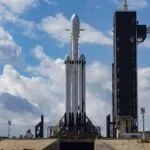
Nova-C IM-2 & Others was a Falcon 9 Block 5 mission operated by SpaceX that lifted off from Launch Complex 39A, Kennedy Space Center, FL, USA on February 27, 2025. The flight carried its payload on a lunar exploration mission to Lunar Orbit. The first stage, booster B1083, made its 9th flight, returning to service just 36 days after its previous mission. The launch was a success.
The stored SUCCESS status applies to the Falcon 9 launch itself, but the mission payloads largely failed. Intuitive Machines’ Nova-C lander Athena reached the lunar surface but landed with an incorrect orientation, coming to rest on its side. Unable to generate sufficient solar power, the lander’s batteries depleted and the mission ended on 7 March 2025, less than 13 hours after touchdown.
The two deep-space rideshare payloads were also lost after deployment:
- NASA’s Lunar Trailblazer lost contact the day after launch; after months of recovery attempts, NASA ended the mission on 31 July 2025, unable to reestablish two-way communications.
- AstroForge’s Odin asteroid probe suffered communication problems shortly after separation, partly due to a ground-station power-amplifier failure in Australia, and was declared lost on 6 March 2025.