

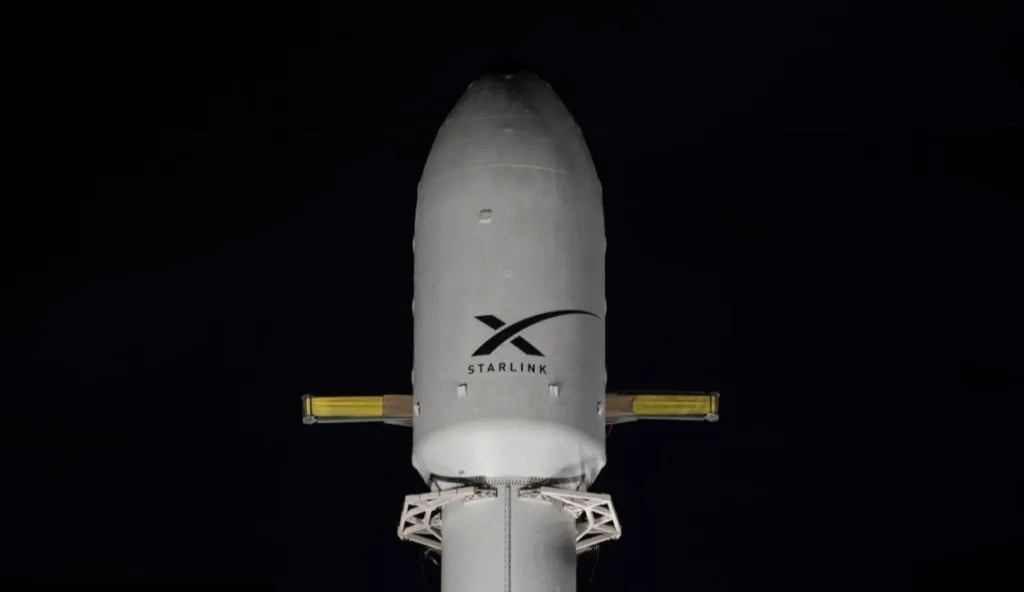
Falcon 9 Block 5 | Starlink Group 10-23
A batch of 27 satellites for the Starlink mega-constellation – SpaceX’s project for space-based Internet communication system.
Falcon 9 is a two-stage rocket designed and manufactured by SpaceX for the reliable and safe transport of satellites and the Dragon spacecraft into orbit. The Block 5 variant is the fifth major interval aimed at improving upon the ability for rapid reusability.
When is the Falcon 9 Block 5 | Starlink Group 10-23 launch?
What rocket is being used for Starlink Group 10-23?
Where is the Falcon 9 Block 5 | Starlink Group 10-23 launching from?
What orbit is Starlink Group 10-23 going to?
Who is launching Starlink Group 10-23?
Can I watch the Falcon 9 Block 5 | Starlink Group 10-23 launch live?



Mission Profile
Starlink Group 10-23 was a Falcon 9 Block 5 mission operated by SpaceX that lifted off from Space Launch Complex 40, Cape Canaveral SFS, FL, USA on June 23, 2025. The flight carried its payload on a communications mission to Low Earth Orbit. The first stage, booster B1069, made its 25th flight, returning to service just 29 days after its previous mission. This launch expanded SpaceX’s Starlink constellation, the low-Earth-orbit network that delivers broadband internet to users worldwide; each batch is identified by its orbital group (here, Starlink Group 10-23). The launch was a success.
The Starlink Group 10-23 launch is confirmed as a success. It followed a last-minute abort on June 22; SpaceX cited a poor signal from the Falcon 9’s flight termination system, and liftoff instead occurred on June 23, 2025 at 05:58 UTC (1:58 a.m. EDT). The payload of 27 Starlink V2 Mini satellites was deployed to low Earth orbit. This was booster B1069’s 25th flight, after which it landed on a droneship in the Atlantic.
Booster B1069 was later expended on its 32nd and final flight, launching Northrop Grumman/SpaceLogistics’ MRV-1 (MRV-MEP) satellite-servicing mission to geosynchronous transfer orbit on July 21, 2026. The booster was not recovered because the high performance required to lift MRV-1 to GTO left no margin for a landing.