


Falcon 9 Full Thrust | Amos 6 (Failure before launch)
**FAILURE: Rocket and payload lost during anomaly originating around the upper stage oxygen tank during propellant load few minutes before static fire on Sept 1, 1307UTC.**
Built to replace the existing AMOS-2 satellite, AMOS-6 will be positioned in a geostationary orbit at 4 degrees west. The 5500kg craft will contain 43 Ku/Ka-band transponders and 2 S-band transponders to provide communications coverage for Africa, Europe and the Middle East. The 2 solar arrays on the craft will provide 9kW of power for the satellite’s 16 year expected lifetime.
The Full Thrust variants first stage includes all systems necessary for an operational re-use of stages while the second stage is operated as an expendable rocket stage.
When is the Falcon 9 Full Thrust | Amos 6 (Failure before launch) launch?
What rocket is being used for Amos 6 (Failure before launch)?
Where is the Falcon 9 Full Thrust | Amos 6 (Failure before launch) launching from?
What orbit is Amos 6 (Failure before launch) going to?
Who is launching Amos 6 (Failure before launch)?
Can I watch the Falcon 9 Full Thrust | Amos 6 (Failure before launch) launch live?
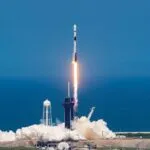
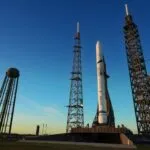

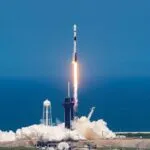
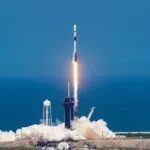
Mission Profile
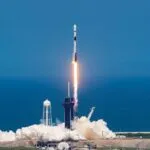
Amos 6 (Failure before launch) was a Falcon 9 Full Thrust mission operated by SpaceX that lifted off from Space Launch Complex 40, Cape Canaveral SFS, FL, USA on September 3, 2016. The flight carried its payload on a communications mission to Geostationary Transfer Orbit. The mission flew on first stage B1028. The launch ended in failure.
On 2 January 2017, SpaceX released the final results of its accident investigation. The team concluded that one of the three composite overwrapped pressure vessels (COPVs) inside the second-stage liquid oxygen tank failed, with the failure likely due to the accumulation of oxygen between the COPV liner and overwrap in a void or buckle in the liner, leading to ignition. As corrective action, SpaceX changed its helium loading operations in the short term, with longer-term COPV design changes planned. Return to flight occurred on 14 January 2017 with the Iridium NEXT mission from Vandenberg.
Space Launch Complex 40, which was damaged in the accident, was rebuilt by SpaceX. Rebuild work did not begin in earnest until February 2017, and the pad returned to service with the CRS-13 mission; repair work was completed by December 2017. Operator Spacecom procured a replacement satellite, AMOS-17, which launched on 6 August 2019.