


Long March 2F | Shenzhou-3
Third test flight of the Shenzhou spacecraft, without crew on board. Main objective of the mission was to test the systems required to support a human in space. A human dummy was carried in the descent module to simulate the physiological signals of a human. 44 different experiments were carried, including an imaging spectrograph, cloud sensor, radiation sensor, solar ultraviolet monitor, solar constant monitor, atmospheric composition detector, atmospheric density detector, multi-chamber space crystallization furnace, space protein crystal equipment, a cell bioreactor, a solid matter tracking detector, and a microgravity gauge. Also on board was a video camera that broadcast images of the Earth as seen through one of the windows on the spacecraft.
This was the first Shenzhou spacecraft launched that could have actually carried a human and as such the main objective of the mission was to test the systems required to…
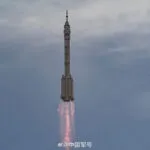
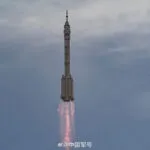
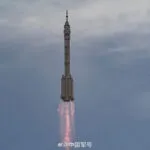
The Long March 2F is a Chinese orbital carrier rocket, part of the Long March 2 rocket family. Designed to launch the crewed Shenzhou spacecraft, the Long March 2F is a human-rated two-stage version of the Long March 2E rocket, which in turn was based on the Long March 2C launch vehicle. It is launched from complex SLS at the Jiuquan Satellite Launch Center.
When is the Long March 2F | Shenzhou-3 launch?
What rocket is being used for Shenzhou-3?
Where is the Long March 2F | Shenzhou-3 launching from?
What orbit is Shenzhou-3 going to?
Who is launching Shenzhou-3?
Can I watch the Long March 2F | Shenzhou-3 launch live?

Mission Profile
Shenzhou-3 was a Long March 2F mission operated by China Aerospace Science and Technology Corporation that lifted off from Launch Area 91 (SLS-1 / 921), Jiuquan Satellite Launch Center, People's Republic of China on March 25, 2002. The flight carried its payload on a human exploration mission to Low Earth Orbit. It was flown as part of the Shenzhou program. The launch was a success.