

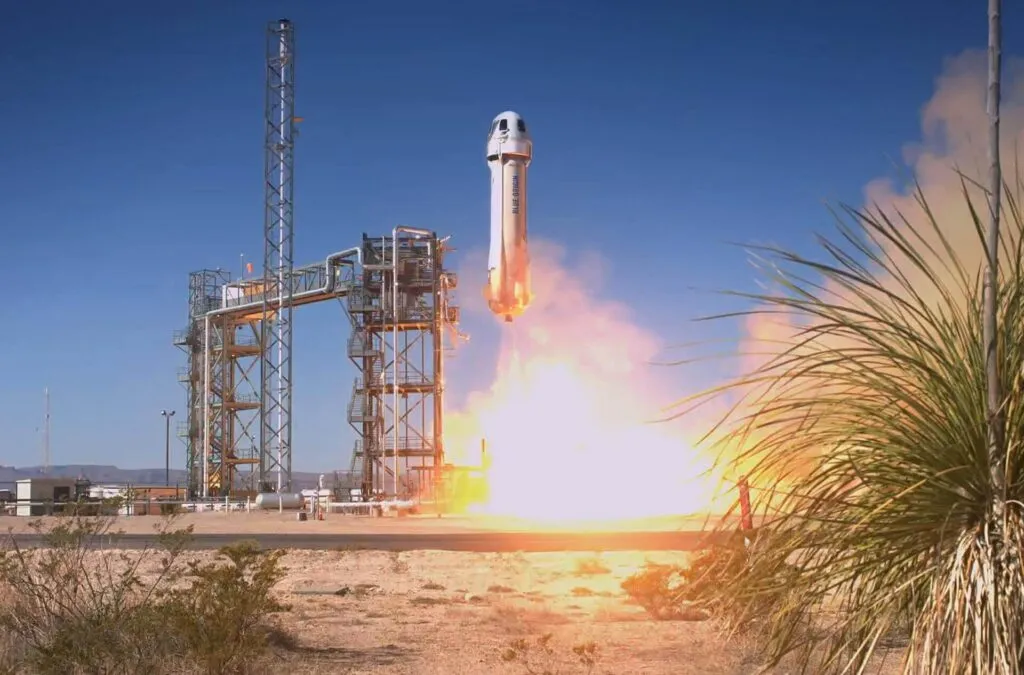
New Shepard | NS-29
NS-29 will simulate the Moon’s gravity and fly 30 payloads, all but one of which is focused on testing lunar-related technologies.
The payloads will experience at least two minutes of lunar gravity forces, a first for New Shepard and made possible in part through support from NASA. The flight will test six broad lunar technology areas: In-situ resource utilization, dust mitigation, advanced habitation systems, sensors and instrumentation, small spacecraft technologies, and entry descent and landing. Proving out these technologies at lower cost is another step toward Blue Origin’s mission to lower the cost of access to space for the benefit of Earth. It also enables NASA and other lunar surface technology providers to test innovations critical to achieving Artemis program goals and exploring the Moon’s surface.
The New Shepard crew capsule is using its Reaction Control System (RCS) to spin up to approximately 11 revolutions per minute. This spin rate simulates one-sixth Earth gravity at the midpoint of the crew capsule lockers. In simulated lunar gravity, customers can accelerate their learning and technology readiness for lunar payloads at much lower cost.
Second New Shepard capsule. It is dedicated to uncrewed flights.
The New Shepard reusable launch system is a vertical-takeoff, vertical-landing (VTVL), suborbital manned rocket that is being developed by Blue Origin as a commercial system for suborbital space tourism.
When is the New Shepard | NS-29 launch?
What rocket is being used for NS-29?
Where is the New Shepard | NS-29 launching from?
What orbit is NS-29 going to?
Who is launching NS-29?
Can I watch the New Shepard | NS-29 launch live?
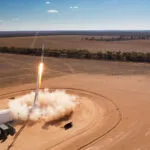
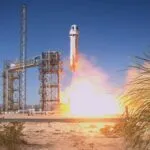
Mission Profile
NS-29 was a New Shepard mission operated by Blue Origin that lifted off from West Texas Suborbital Launch Site/ Corn Ranch, Corn Ranch, Van Horn, TX, USA on February 4, 2025. The flight carried its payload on a suborbital mission to Suborbital. The first stage, booster NS-5, made its 2nd flight, returning to service just 104 days after its previous mission. The launch was a success.