


Soyuz-2.1a/Volga | Mikhailo Lomonosov, Aist-2D & SamSat 218
MVL-300 is named after Mikhail Vasilyevich Lomonosov to honour the 300th year since his birth. The Russian mission will study transient phenomena in the Earth’s upper atmosphere, as well as observing cosmic rays and gamma ray bursts. With a short lifespan of 5 years, the 450kg craft will operate in a 550km Sun-Synchronous orbit.This will mark the first Soyuz mission to launch from the Vostochny Cosmodrome, Russia
In addition to the switch to digital flight control systems as part of the Soyuz 2.1A, this version utilizes the Volga upper stage.
When is the Soyuz-2.1a/Volga | Mikhailo Lomonosov, Aist-2D & SamSat 218 launch?
What rocket is being used for Mikhailo Lomonosov, Aist-2D & SamSat 218?
Where is the Soyuz-2.1a/Volga | Mikhailo Lomonosov, Aist-2D & SamSat 218 launching from?
What orbit is Mikhailo Lomonosov, Aist-2D & SamSat 218 going to?
Who is launching Mikhailo Lomonosov, Aist-2D & SamSat 218?
Can I watch the Soyuz-2.1a/Volga | Mikhailo Lomonosov, Aist-2D & SamSat 218 launch live?




Mission Profile
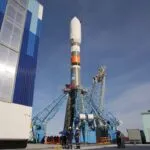
Mikhailo Lomonosov, Aist-2D & SamSat 218 was a Soyuz 2.1a/Volga mission operated by Russian Federal Space Agency (ROSCOSMOS) that lifted off from Cosmodrome Site 1S, Vostochny Cosmodrome, Siberia, Russian Federation on April 28, 2016. The flight carried its payload on a earth science mission to Sun-Synchronous Orbit. The launch was a success.
The launch was a success — the inaugural flight from Vostochny Cosmodrome on 28 April 2016. The primary payload, the Mikhailo Lomonosov (MVL-300) astrophysics satellite, suffered a malfunction: its TUS telescope stopped collecting data in late 2017, and on 30 June 2018 it was reported that the satellite had suffered a failure in its data-transmission system.