

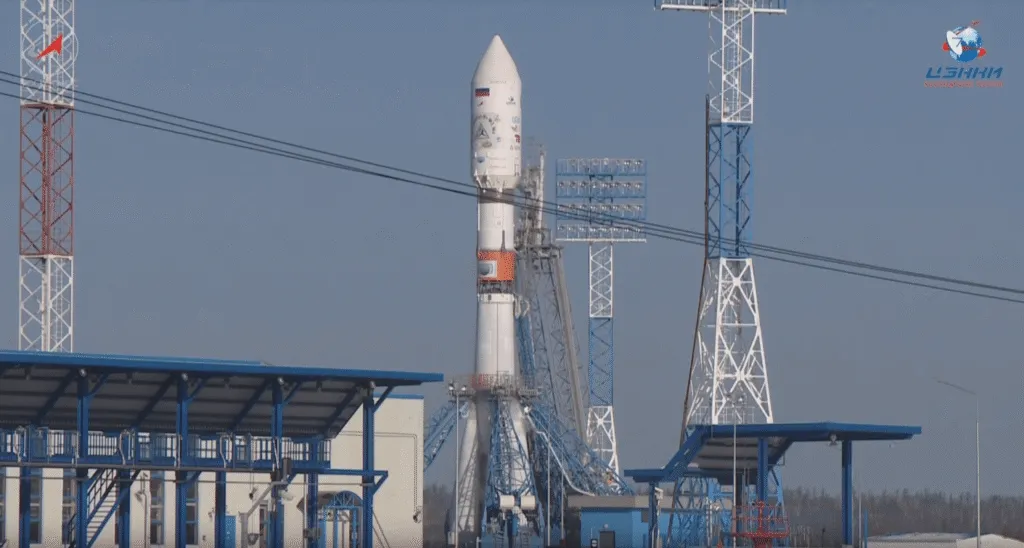
Soyuz 2.1b/Fregat-M | MKA Kinosputnik, KOEN and others
Share-ride of multiple satellites, including dual-use optical Earth observation satellites and drone-guiding satellites:
* MKA Kinosputnik
* KOEN, KA MT-LAB
* NPO Kaisant 6U cubesat with a Germes modem
* NPO Kaisant 16U cubesat with Gonets modems
Soyuz-2, GRAU index 14A14, is the collective designation for the 21st-century version of the Russian Soyuz rocket. In its basic form, it is a three-stage carrier rocket for placing payloads into low Earth orbit. The first-stage boosters and two core stages feature uprated engines with improved injection systems, compared to the previous versions of the Soyuz. Digital flight control and telemetry systems allow the rocket to be launched from a fixed launch platform, whereas the launch platforms for earlier Soyuz rockets had to be rotated as the rocket could not perform a roll to change its heading in flight.
When is the Soyuz 2.1b/Fregat-M | MKA Kinosputnik, KOEN and others launch?
What rocket is being used for MKA Kinosputnik, KOEN and others?
Where is the Soyuz 2.1b/Fregat-M | MKA Kinosputnik, KOEN and others launching from?
What orbit is MKA Kinosputnik, KOEN and others going to?
Who is launching MKA Kinosputnik, KOEN and others?
Can I watch the Soyuz 2.1b/Fregat-M | MKA Kinosputnik, KOEN and others launch live?
Mission Profile
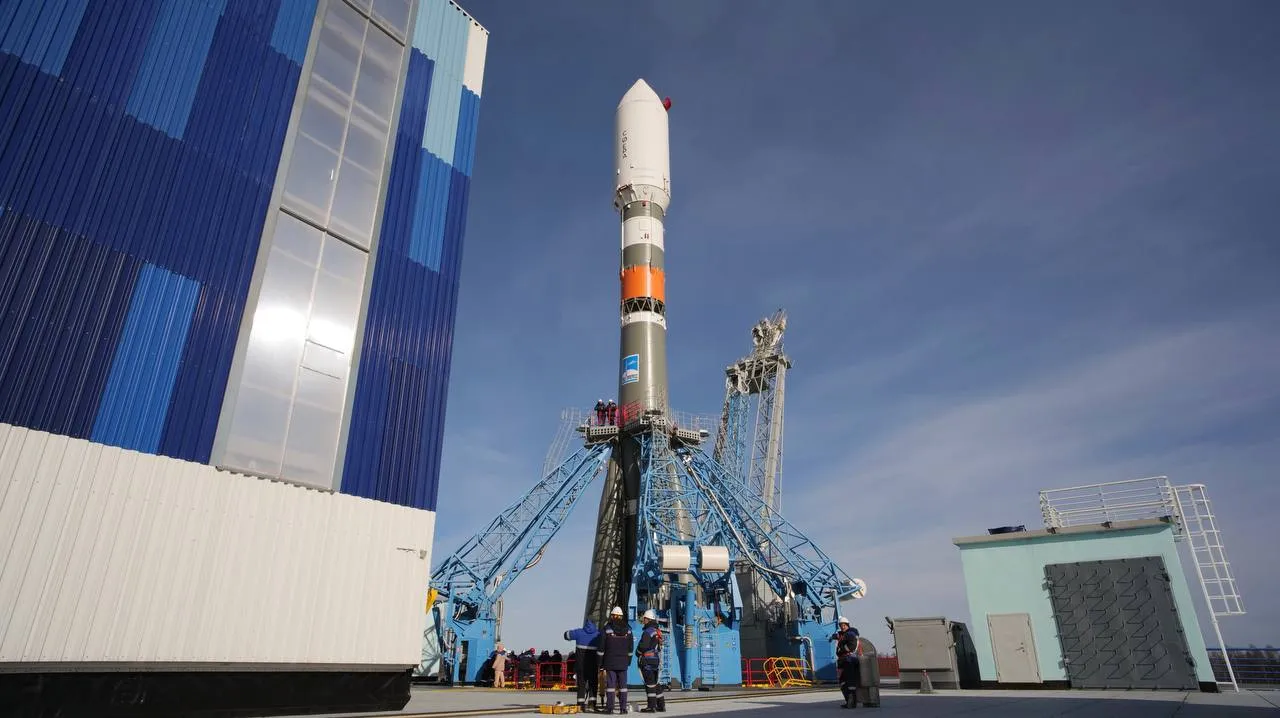
MKA Kinosputnik, KOEN and others was a Soyuz 2.1b/Fregat-M mission operated by Russian Federal Space Agency (ROSCOSMOS) that lifted off from Cosmodrome Site 1S, Vostochny Cosmodrome, Siberia, Russian Federation on November 14, 2026. The flight carried its payload on a technology mission to Sun-Synchronous Orbit. The launch was a success.
Gunter’s Space Page lists the Kinosputnik rideshare launching in 2026 on a Soyuz-2.1a/Fregat from Vostochny LC-1S together with KOEN and multiple additional satellites, indicating a vehicle-variant discrepancy with the stored Soyuz-2.1b/Fregat-M.
The rideshare includes the SPUTNIX Kinosputnik optical Earth-observation satellite (Pallada platform, ~150 kg, ~500–800 km orbit) along with KOEN and other payloads.