


Ariane 5 ES | Galileo L8 (FOC FM07 & FM12-FM14)
The Galileo constellation is ESA’s satellite navigation system and is expected to be completed by 2020. Galileo will provide Europe with an alternative to the American GPS and Russian GLONASS constellations, but will be interoperable with both systems.
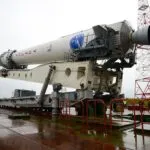
The Ariane 5 ES (Evolution Storable) has an estimated LEO launch capacity of 21,000 kg (46,000 lb). It includes all the performance improvements of Ariane 5 ECA core and boosters but replaces the ESC-A second stage with the restartable EPS used on Ariane 5 GS variants. It was used to launch the Automated Transfer Vehicle (ATV) into a 260 km circular low Earth orbit inclined at 51.6° and has been used 3 times to launch 4 Galileo navigation satellites at a time directly into their operational orbit. The Ariane 5 ES flew 8 times from 2008 to 2018 with no failures.
When is the Ariane 5 ES | Galileo L8 (FOC FM07 & FM12-FM14) launch?
What rocket is being used for Galileo L8 (FOC FM07 & FM12-FM14)?
Where is the Ariane 5 ES | Galileo L8 (FOC FM07 & FM12-FM14) launching from?
What orbit is Galileo L8 (FOC FM07 & FM12-FM14) going to?
Who is launching Galileo L8 (FOC FM07 & FM12-FM14)?
Can I watch the Ariane 5 ES | Galileo L8 (FOC FM07 & FM12-FM14) launch live?

Mission Profile
Galileo L8 (FOC FM07 & FM12-FM14) was a Ariane 5 ES mission operated by Arianespace that lifted off from Ariane Launch Area 3, Guiana Space Centre, French Guiana on November 17, 2016. The flight carried its payload on a communications mission to Medium Earth Orbit. It was flown as part of the Galileo program. The launch was a success.