


H-II | Midori
Primary applications of ADEOS (Advanced Earth Observation Satellite), which has been renamed Midori after reaching orbit, include monitoring global environmental changes such as maritime meteorological conditions, atmospheric ozone, and gases that promote global warming. ADEOS was also expected to play a vital role in developing more sophisticated inter-orbit communications and platform technology for the satellite of tomorrow. ADEOS was launched by H-2 Launch Vehicle No.4 on August 1996 and provided a large volume of data containing valuable information about our environment atmosphere, ocean and land for about 10 months until it suddenly got out of control on 30 June 1997 because of the structural damage in its solar array paddle.
The H-II rocket was a Japanese satellite launch system which flew seven times between 1994 and 1999 with 5 successes. It was developed by NASDA in order to give Japan a capability to launch larger satellites in the 1990s. It was the first two stage liquid fuelled rocket Japan made using only domestic technologies.
When is the H-II | Midori launch?
What rocket is being used for Midori?
Where is the H-II | Midori launching from?
What orbit is Midori going to?
Who is launching Midori?
Can I watch the H-II | Midori launch live?
Mission Profile
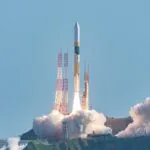
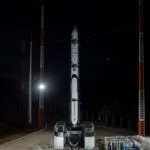
Midori was a H-II mission operated by Japan Aerospace Exploration Agency that lifted off from Yoshinobu Launch Complex LP-1, Tanegashima Space Center, Japan on August 17, 1996. The flight carried its payload on a earth science mission to Low Earth Orbit. The launch was a success.