


H-IIA 202 | Michibiki 2 (QZS-2)
The Quasi-Zenith Satellite System (QZSS) is a three-satellite regional time transfer system and the satellite-based augmentation system for the GPS that would be receivable within Japan. The primary purpose of QZSS is to increase the availability of GPS in Japan’s numerous urban canyons, where only satellites at very high elevation can be seen. A secondary function is performance enhancement, increasing the accuracy and reliability of GPS derived navigation solutions. A single satellite weighs about 4000 kg, has an expected lifetime of 15 years and is put in a elliptical, highly inclined geosynchronous orbit.
H-IIA (H2A) is an active expendable launch system operated by Mitsubishi Heavy Industries (MHI) for the Japan Aerospace Exploration Agency. The liquid-fueled H-IIA rockets have been used to launch satellites into geostationary orbit, to launch a lunar orbiting spacecraft, and to launch Akatsuki, which studied the planet Venus. Launches occur at the Tanegashima Space Center.
When is the H-IIA 202 | Michibiki 2 (QZS-2) launch?
What rocket is being used for Michibiki 2 (QZS-2)?
Where is the H-IIA 202 | Michibiki 2 (QZS-2) launching from?
What orbit is Michibiki 2 (QZS-2) going to?
Who is launching Michibiki 2 (QZS-2)?
Can I watch the H-IIA 202 | Michibiki 2 (QZS-2) launch live?
Mission Profile
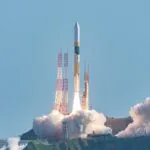
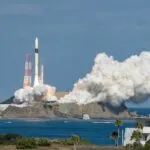
Michibiki 2 (QZS-2) was a H-IIA 202 mission operated by Mitsubishi Heavy Industries that lifted off from Yoshinobu Launch Complex LP-1, Tanegashima Space Center, Japan on June 1, 2017. The flight carried its payload on a navigation mission to Geosynchronous Transfer Orbit. The launch was a success.