MITSUBISHI HEAVY INDUSTRIES

H3-22 | Michibiki 7 (QZS-7)

GO H3-22 →
Aug 6, 2026 at 19:30 UTC
Geostationary Transfer Orbit Navigation Tanegashima Space Center, Japan 67% success
Initializing Launch Globe…
Live Orbit
Fullscreen
Mission Control3D trajectory · Live telemetry · AI narrator · Booster tracking
PADYoshinobu Launch Complex LP-2
SITETanegashima Space Center, Japan →
ORBITGeostationary Transfer Orbit
TYPENavigation

QZSS (Quasi Zenith Satellite System) is a Japanese satellite navigation system operating from inclined, elliptical geosynchronous orbits to achieve optimal high-elevation visibility in urban canyons and mountainous areas. The navigation system objective is to broadcast GPS-interoperable and augmentation signals as well as original Japanese (QZSS) signals from a three-spacecraft constellation.

The navigation system objective is to broadcast GPS-interoperable and augmentation signals as well as original Japanese (QZSS) signals from a three-spacecraft constellation in inclined, elliptical geosynchronous orbits.

VEHICLE
H3-22
MISSION
Michibiki 7 (QZS-7)
MISSION TYPE
Navigation
TARGET ORBIT
Geostationary Transfer Orbit
COUNTRY
JPN
CONFIRMEDPrecision: Half-year
LAUNCH LIBRARY 2 PRIMARY
API ID: b89ab080-66c3-4831-85a9-38d85da71d30
Reported date: Aug 6, 2026 at 19:30 UTC
Last synced: 5 minutes ago
This launch date and time are confirmed by the launch provider. Countdown is active.
Loading weather…
Select a location to check if this launch is visible from where you are
MANUFACTURER
Mitsubishi Heavy Industries
VARIANT
22
FLIGHTS
6
SUCCESSES
4
SUCCESS RATE
66.7%

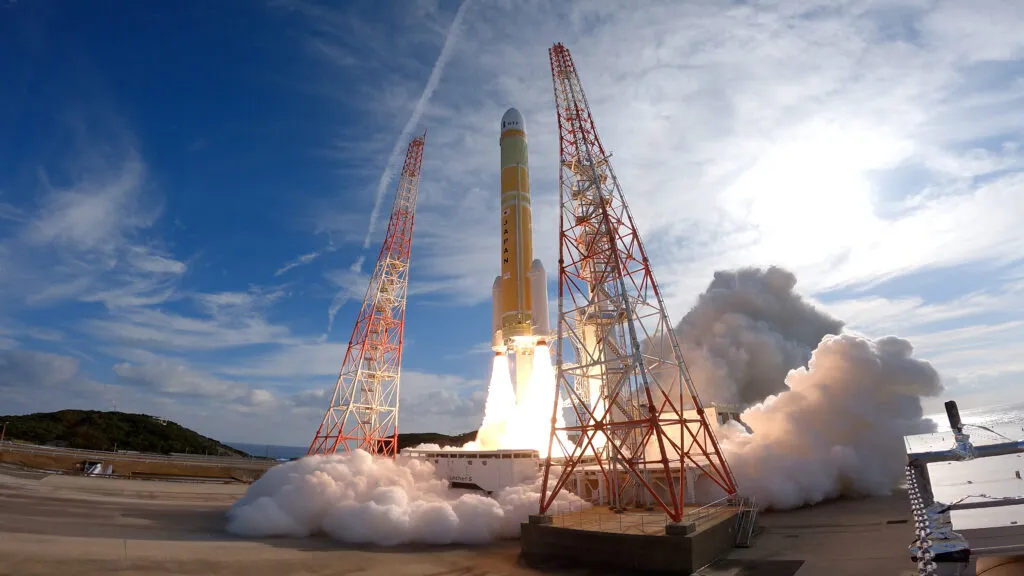
The H3 Launch Vehicle is a Japanese expendable launch system. Each H3 booster configuration has a two-digit and a letter designation that indicates the features of that configuration. The first digit represents the number of LE-9 engines on the main stage, either "2" or "3". The second digit indicates the number of SRB-3 solid rocket boosters attached to the base of the rocket, and can be "0", "2" or "4". All layouts of solid boosters are symmetrical. The letter in the end shows the length of the payload fairing, either short "S" or long "L". For example, an H3-24L has two engines, four solid rocket boosters, and a long fairing, whereas an H3-30S has three engines, no solid rocket boosters, and a short fairing.

When is the H3-22 | Michibiki 7 (QZS-7) launch?
The H3-22 | Michibiki 7 (QZS-7) is scheduled for Thursday, August 6, 2026 at 7:30 PM UTC. This is the NET (No Earlier Than) time and may be subject to change. Current status: GO.
What rocket is being used for Michibiki 7 (QZS-7)?
The H3-22 | Michibiki 7 (QZS-7) mission uses the H3-22 rocket, manufactured by Mitsubishi Heavy Industries. The H3-22 has flown 6 times with a 66.7% success rate.
Where is the H3-22 | Michibiki 7 (QZS-7) launching from?
The launch takes place from Yoshinobu Launch Complex LP-2 at Tanegashima Space Center, Japan.
What orbit is Michibiki 7 (QZS-7) going to?
The Michibiki 7 (QZS-7) mission is targeting Geostationary Transfer Orbit.
Who is launching Michibiki 7 (QZS-7)?
The H3-22 | Michibiki 7 (QZS-7) is operated by Mitsubishi Heavy Industries.
Can I watch the H3-22 | Michibiki 7 (QZS-7) launch live?

Yes. Visit the launch detail page on Space Launch Live for embedded YouTube webcasts, replay videos, and links to live coverage from SpaceX, NASA, NASASpaceflight, and other channels.
Jun 19, 2026 13:38 UTC
Launch status set to GO for launch
Updated via Launch Library 2
Jun 19, 2026 11:38 UTC
Launch added to tracker
Imported from Launch Library 2 API
Jun 19, 2026 11:38 UTC
Launch date set: Aug 6, 2026 at 19:30 UTC
NET (No Earlier Than) confirmed by Mitsubishi Heavy Industries
Last data sync: 5 minutes ago
Launch Library 25 minutes ago
Launch ID: b89ab080-66c3-4831-85a9-38d85da71d30
Open-Meteo Weather17 hours ago
Pad weather at 30.4, 130.98

Mission Profile

Michibiki 7 (QZS-7) is a H3-22 mission operated by Mitsubishi Heavy Industries set to lift off from Yoshinobu Launch Complex LP-2, Tanegashima Space Center, Japan on August 6, 2026. The flight is tasked with delivering its payload on a navigation mission to Geostationary Transfer Orbit.