


H3-30 | H3-30 Test Flight
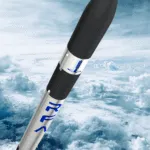
Test flight of the H3-30 variant of the H3 launch vehicle with 3 LE-9 engines in the first stage and no SRBs. The flight will carry a dummy main payload (Vehicle Evaluation Payload 5, VEP-5) and several hitchhiking small satellites:
* PETREL
* STARS-X
* BRO-22
* VERTECS
* HORN-L/R
The H3 Launch Vehicle is an expendable launch system in development in Japan. H3 rockets are liquid-propellant rockets with strap-on solid rocket boosters and are planned to be launched from the Tanegashima Space Center in Japan. Mitsubishi and the JAXA have been responsible for the design, manufacture, and operation of the H3.
When is the H3-30 | H3-30 Test Flight launch?
What rocket is being used for H3-30 Test Flight?
Where is the H3-30 | H3-30 Test Flight launching from?
What orbit is H3-30 Test Flight going to?
Who is launching H3-30 Test Flight?
Can I watch the H3-30 | H3-30 Test Flight launch live?



Mission Profile
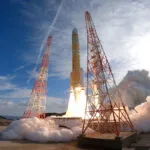
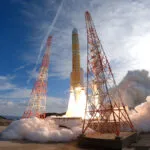
H3-30 Test Flight was a H3-30 mission operated by Mitsubishi Heavy Industries that lifted off from Yoshinobu Launch Complex LP-2, Tanegashima Space Center, Japan on June 12, 2026. The flight carried its payload on a test flight mission to Sun-Synchronous Orbit. The launch was a success.
JAXA confirmed the H3-30 test flight (H3 Launch Vehicle Flight No. 6) lifted off at 00:53:59 UTC on 12 June 2026 from Tanegashima Space Center and injected its second stage into the predetermined orbit. The mission carried the VEP-5 mass simulator (approximately 1,600 kg, not designed to separate and remaining fixed to the rocket for the duration of the mission), plus rideshare satellites PETREL, STARS-X, BRO-22, VERTECS, HORN-L and HORN-R. Separation of PETREL and STARS-X was confirmed about 16 minutes 4 seconds after liftoff, and separation signals were sent to the remaining four smallsats.
This was the first flight of the three-engine H3-30 configuration and H3’s return to flight following a December 2025 failure. After payload deployment, an 18-second burn deorbited the upper stage with VEP-5 still attached for a safe reentry over the Indian Ocean.