

When is the H3 | Six Smallsats Mission launch?
What rocket is being used for H3 | Six Smallsats Mission?
Where is the H3 | Six Smallsats Mission launching from?
What orbit is H3 | Six Smallsats Mission going to?
Who is launching H3 | Six Smallsats Mission?
Can I watch the H3 | Six Smallsats Mission launch live?
Mission Profile
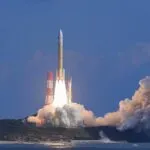
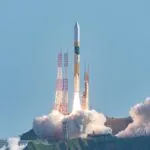
H3 | Six Smallsats Mission was a H3 mission operated by Japan Aerospace Exploration Agency that lifted off from Tanegashima Space Center, Japan on June 11, 2026. The flight carried its payload to Low Earth Orbit. The launch was a success.
The H3 return-to-flight mission launched successfully from the Tanegashima Space Center, with liftoff just before 00:54 UTC on June 12, 2026 (evening of June 11 EDT). It was the eighth flight of the H3 and the first flight of its three-engine configuration, delivering all six smallsats to their respective orbits. The mission followed the December 2025 failure that destroyed the QZS-5 (Michibiki 5) navigation satellite, a loss JAXA traced to a damaged payload adapter that also damaged the second stage propellant tanks.
This flight used the H3-30S configuration — three first-stage engines, no solid rocket boosters, and a short fairing — marking Japan’s first launch of an all-liquid-propellant large rocket. Secondary payload deployment began with PETREL and STARS-X and concluded with HORN-R at 30 minutes and six seconds mission elapsed time. The non-separating VEP-5 performance-evaluation payload remained attached to its fitting and reentered over the Indian Ocean with the upper stage.