


Pegasus XL | 8 x CYGNSS
CYGNSS or Cyclone Global Navigation Satellite System is a NASA developed system to improve hurricane forecasting. It is a constellation of 8 small observation satellites, 27.5 kg each, that will make accurate measurements of ocean surface winds in and near the eye of the storm throughout the lifecycle of tropical cyclones, typhoons & hurricanes.
The Pegasus is an air-launched rocket developed by Orbital Sciences Corporation (now part of Northrop Grumman Innovation Systems). Capable of carrying small payloads of up to 443 kilograms (977 lb) into low Earth orbit, the vehicle consists of three solid propellant stages and an optional monopropellant fourth stage. Pegasus is released from its carrier aircraft at approximately 40,000 ft (12,000 m), and its first stage has a wing and a tail to provide lift and attitude control while in the atmosphere.
When is the Pegasus XL | 8 x CYGNSS launch?
What rocket is being used for 8 x CYGNSS?
Where is the Pegasus XL | 8 x CYGNSS launching from?
What orbit is 8 x CYGNSS going to?
Who is launching 8 x CYGNSS?
Can I watch the Pegasus XL | 8 x CYGNSS launch live?

Mission Profile
8 x CYGNSS was a Pegasus XL mission operated by Orbital ATK that lifted off from Cape Canaveral, Air launch to orbit on December 15, 2016. The flight carried its payload on a earth science mission to Low Earth Orbit. The launch was a success.
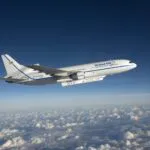
The Orbital ATK Pegasus XL was air-dropped from the L-1011 “Stargazer” aircraft and deployed all eight CYGNSS microsatellites into low Earth orbit on 15 December 2016, with mission controllers contacting each of the eight spacecraft on the first attempt.
CYGNSS completed its prime mission science objectives on 19 March 2019 and has been operating in extended mission status since then.
Since 26 November 2022, NASA’s CYGNSS team has not been able to make contact with one of the eight spacecraft, designated FM06, while the remaining seven continued collecting scientific data.