

ABOUT PEGASUS XL
The Pegasus is an air-launched rocket developed by Orbital Sciences Corporation (now part of Northrop Grumman Innovation Systems). Capable of carrying small payloads of up to 443 kilograms (977 lb) into low Earth orbit, the vehicle consists of three solid propellant stages and an optional monopropellant fourth stage. Pegasus is released from its carrier aircraft at approximately 40,000 ft (12,000 m), and its first stage has a wing and a tail to provide lift and attitude control while in the atmosphere.
PAYLOAD CAPACITY
443 kg
TO LEO
977 lbs
LIFTOFF THRUST
580
KILONEWTONS
130,389
POUNDS-FORCE
~778
HORSEPOWER
DIMENSIONS
Height17.6 m (58 ft)
Diameter1.27 m (4.2 ft)
Launch Mass23 kg (51 lbs)
Stages3
Apogee4,000 km
FLIGHT HISTORY
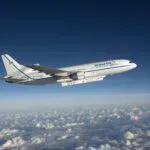
Pegasus XL | Swift Boost Mission
Pegasus XL | 8 x CYGNSS
Pegasus XL | Interface Region Imaging Spectrograph (IRIS)
Pegasus XL | Nuclear Spectroscopic Telescope Array (NuSTAR)
Pegasus XL | Aeronomy of Ice in the Mesosphere (AIM)
Pegasus XL | Space Technology 5 (ST-5) (3x microsats)
Pegasus XL | ST-5 FWD
Pegasus XL | Demonstration for Autonomous Rendezvous Technology (DART)
Pegasus XL | SCISAT-1
Pegasus XL | OrbView-3
Pegasus XL | Galaxy Evolution Explorer (GALEX)
Pegasus XL | Solar Radiation and Climate Experiment (SORCE)
Pegasus XL | Reuven Ramaty High Energy Solar Spectroscopic Imager (RHESSI)
Pegasus XL | Tri-Services Experiments Platform-5 (TSX-5)
Pegasus XL | Wide Field Infrared Explorer (WIRE)
🚀 OTHER ORBITAL SCIENCES CORPORATION VEHICLES