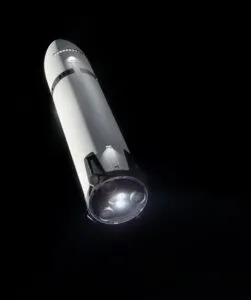
The Long March family is China’s main line of rockets for reaching space, and it has carried nearly every milestone the country has achieved beyond Earth. From a single satellite in 1970 to a crewed space station today, this one family of rockets has done it all.
Quick facts
- Chinese name: Chang Zheng (abbreviated CZ), after the Chinese Red Army’s 1934-35 Long March.
- Builder and operator: China Aerospace Science and Technology Corporation (CASC).
- First launch: 24 April 1970, when a Long March 1 placed China’s first satellite, Dong Fang Hong 1, into orbit, making China the fifth nation to reach orbit on its own.
- Track record: more than 600 missions flown, the third-most of any active rocket family.
- Type: expendable, meaning each rocket is used once and not recovered (newer members aim to change that).
What it is and how it works
The Long March is not one rocket but a numbered series, each version tuned for a different job. They are mostly “staged” rockets: a rocket carries its fuel in sections called stages, burns through the lower stage to climb up through the thick lower atmosphere, then drops that empty stage like a spent battery and lights the next one. Lower stages provide raw power for liftoff; upper stages, which are usually more efficient, give the final push to orbit.
The fuels tell the story of the family’s evolution. The older members (CZ-2, CZ-3, CZ-4) use “hypergolic” propellants, a pair of chemicals (dinitrogen tetroxide, or N2O4, plus unsymmetrical dimethylhydrazine, or UDMH) that burst into flame the instant they touch. They need no spark or igniter, which makes them simple and dependable, but they are highly toxic and corrosive. The newer generation (CZ-5, CZ-6, CZ-7, CZ-8) switched to cleaner, higher-performance fuels: “kerolox” (liquid oxygen and refined kerosene) for the powerful first stages and boosters, and “hydrolox” (liquid oxygen and liquid hydrogen) for cores and upper stages.
The heavy-lift Long March 5 shows how these pieces fit together. It has a hydrolox core driven by two YF-77 engines, four strap-on kerolox boosters each carrying two YF-100 engines for the dense liftoff thrust, and a hydrolox second stage with two YF-75D engines. Not every member follows this pattern: the CZ-11 burns solid fuel for fast, on-demand launches, including from the sea.
Why it matters
The Long March family is the backbone of China’s space program and one of the most-used launch systems in history. It carried every major step China has taken in space: reaching orbit in 1970, its first crewed flight in 2003, robotic Moon missions (Chang’e), Mars exploration (Tianwen-1), and the building and crewing of the Tiangong space station. Because the lineup spans small to heavy lift, China can launch almost anything it needs without relying on other countries. The shift away from toxic fuels toward cleaner kerolox and hydrolox, plus work on reusable (CZ-8, CZ-9) and crew-rated lunar (CZ-10) designs, marks a push toward a more modern and sustainable rocket family.
Notable members
- Long March 1 (CZ-1): launched China’s first satellite, Dong Fang Hong 1, on 24 April 1970, the family’s inaugural flight.
- Long March 2F (CZ-2F): the human-rated rocket that launched Shenzhou 5, China’s first crewed mission, on 15 October 2003, and every Shenzhou crew since. As of late 2025 it had flown about 26 times with a perfect 100 percent success record, a key part of the safety case for crewed flight.
- Long March 3B (CZ-3B): the workhorse for high orbits, used for communications satellites and lunar missions.
- Long March 5 (CZ-5/5B): China’s heaviest rocket in service, lifting about 25,000 kg to low Earth orbit. It launched the Tianwen-1 Mars probe, the Chang’e 5 and Chang’e 6 Moon sample-return missions, and the Tiangong station modules.
- Long March 9 (CZ-9): a super-heavy, partly reusable rocket in development, aiming for more than 140,000 kg to low Earth orbit for future deep-space and crewed lunar plans.
| 🚀 Dong Fang Hong 1 (first Chinese satellite) |
| 🚀 Shenzhou crewed missions |
| 🚀 Chang'e lunar missions |
| 🚀 Tiangong modules |
| Category | Launch Vehicle |
| Era | Multi-era |
| Agency | CASC / CNSA |
| Country | China |
| Start Date | 1970-04-24 |
| Total Flights | 500 |
| Success Rate | 96% |
| Successor | Long March 9 (in development) |
| Original Cost | State-funded |
| Inflation-Adjusted | ~$30-70M per launch depending on variant |