


Pegasus XL | High Energy Transient Explorer (HETE) & Satelite de Aplicaciones Cientificas-B (SAC-B)
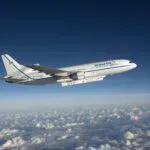
The Pegasus is an air-launched rocket developed by Orbital Sciences Corporation (now part of Northrop Grumman Innovation Systems). Capable of carrying small payloads of up to 443 kilograms (977 lb) into low Earth orbit, the vehicle consists of three solid propellant stages and an optional monopropellant fourth stage. Pegasus is released from its carrier aircraft at approximately 40,000 ft (12,000 m), and its first stage has a wing and a tail to provide lift and attitude control while in the atmosphere.
When is the Pegasus XL | High Energy Transient Explorer (HETE) & Satelite de Aplicaciones Cientificas-B (SAC-B) launch?
What rocket is being used for Pegasus XL | High Energy Transient Explorer (HETE) & Satelite de Aplicaciones Cientificas-B (SAC-B)?
Where is the Pegasus XL | High Energy Transient Explorer (HETE) & Satelite de Aplicaciones Cientificas-B (SAC-B) launching from?
Who is launching Pegasus XL | High Energy Transient Explorer (HETE) & Satelite de Aplicaciones Cientificas-B (SAC-B)?
Can I watch the Pegasus XL | High Energy Transient Explorer (HETE) & Satelite de Aplicaciones Cientificas-B (SAC-B) launch live?
Mission Profile
Pegasus XL | High Energy Transient Explorer (HETE) & Satelite de Aplicaciones Cientificas-B (SAC-B) was a Pegasus XL mission operated by Orbital Sciences Corporation that lifted off from Wallops Flight Facility, Air launch to orbit on November 4, 1996. The launch ended in failure.